Official portrayals depict an apathetic generation, but empirical evidence from protests, prisons, and executions reveals a politically engaged and heavily targeted youth at the center of Iran’s social unrest.
In official state media discourse in Iran, the image of the younger generation—often labeled as Generation Z—is largely constructed through negative stereotypes: apathetic, disengaged from politics, lacking collective motivation, indifferent to serious study, socially detached, and reluctant to assume responsibility.
This narrative, particularly prominent in outlets aligned with the ruling establishment, attempts to normalize the idea of an “absence of social agency” as an inherent trait of the new generation. In doing so, it portrays Iranian youth as fundamentally passive, suggesting a society internally defined by inertia. Some state-affiliated platforms even go further, framing this alleged passivity as a widespread social condition in need of “treatment.” By erasing the structural realities of repression, this narrative seeks to convince both society and the younger generation that they are inherently opposed to activism, dynamism, and collective movement.
But does this portrayal reflect reality? Are Iran’s youth truly indifferent to the fate of their country? On what empirical basis can such claims be validated—or rejected? And if state media advances this narrative, does it genuinely represent the concerns of young people?
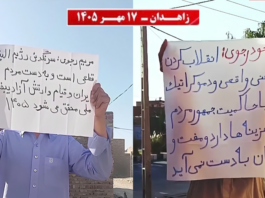
From the perspective of political sociology and social movement studies, such portrayals are rarely neutral reflections of reality. Rather, they form part of a broader “politics of representation”—an effort by those in power to control how social reality is interpreted and understood. When contrasted with empirical indicators such as patterns of repression, arrest records, protest participation, and the age composition of demonstrators in the nationwide uprisings of 2019, 2022, and 2026, a fundamentally different picture emerges. In this alternative view, young people are not on the margins but at the very core of political and social action.
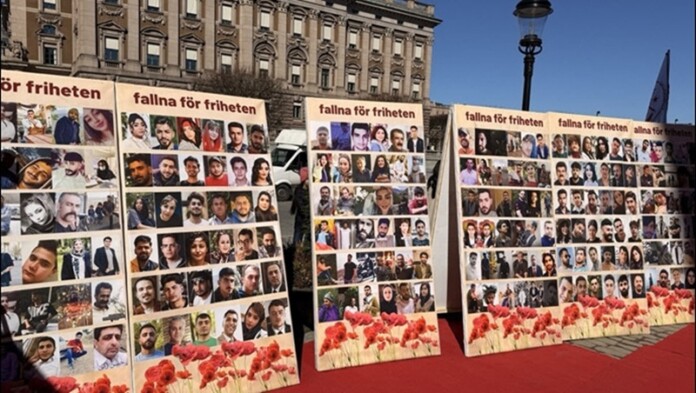
The extensive lists of those killed during these uprisings further reinforce this conclusion: the dominant narrative about youth apathy is not merely inaccurate, but systematically constructed.
Theoretical frameworks in the sociology of social movements emphasize that the level of engagement of a generation is not measured through official propaganda, but through its presence in moments of social crisis. In Iran, from the mass protests of 2022 to subsequent waves of unrest and the intense uprising of January 2026, patterns of arrests and casualties consistently indicate that a significant proportion of participants belong to younger age groups, including teenagers.
Reports by human rights organizations confirm that young people constitute a disproportionately large share of those arrested and killed during protests. While exact figures may vary across sources, the overall pattern is unmistakable: the driving force behind Iran’s protests is its youth.
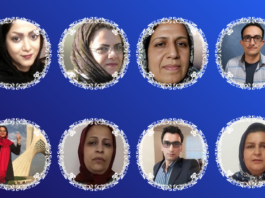
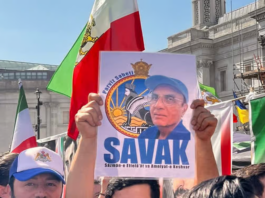
A closer examination of executed political prisoners in the past two months—following the onset of war—provides even clearer evidence of this trend:
- Amer Ramesh (18 at the time of arrest)
- Saleh Mohammadi (19)
- Saeed Davoudi (22)
- Mehdi Ghasemi (24)
- Amirhossein Hatami (18)
- Mohammadamin Biglari (19)
- Shahin Vahedparast (30)
- Ali Fahim (23)
- Pouya Ghobadi (32)
- Babak Alipour (34)
- Amirali Mirjafari (24)
- Hamed Validi (45)
- Mohammad Masoum Shahi (38)
- Vahid Bani Amerian (36)
As reflected in the average age of these individuals, the overwhelming majority of the 18 political prisoners executed over the past two months were young adults or teenagers. This pattern is even more pronounced among those currently on death row, as well as among the thousands arrested during the 2025 uprising.
From a political sociology standpoint, it is essential to stress that the “silent majority” is not, in itself, an adequate metric for assessing social dynamism. In many social movement theories, including the works of Charles Tilly and Sidney Tarrow, the focus is placed on active and engaged segments of society rather than the inactive majority. Societies become analytically visible when underlying tensions translate into collective action—and such action is typically driven by a motivated and organized minority, not by the passive majority.
In Iran, empirical evidence clearly shows that this “active minority” is largely concentrated within the younger generation—a generation that consistently bears the highest costs in times of crisis, whether through arrest, imprisonment, or execution.
Therefore, any serious attempt to assess the condition of Iranian society must move beyond official narratives and statistical silence. Instead, it should rely on action-based indicators: the streets, the prisons, the gallows, and the broader patterns of repression. Viewed through this lens, the analytical conclusion is clear: the true measure of Iran’s social dynamism lies not in state media claims, but in the age profile of those who protest, those who are detained, and those who are executed. In each of these domains, the prominent presence of youth stands as a decisive sociological indicator.