


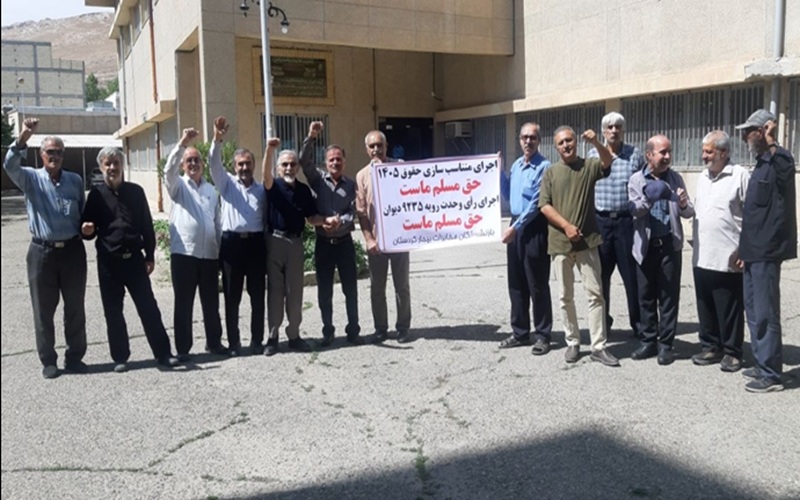

A new report by the regime’s parliamentary research center warns that poverty is set to deepen across Iran, threatening the middle class, rural communities, and long-term social stability.
Regime Report Warns Poverty in Iran Is Set to Worsen
A new report by the Iranian regime’s Parliamentary Research Center has painted a bleak picture of the country’s economic future, warning that poverty is likely to expand significantly in the coming years if current trends continue.
According to the report, cited by state-run media, Iran’s poverty rate is projected to rise from 41 percent in 2026 to 45.5 percent by 2028. If realized, nearly one out of every two Iranians would be living below the poverty line—a dramatic indicator of the country’s deepening economic crisis.
The findings underscore that Iran’s worsening living standards are no longer reflected solely in economic statistics. They are increasingly evident in households struggling to afford food, housing, healthcare, and other basic necessities.
Economic Hardship Extends Beyond Income
The Parliamentary Research Center emphasizes that the consequences of growing poverty extend far beyond declining household income.
According to the report, expanding poverty is contributing to:
- Declining educational quality and rising school dropout rates.
- Reduced access to healthcare as medical costs become unaffordable.
- Increasing malnutrition among vulnerable families.
- Growth in child labor.
- Rising social problems linked to prolonged economic hardship.
The report also highlights a broader erosion of public optimism. Many families have reportedly reduced essential food purchases to cope with inflation, while young people are postponing marriage because of financial insecurity. Retirees, meanwhile, increasingly face impossible choices between purchasing medication and paying housing costs.
These examples suggest that the economic crisis has become deeply embedded in everyday life across the country.
Rural Iran Faces an Even Faster Decline
One of the report’s most striking findings concerns the accelerating deterioration of living conditions in rural areas.
The Parliamentary Research Center warns that poverty is increasing more rapidly in villages than in urban centers, raising concerns that rural communities could experience even greater economic hardship in the coming years.
State media reporting on the study notes that continued deterioration could trigger large-scale migration to cities, expand informal settlements on urban outskirts, reduce rural populations, and further weaken Iran’s agricultural sector.
Such developments would not only deepen regional inequality but also create additional economic and social pressures nationwide.
Structural Problems, Not Temporary Pressures
Notably, the report does not attribute Iran’s economic difficulties solely to sanctions or recent regional developments.
Instead, it argues that long-standing policy failures have played a central role in the country’s worsening living conditions. According to the findings, successive governments have failed to prioritize household welfare or implement sustainable policies to reduce poverty, strengthen the middle class, or improve public living standards.
The report further acknowledges that while regional tensions and security-related developments may have intensified economic pressures, structural problems—including chronic inflation, declining purchasing power, weak investment, and expanding poverty—predate these events.
This assessment represents a rare acknowledgment from within the regime’s own institutions that Iran’s economic crisis has deep domestic roots.
Middle Class Continues to Shrink
Beyond the growing number of people living below the poverty line, the report warns that Iran’s middle class is steadily eroding.
A shrinking middle class is expected to widen income inequality, weaken social cohesion, and reduce public confidence in economic institutions. As economic opportunities continue to diminish, broader segments of society are becoming increasingly vulnerable to financial insecurity.
The report cautions that if current trends persist, poverty will evolve from an economic challenge into a broader social and political crisis with consequences extending to education, public health, demographic trends, and overall social stability.
A Stark Warning from Within the Regime
The findings of the Parliamentary Research Center offer one of the clearest acknowledgments from an official institution of the severity of Iran’s economic deterioration. Rather than portraying poverty as a temporary challenge, the report presents it as a structural crisis that is steadily reshaping the country’s social fabric.
With living costs continuing to rise, purchasing power declining, and rural as well as urban households facing mounting financial pressure, the report suggests that without meaningful policy changes, poverty is likely to affect an even larger share of the Iranian population in the years ahead.