


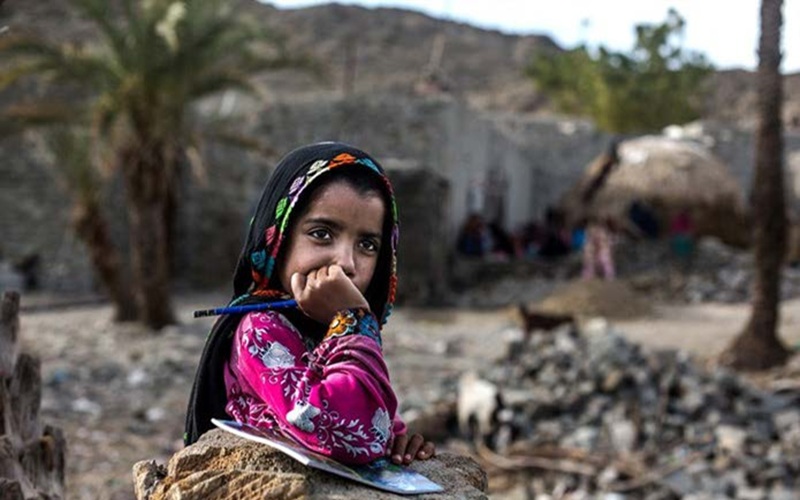

Decades of systemic discrimination, economic abandonment, and brutal repression have condemned Iran’s most impoverished province to early death, identity loss, and generational despair.
Sistan and Baluchestan Province stands today as one of the starkest symbols of the Iranian regime’s deliberate neglect, systemic discrimination, and sustained exploitation. Under the shadow of the clerical dictatorship, this southeastern region has been plunged into a vortex of deprivation, identity erasure, and premature death.
Official regime media and statements from its own provincial authorities inadvertently reveal the scale of a crisis that is the product of decades of plunder, mismanagement, and purposeful marginalization.
According to the regime’s Tasnim News Agency (December 24, 2024), Ali Rahmati, Director General of the province’s Civil Registration Office, disclosed that the average age of death in Sistan and Baluchestan is just 50 years—a shocking 16 years below the national average of 66.
This grim statistic is not the result of fate or geography but of structural deprivation: a collapsing healthcare system, chronic malnutrition, unsafe water, and non-existent medical infrastructure.
In a country with vast oil and gas wealth, the regime has chosen to funnel national resources into foreign proxy wars and terrorist sponsorship rather than building clinics, hospitals, and sanitation systems for its own citizens.
Despite its demographic advantage—63 percent of the population is under the age of 30—Sistan and Baluchestan’s youthful energy has been turned into a curse rather than a blessing.
Mass unemployment and total economic stagnation have pushed many young men into the deadly occupation of fuel smuggling, an illegal trade born of desperation. Countless families have buried sons who perished in road accidents or under indiscriminate fire from regime security forces.
Those who survive face the threat of arbitrary arrest, widespread torture, and execution, as the regime uses fear to maintain its grip on one of Iran’s most restive and rebellious provinces.
The regime’s own media has also exposed another tragedy—identity denial. In a report published by Entekhab (January 8, 2025), it was revealed that between 50,000 and 100,000 people in the province are stateless, lacking any form of official identification.
Rahmati himself admitted that in the past year, only 172 birth certificates had been issued and 1,694 cases reviewed, an absurdly small number given the scale of the crisis. Without identity documents, thousands are denied the right to education, healthcare, employment, and even the legal recognition of their existence.
This “life in the limbo of statelessness” is not an accident—it is the direct result of decades of discriminatory policies designed to keep the province marginalized and politically voiceless.
Social indicators paint an equally grim picture. In 2024 alone, more than 18,546 marriages were recorded in the province, with the average age of grooms between 20–24 and brides between 19–20. In the same year, 2,806 divorces were registered, reflecting the crushing weight of poverty, unemployment, and lack of social stability on family life.
Basic administrative services remain decades behind the rest of the country. Approximately 298,000 residents are eligible for the so-called “smart national ID card,” with 99.5 percent registered, yet 30,000 cards remain undelivered. Furthermore, 900,000 outdated birth certificates still need replacing—an impossible task under the regime’s underfunded, inefficient bureaucracy.
Every one of these crises—early mortality, mass unemployment, statelessness, crumbling healthcare, and administrative paralysis—is a direct outcome of the policies of the regime. Instead of investing in the nation’s development, the regime has poured the country’s wealth into funding militias in Lebanon, Syria, Iraq, and Yemen, expanding its nuclear program, and sustaining its apparatus of internal repression.
The human cost of these policies is not limited to Sistan and Baluchestan. Iran’s modern history is littered with the regime’s wars and crimes against its own people. The eight-year Iran-Iraq War—prolonged at the insistence of regime founder Ruhollah Khomeini—claimed an estimated two million dead and wounded, destroyed five provinces, and displaced countless families. Today, that same appetite for conflict and power projection continues to starve Iran’s provinces of the resources they need to survive.
With a population of 3,337,534, the province remains one of Iran’s poorest and most disenfranchised. While cities like Saravan have seen the highest population growth, the Sistan region itself suffers from minimal development and chronic depopulation due to poverty and lack of opportunity. The people’s protests and repeated calls for justice have been met with bullets, mass arrests, and the gallows.
The tragedy of Sistan and Baluchestan is not a humanitarian accident—it is a deliberate policy choice by a corrupt, sectarian, and self-serving regime. The situation cannot be resolved through token reforms or bureaucratic promises. The cries of the impoverished, the stateless, and the bereaved mothers demand not another hollow government plan but the end of the entire apparatus of oppression.
For Sistan and Baluchestan—and for all of Iran—true recovery can only begin when the rule of the Velayat-e Faqih is dismantled and replaced by a system founded on justice, equality, and respect for human rights. Anything less will condemn yet another generation to die young, nameless, and forgotten.