


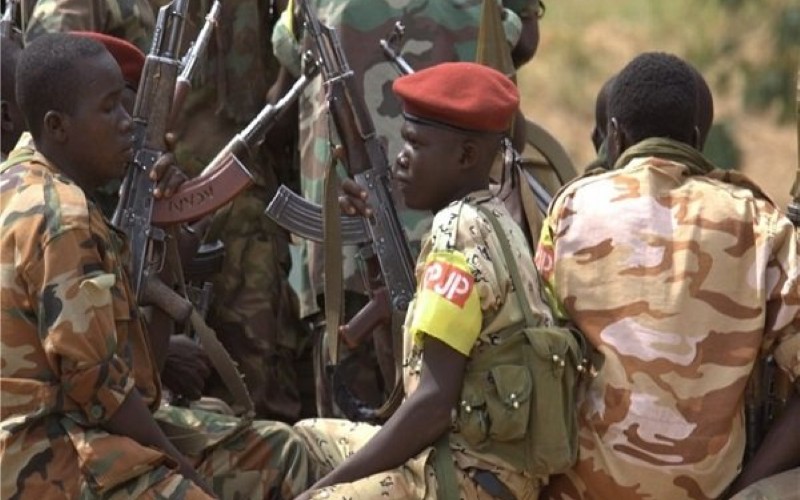

Arrests in Chad reveal Tehran’s structured operations to recruit, train, and manipulate African actors to target Western interests.
Recent arrests in Chad have uncovered two networks linked to the Iran regime, exposing a broader strategy by Tehran to expand its influence and destabilize African nations. Based on confessions from detainees, the operations involved recruiting, training, and organizing individuals to execute attacks against Western targets, while promising logistical, military, and political support for actions against local governments.
Argentinian outlet Infobae reported that Chadian security forces revealed the arrests of several members of “two terrorist networks” connected to the Iran regime. The confessions shed light on the activities of the IRGC Quds Force and the Ministry of Intelligence and Security (MOIS), which have sought to establish structures for espionage, sabotage, and insurgency across Africa.
Tehran’s approach combines ideological indoctrination, religious influence, operational guidance, and military support to form networks capable of striking at American and Israeli interests, while undermining African governments.
One detainee, Ali Abdoulaye Mahamat, revealed that after studying at Qom’s Jamia al-Mustafa Islamic College, he was recruited by MOIS agents posing as Foreign Ministry officials.
During interrogations, he explained that in 2022 and 2023, he met Iranian operatives in Iran to identify Western targets, recruit personnel, map connections between local insurgent groups such as the Front for Change and Concord in Chad (FACT) and Iranian agents, and transmit sensitive intelligence about U.S., Israeli, and French forces in Chad. Mahamat was required to return regularly to Iran to report on his progress, and he was ultimately identified and arrested in Chad.
Mahamat described how a key operative, known as Karim, coordinated his recruitment and maintained strict surveillance, confiscating his phone and interrogating him about local intelligence contacts and foreign ties.
The detainee was instructed to provide detailed information about the presence, movements, and activities of American, Israeli, and French personnel, as well as Chadian intelligence officers and their foreign connections.
A second detainee, Abdoulaye Ahmat Sheikh Alamine, revealed that he was recruited by Unit 400 of the Quds Force, which oversees cross-border operations and the management of militias in Iraq, Africa, and other regions.
This unit, led by Hamed Abdollahi with Abu Ali and Aydin Salahlou involved in network management, trains recruits in weapons use, including Kalashnikov rifles, RPGs, and KFX firearms.
Training often occurs under the pretext of religious trips to Shiite militia bases in Iraq, a cover used to indoctrinate and militarize operatives for extraterritorial missions. Alamine also described the role of Mousa Bterrane Abakar El-Miskin, a veteran extremist commander, in recruiting new members for the Iran regime network.
The involvement of the Quds Force in African subversive activities is not new. In 2019, Ismail Mohamad Djidah, a senior Unit 400 operative in Niger, was implicated in violent attacks against Saudi officials, gathering intelligence on Western targets, and destabilization campaigns against Chad and Gambia.
Jamia al-Mustafa Islamic College, founded in 2007 in Qom, Iran, serves as a central hub for recruiting and training foreign students for the Quds Force and MOIS. With over fifty branches across Africa, Asia, and Europe, an annual budget of around $80 million, and nearly 80 percent non-Iranian students, the institution has been designated a Specially Designated Global Terrorist Organization under U.S. Executive Order 13224.
The designation underscores its role in indoctrinating students and preparing them for espionage, military, and destabilization operations abroad.
Chadian authorities confirmed that dismantling these networks has temporarily disrupted Tehran’s efforts to expand influence and destabilize the Sahel region. Nevertheless, they warned that the Iran regime’s operations in Africa are systematic and enduring, suggesting that similar campaigns are likely to emerge in the future despite domestic crises in Tehran.