Politicians call for urgent investigation into Iran regime’s influence and misuse of UK public funds
A third Islamic center in Glasgow has come under scrutiny for its ties to the Iranian regime, intensifying concerns over Tehran’s growing influence in Scotland and prompting urgent calls for investigation by UK authorities.
The Ark: Tehran’s Electoral Hub in Scotland
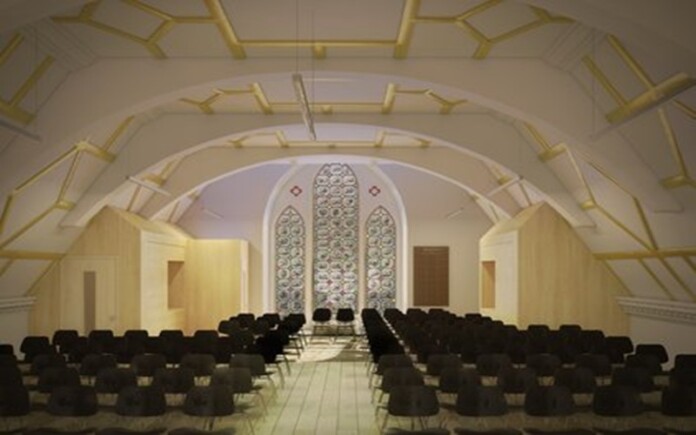
The Ark, a registered charity and community hub located in Govanhill, Glasgow, served as an official polling station for the Iranian regime during its most recent presidential election, according to documents and images obtained by The Sunday Times. The building, which also houses the Muslim Council of Scotland — an advisory body to the Scottish government — was used by the Iranian embassy in London to collect ballots in both rounds of the 2021 election.
Images from the election show Iranian flags displayed throughout The Ark’s main hall, with voters queueing to cast their ballots under the banner of a regime accused by human rights organizations of severe repression. Amnesty International has reported that Iran executed nearly 1,000 people last year alone, including children and political prisoners.
While The Ark claims to be an “independent and ethical” organization committed to inclusion and social enterprise, its cooperation with the Iranian regime has raised serious questions about foreign influence and the use of UK-based institutions for authoritarian state functions.
A Pattern of Influence: Publicly Funded Centers Under Scrutiny
The Ark is the third Glasgow-based institution revealed to have ties to the Iranian regime. The Sunday Times previously reported that the Ahl al-Bait Society Scotland, recipient of more than £400,000 in public funds, held a memorial vigil for Ebrahim Raisi — the former president known for overseeing the execution of thousands of political prisoners in 1988. Another center, the Al-Mahdi Islamic Centre, also received government grants exceeding £370,000 and prominently displayed images of Ruhollah Khomeini, the regime’s founder who infamously issued a fatwa calling for the murder of British author Salman Rushdie.
These revelations have triggered political backlash across party lines.
Calls for Action from UK Politicians
Russell Findlay, Scottish Conservative MSP, condemned the revelations:
“It is deeply concerning to learn of yet another organisation in Scotland’s largest city being linked to the Iranian regime which stands against our precious values of freedom and democracy, while being the world’s largest state-sponsor of terrorism. Not a single penny of taxpayers’ money should find its way into these entities.”
Andrew Bowie, Conservative MP and shadow secretary of state for Scotland, echoed the urgency for action:
“I would expect a robust response from the UK government and security services, along with the authorities in Scotland.”
The former First Minister Nicola Sturgeon also issued a statement through her spokesperson, denouncing the Iranian regime’s systemic human rights abuses and repression.
Security Services and Parliamentary Warnings
Earlier this month, Westminster’s Intelligence and Security Committee warned that regime-linked cultural and educational centres in the UK may be promoting extremist ideologies. The committee urged the government and intelligence community to address potential threats from Iranian-linked institutions, citing concerns about radicalisation, intimidation of diaspora communities, and state-sponsored espionage.
A spokeswoman for the committee added:
“Whilst we are reassured that the Home Office is now investigating the threat posed by Iranian-aligned cultural groups, it is important that this is followed up with specific and timely action.”
The Home Office declined to comment on individual organisations but reiterated that any group or activity undermining democratic society is deemed unacceptable.
Lack of Transparency, Denials, and Silence
The Muslim Council of Scotland, based at The Ark, claimed it was unaware of the building’s use as a polling station, asserting it rents only a small office space and has no knowledge of activities in the rest of the premises.
Neither The Ark, Al-Mahdi Centre, nor the Ahl al-Bait Society responded to requests for comment.
Meanwhile, the Iranian embassy in London has dismissed the allegations, stating:
“The suggestion that Iran engages in, or supports, acts of physical violence, espionage or cyber-aggression on British soil, or against British interests abroad, is wholly rejected. Such accusations are defamatory and dangerous.”
However, the regime’s documented use of The Ark as a polling site — confirmed through embassy communications — directly links Iranian state operations to UK-based institutions, calling into question the boundaries between cultural engagement and political influence.
A Growing Threat
As revelations continue to unfold, many are calling for a complete review of public funding mechanisms, stronger oversight of charitable organisations, and a comprehensive investigation into foreign influence campaigns operating under the guise of religious and cultural activity.
At the heart of this issue lies a deeper concern: how many other institutions in the UK are quietly facilitating the goals of an authoritarian regime that openly defies democratic norms — and at what cost to national security and public trust?