


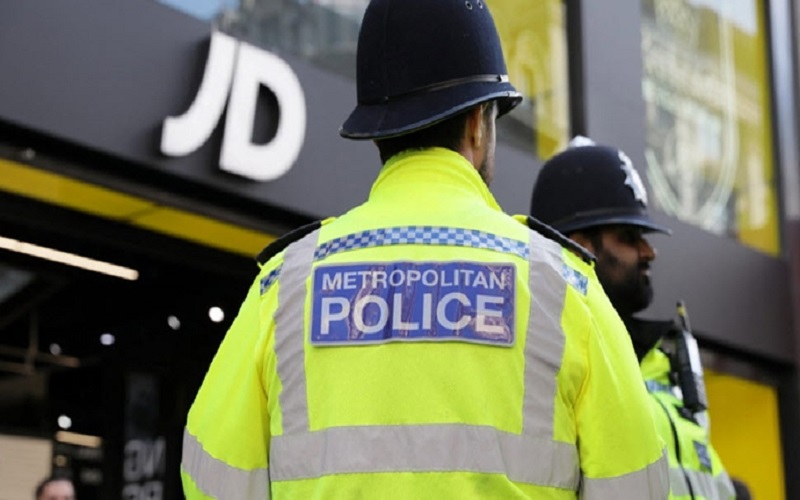

The recent arrest of four Iranian operatives in the UK—linked to Unit 840 of the Islamic Revolutionary Guard Corps (IRGC) Quds Force—has been described as one of the most serious national security threats Britain has faced in years. The alleged terror plot, reportedly targeting the Israeli embassy in London, underscores the Islamic Republic’s ongoing campaign to silence dissidents, export terror, and promote extremism across the West.
The suspects, apprehended last week by UK special forces and counter-terrorism police, were believed to be preparing an imminent attack. According to intelligence sources, some of the men may have entered the UK disguised as migrants via small boats—a method increasingly exploited, with over 10,000 illegal crossings recorded this year alone. The arrests followed a prolonged surveillance operation led by MI5, which feared an attack was imminent.
At the center of this plot lies Iran’s IRGC, a powerful and deeply entrenched institution that has functioned for decades as a state within a state. Originally established in 1979 to safeguard the Islamic Revolution, the IRGC has since evolved into Iran’s dominant military, political, and economic force. With an estimated 190,000 active personnel, its own army, navy, and air units, and command over Iran’s strategic weapons, the IRGC holds immense power. It also oversees the Basij Resistance Force, which is notorious for brutally suppressing domestic dissent.
But the IRGC’s reach extends far beyond Iran’s borders. Through proxies like Hezbollah and Hamas, it sponsors terrorism across the Middle East. It is directly responsible for the deaths of hundreds of American and allied forces. And it has orchestrated numerous assassinations and abduction attempts abroad—often targeting Iranian dissidents, journalists, and opposition figures in exile.
In recent years, the IRGC has ramped up efforts to intimidate and silence exiled critics, including those based in London. These campaigns often involve hired criminals or covert agents tasked with surveilling, threatening, or even attempting to kill perceived enemies of the regime.
Despite this, the IRGC remains free to operate in much of Europe. Unlike Canada, the United States, and Sweden—countries that have formally designated the IRGC as a terrorist organization—the United Kingdom and most of the European Union have yet to take this vital step. This hesitation stems from a mixture of legal, diplomatic, and practical concerns, but it is a dangerously short-sighted position.
The West’s Flawed Justifications
European governments have offered several arguments against blacklisting the IRGC in its entirety, but none of them withstand serious scrutiny:
1. Legal and Technical Challenges:
Some claim that designating the IRGC as a terrorist group could unfairly target individuals conscripted into its ranks for mandatory service. While this is a valid concern, it can be addressed through carefully crafted legal exemptions. It should not serve as a shield for an organization that systematically engages in international terrorism.
2. Legal Definition Issues:
Another objection is that the IRGC, as part of a state military, does not fit traditional definitions of a terrorist entity—typically reserved for non-state actors. However, this distinction is increasingly irrelevant. The IRGC’s operations, particularly through its Quds Force, mirror those of the world’s most dangerous terror groups.
3. Diplomatic and Strategic Concerns:
Some European leaders fear that blacklisting the IRGC would derail efforts to revive the Iran nuclear deal or worsen diplomatic relations. But decades of engagement and appeasement have only emboldened the regime, not moderated it. Continued inaction will not buy peace—it will invite more aggression.
4. Resource and Enforcement Issues:
Designating the IRGC as a terrorist entity would indeed require substantial resources for enforcement. But the cost of failing to act—both in human lives and national security—is far greater.
A Dangerous Delay
The evidence of IRGC involvement in global terrorism is overwhelming. From targeted killings to assassination plots on European soil, the organization has shown a blatant disregard for international norms. The UK plot is not an isolated case—it is part of a broader pattern of aggression that demands a unified and forceful response.
The West’s reluctance to act decisively has already cost the Iranian people dearly. For over four decades, Europe’s economic and diplomatic engagement with Tehran has propped up a regime that represses its own citizens and spreads violence abroad.
It is long past time for the UK and the EU to align with their allies and designate the IRGC as a terrorist organization. Every day of delay increases the risk of another deadly attack—perhaps one that succeeds.
Europe must wake up to this threat before tragedy strikes. The safety, peace, and democratic integrity of its citizens depend on it.