



Amid deepening public resistance led by Iranian women, the regime has activated a coordinated security and political campaign to reimpose compulsory hijab through intensified policing, closures, and expanded surveillance.
The sustained resistance of Iranian women to compulsory hijab, especially since the uprising of autumn 2022, has become one of the most enduring social movements of the past four decades.
This ongoing defiance has now triggered a fresh phase of repression as senior officials of the Iranian regime signal a coordinated effort to restore the same coercive machinery that briefly retreated under public pressure.
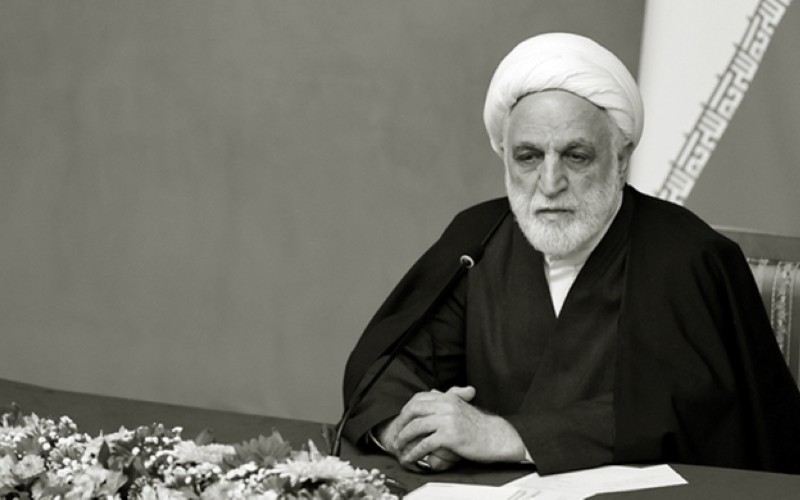
In a speech in Yazd on December 4, Judiciary Chief Gholam-Hossein Mohseni-Ejei delivered his most explicit remarks in months, insisting that existing laws allow authorities to “control up to 75 percent of violations” and declaring that the current social atmosphere on the streets “must not continue.”
He announced that intelligence agencies have been tasked with identifying what he described as “organized anti-hijab networks,” while police forces have been instructed to act swiftly against “obvious offenses,” effectively granting approval for the full return of morality patrols.
Ejei further warned that commercial venues deemed noncompliant would no longer face mere temporary shutdowns and that hosts of any event involving what he called “immoral acts” would also be prosecuted.
These comments, reinforced by recent statements from the regime’s president, security chiefs, and police commanders, reflect a broad mobilization to reinstate compulsory hijab. According to officials, this campaign is directly linked to orders issued by the regime’s Supreme Leader, who has pressed the government of Masoud Pezeshkian to reactivate stringent enforcement mechanisms.
A day before Ejei’s remarks, the Supreme Leader addressed a group of Basij women and demanded resistance against what he condemned as “Western thinking on women and hijab.”
He urged state media and cultural institutions to avoid “magnifying” Western views on personal freedoms, warning that doing so would make domestic outlets “tools of the enemy.” These comments followed weeks of pressure from his inner circle to restore the suspended hijab enforcement apparatus.
Developments on the ground match the rhetoric. The regime-affiliated Fars News Agency published footage showing cafés and restaurants in Tehran being sealed with welding and brick walls, a punitive method now applied for months rather than days.
Police across the country have accelerated the closure of businesses over accusations ranging from “improper hijab” to live music or hosting gatherings. This escalation reflects the new policing model that has emerged after months of internal planning.
Within the parliament, hardline figures such as Morteza Agha-Tehrani have urged a full mobilization of all institutions to confront what they describe as “nudity and unveiling,” while Ezzatollah Zarghami has framed any deviation from compulsory hijab as a slippery slope toward “obscenity.” These statements illustrate the political alignment behind the crackdown and the ideological justification being constructed to support it.
Even President Pezeshkian, who admitted during last year’s election campaign that he once participated in the early revolutionary suppression of women, has now adopted the regime’s messaging.
His recent emphasis on “modesty” and “avoiding exposure” and his call for athletes and cultural figures to promote “superior hijab models” demonstrate the government’s willingness to follow the Supreme Leader’s directives rather than engage with public opinion.
This intensified effort began after the Ministry of Intelligence submitted a classified assessment of social conditions—especially regarding hijab—to the Supreme Leader. According to Elyas Hazrati, head of the government’s media council, the report prompted an immediate order to Pezeshkian’s cabinet to revive hijab enforcement.
Within days, emergency meetings involving the Interior Ministry, the Intelligence Ministry, the presidential office, and security bodies were held to design a new framework for “managing social abnormalities.” A special committee was formed to coordinate these measures across the state.
All this is taking place while field observations and international reporting highlight a profound transformation in the behavior of Iranian women. A recent Associated Press report from Tehran described women of all ages walking unveiled in the northern districts of the capital, “unconcerned and unresponsive” to warnings.
According to the report, the regime is alarmed by the scale of public rejection and aware that heavy-handed enforcement amid economic crisis, water shortages, and the threat of war could reignite nationwide protests.
Despite claims from regime-affiliated scholars promoting “polite reminders” rather than force, the new security architecture tells a different story. Authorities have formally activated a so-called “Hijab and Chastity Operations Room” in Tehran and organized more than 80,000 personnel dedicated to hijab enforcement, an unprecedented mobilization that marks one of the largest such operations since the 1980s.
Three years after the 2022 protests and the regime’s partial retreat from aggressive enforcement, Iran now faces the resurgence of a familiar and failed strategy. Renewed security pressures, arrests, fines, business closures, revived morality patrols, and intensified propaganda reveal a state attempting to reassert control through coercion rather than consent.
Whether this new version of an old policy can withstand the social transformation that has taken hold in public spaces, or whether it will ignite another wave of nationwide dissent, is a question that will likely find its answer in the months ahead.