


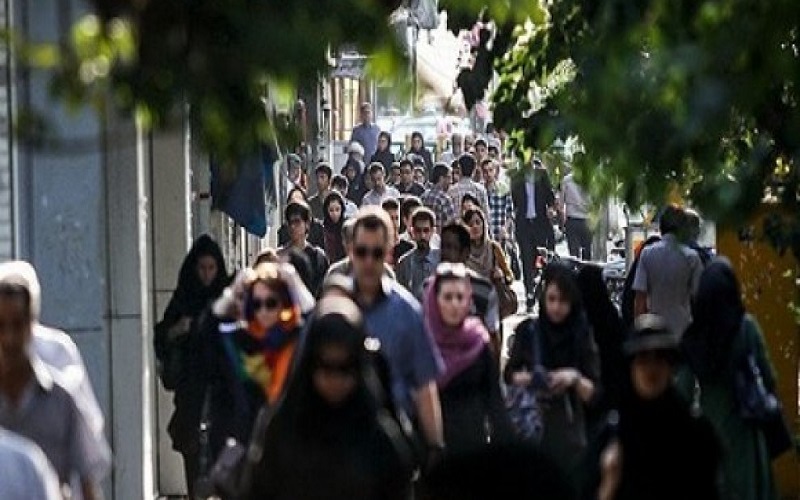

The labor force participation rate of Iranian women has dropped to its lowest level in recent years, reflecting deepening structural, cultural, and economic barriers to women’s employment in the country.
According to data published for fall 1403 (late 2024), women’s participation in the labor market fell to just 14.7 percent, the lowest figure recorded in recent years. This marks a 1.1 percentage point decrease from the previous year and highlights a growing gender divide in the Iranian workforce.
A report by the Statistics and Research Center of Tarbiat Modares University reveals that the overall economic participation rate—a key measure of labor market activity—also declined slightly, reaching 41.3 percent, down 0.5 percent compared to the previous year. However, the decline among women has been far more pronounced.
Growing Gender Gap Among Youth
The gender disparity is especially evident among Iran’s youth. In the 20–24 age group, the gender gap in labor force participation now stands at 21.1 percent. Unemployment is disproportionately affecting young women: 29.2 percent of women in this age group are unemployed, compared to 18.9 percent of their male counterparts.
Similarly, the unemployment rate for women aged 25–29 is reported at 26.7 percent, while for women aged 30–34, it stands at 20.6 percent, nearly three times higher than the 7 percent unemployment rate for men in the same group.
A Global Outlier
With only 14.4 percent of Iranian women counted as economically active, Iran lags significantly behind the global average of 49 percent. In fact, aside from Afghanistan and Iraq, Iran has the lowest rate of female economic participation in the region.
Experts attribute this alarming decline to several factors, including the scarcity of workplaces suited to women’s needs, employers’ reluctance to hire women, and widespread disillusionment among women regarding the possibility of finding suitable, dignified employment. Many have exited the labor market altogether, contributing to a widening gender employment gap. Currently, men are 5.6 times more likely to be employed than women in Iran.
Regional Disparities
Provincial statistics reveal stark inequalities. In Kurdistan, women’s labor force participation is as low as 3.5 percent, while Alborz reports the highest rate at 26.8 percent. In Tehran, the rate is 19.1 percent, slightly above the national average, while Khorasan Razavi (13.1 percent) and Isfahan (8.4 percent) fall below. In Qom, a significant 20.7 percent of employed women work more than 49 hours per week, reflecting both economic pressure and labor market imbalances.
Sectoral Employment Patterns
Iranian women’s employment is heavily skewed toward the service sector. Of the economically active women:
-
61.3 percent work in services,
-
25.5 percent in industry,
-
13.1 percent in agriculture.
This means the share of women in the service sector is 48.2 percent higher than in agriculture and 35.8 percent higher than in industry.
However, many educated women are increasingly pushed out of the formal job market and into precarious or informal work. The rise in women engaging in street vending, ride-hailing services, and online advertising illustrates the disconnect between women’s educational attainment and available job opportunities.
Structural and Cultural Barriers
Iran’s economy is deeply capital-oriented, with limited emphasis on human resources, which further marginalizes women’s participation. Without sufficient capital or clear career prospects, many women—especially the youth—are unable or unwilling to remain in the job market, leading to a surge in female poverty. Statistical data show that female-headed households bear the highest rates of poverty in Iran.
Economic downturns only exacerbate this problem. During times of recession and inflation, women are often the first to be laid off, as businesses prioritize male employment in line with patriarchal norms and state propaganda that reinforce traditional gender roles.
Between 2019 and 2022, women’s presence in managerial positions and formal employment declined sharply, underscoring the systemic nature of their exclusion.
Marriage also appears to be a turning point in women’s labor market participation. Many women leave their jobs after getting married due to social expectations and state messaging that prioritize male breadwinners and relegate women to the domestic sphere.
A Bleak Outlook
As Iran’s labor market struggles with stagnation and inflation, the outlook for women’s employment remains grim. The combination of economic hardship, deep-rooted gender inequality, and lack of policy support has cast a shadow of uncertainty over the future of women’s work in Iran.
If current trends continue, school dropout rates among girls are expected to rise in the coming years due to lack of motivation and diminishing hope for a stable and meaningful professional future.