



Executions, mass arrests, femicide, and the continued targeting of female students expose an intensifying campaign against women in Iran during the first half of 2026.
The first half of 2026 paints a grim picture of the state of women’s rights in Iran. New data compiled from documented human rights cases indicate that women continue to bear a disproportionate share of the regime’s repression, facing executions, arbitrary detention, lengthy prison sentences, corporal punishment, and deadly violence both inside and outside the courtroom.
The findings suggest that the crackdown on women has not eased in the years following the 2022 protests. Instead, the state’s security and judicial apparatus appears to have intensified its campaign against female activists, protesters, students, and ordinary citizens, while broader social violence against women continues to rise.
A Campaign of Repression
According to documented cases covering the period from January through June 2026, at least 5,000 women were arrested during security operations and nationwide protests. Because of severe internet restrictions and the security environment inside Iran, only a fraction of those detained—368 women—have so far been publicly identified.
Among those whose identities have been confirmed are members of ethnic and religious minorities, university students, teachers, and women from diverse social backgrounds. The figures also include at least 23 girls under the age of 18, highlighting that minors have not been spared from the state’s security campaign.
The sheer scale of the arrests demonstrates that women remain at the forefront of civic activism—and consequently among the primary targets of state repression.
Harsh Sentences Become a Tool of Intimidation
The judiciary has complemented mass arrests with increasingly severe punishments.
During the first six months of the year, at least 44 women activists received combined prison sentences totaling more than 211 years. Others were sentenced to 179 lashes, while several received suspended prison terms.
Four women were sentenced to death, although one of those death sentences has reportedly been overturned pending retrial. Three of the women facing execution had been arrested during the January 2026 nationwide protests.
These cases illustrate how the judicial system is increasingly being used not merely to punish alleged offenses but to discourage future activism through exceptionally harsh penalties.
Executions Continue
Capital punishment also remains a persistent threat for women in Iran.
At least nine women were executed during the reporting period in prisons across the country. Most had been convicted of murder, while two were executed on drug-related charges.
The executions were carried out in multiple provinces, demonstrating that the use of capital punishment against women is not confined to one region but remains a nationwide practice.
Although women constitute a smaller proportion of those executed compared to men, each execution reflects broader concerns over due process, access to fair legal representation, and the continued use of the death penalty.
Women Paid a Heavy Price During the January Uprising
Women were also among the principal victims of the nationwide protests that erupted in January 2026.
Documented figures indicate that at least 250 women and 25 girls under the age of 18 were killed during the demonstrations, many reportedly as a result of direct fire by security forces.
Among the identified victims were university students, teachers, and healthcare workers, underscoring the broad social composition of those participating in the protests.
The high number of female casualties further challenges official narratives portraying demonstrators as isolated agitators. Instead, the available evidence suggests widespread participation by women from across Iranian society.
Fatal Force Beyond the Protests
The violence did not end with the suppression of the January demonstrations.
Two women—identified as Nahal Ghalandari from Khorramabad and Faezeh Afshari from Semirom—were reportedly killed by security forces during public celebrations following the announcement of Ali Khamenei’s death in early March.
Their deaths reinforce concerns that security forces continue to resort to lethal force even during spontaneous public gatherings unrelated to organized political demonstrations.
Femicide Remains a Growing Crisis
Beyond state violence, violence against women inside the home continues to claim lives at an alarming rate.
At least 45 cases of femicide were documented during the first half of 2026. According to available data, five killings were described as so-called “honor” murders, while the majority resulted from domestic or family disputes.
Most victims were allegedly killed by those closest to them—including husbands, former husbands, fathers, or brothers.
Tehran recorded the highest number of reported cases, followed by Sistan and Baluchestan and Fars provinces.
The persistence of femicide highlights another dimension of the crisis facing women in Iran: while political repression dominates headlines, gender-based violence within families continues largely unabated.
Universities Remain a Battleground
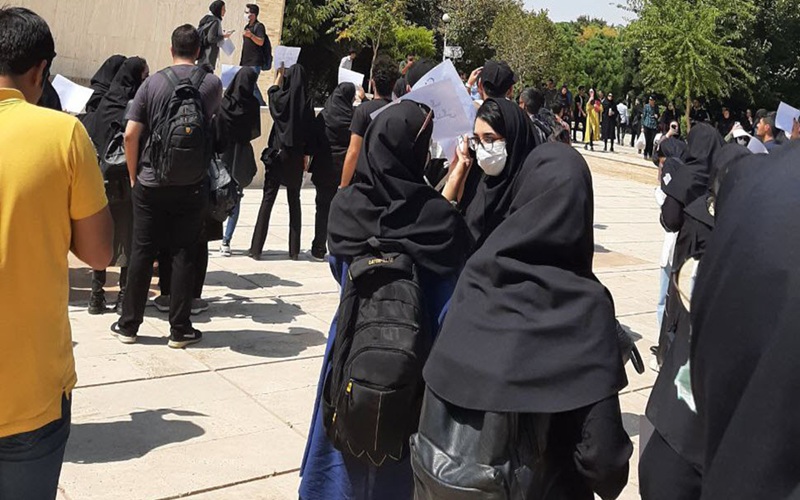
One notable aspect of the latest figures is the continued targeting of female students.
Since the 2022 protests, universities have remained under intense surveillance. Female students have faced suspensions, expulsions, disciplinary proceedings, arbitrary arrests, and prosecution for participating in peaceful demonstrations or challenging compulsory state policies.
The inclusion of students among those killed, arrested, and imprisoned during the first half of 2026 demonstrates that campuses continue to be viewed by authorities as centers of political dissent.
This reflects a broader strategy that has increasingly focused on suppressing younger generations, particularly women who have emerged as prominent voices demanding social and political change.
A Pattern Rather Than Isolated Incidents
Taken individually, each execution, arrest, prison sentence, or killing represents a personal tragedy.
Viewed collectively, however, they reveal something larger: a sustained pattern of repression targeting women across multiple aspects of public life.
Whether through the criminal justice system, security operations, restrictions on civic activism, or the failure to adequately address gender-based violence, women continue to face multiple and overlapping forms of discrimination.
The persistence of these trends several years after the Woman, Life,Freedom movement suggests that rather than moderating its approach, the regime has chosen to expand the mechanisms used to silence female dissent while maintaining broader systems of legal and social inequality.
As women continue to play a leading role in demands for greater freedom and equal rights, the state’s response remains rooted in coercion rather than reform—a strategy that has placed women’s rights at the center of Iran’s ongoing human rights crisis.