


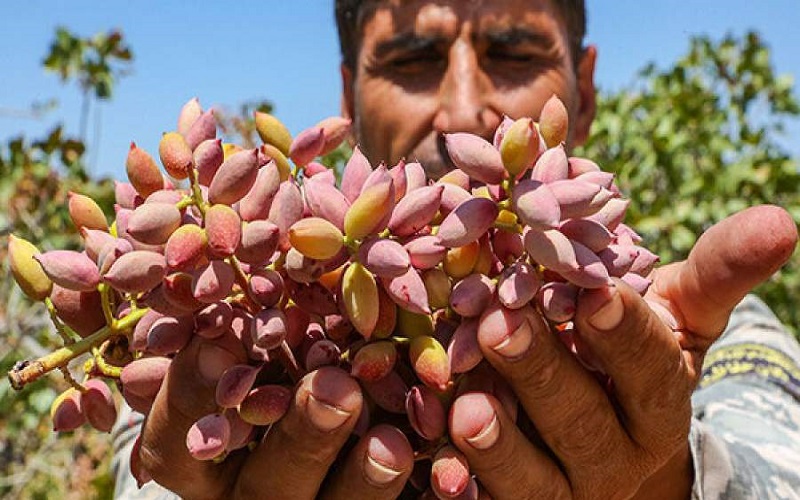

While Iran’s share of the global pistachio market has plummeted to an unprecedented level, dipping below 18%, domestic consumption has also fallen sharply due to a dramatic surge in prices. Reports indicate that the average annual pistachio consumption per Iranian is now less than one kilogram.
According to a report from the state-run Tejarat News website, the current price for one kilogram of salted pistachio packs is at least 1,784,000 tomans. This translates to an approximate cost of 1,700 tomans per pistachio seed.
A quick browse through online stores further highlights the astronomical prices of both salted and raw pistachios. For instance, the cost of one kilogram of hand-picked saffron pistachios with special packaging can reach about three million tomans. This is in stark contrast to the 2023 prices, which ranged from 700 to 900,000 tomans, and the 2021 average of 400,000 tomans per kilogram.
A decade ago, the price per kilogram of pistachios was around 25,000 tomans, and in 2008, it stood at about 6,800 tomans. A little before that, the price was less than 4,000 tomans per kilogram.
A comparison of these historical prices with recent figures underscores the exponential increase in the cost of pistachios in Iran, driven by inflation and fluctuations in the dollar rate. Activists in the pistachio market have repeatedly emphasized the correlation between the product’s price and the dollar rate.
The soaring prices of pistachios have excluded or restricted access to this nutritious product for many Iranians, impacting their daily lives. Reports suggest that Iran has lost its dominance in the global pistachio market, with the monopoly slipping away and exports seeing a drastic decline.
Pistachios, alongside saffron and carpets, constitute Iran’s most significant non-oil export goods, contributing to increased non-oil income. However, due to inefficient management, all three products have lost their standing in global markets in recent years, facing domestic production challenges as well.
Up until 2000, Iran held approximately 80% of the world’s pistachio market, but this position steadily eroded. In 2017, Iran and the United States nearly shared the world pistachio market, but the scales tipped heavily in favor of America. In 2022, Iran’s share fell by half, while America doubled its exports.
Presently, the United States commands 56% of the world’s pistachio production, and statistical reports from Iranian Customs and Chamber of Commerce reveal Iran’s share has dwindled to less than 18%. Spain and Turkey are now active players in this field, challenging Iran’s historical second or third-place status.
A scrutiny of Iran’s pistachio export statistics for the first six months of 2023, compared to previous years, exposes the dire state of this non-oil product’s exports. According to customs reports, Iran earned 137 million dollars from pistachio exports in the first half of the year, constituting 11% of the total value of agricultural exports and 0.57% of non-oil exports. The exported weight of pistachios was reported as 20,000 tons.
Typically, 15 to 25% of produced pistachios are used domestically, with the remainder exported. However, the current situation for exporters is dire, with some halting their export activities. Activists argue that with favorable export conditions, Iran could potentially earn up to 1.5 billion dollars annually from pistachios.