



Why externally promoted figures and nostalgic narratives cannot substitute for a genuine democratic transformation
As the clerical establishment in Iran shows increasing signs of internal strain, a familiar political mechanism has accelerated: the construction of “alternatives.” This process, however, is neither new nor particularly innovative. It resembles an old, overused engine—revved up in moments of crisis, yet structurally incapable of delivering meaningful change.
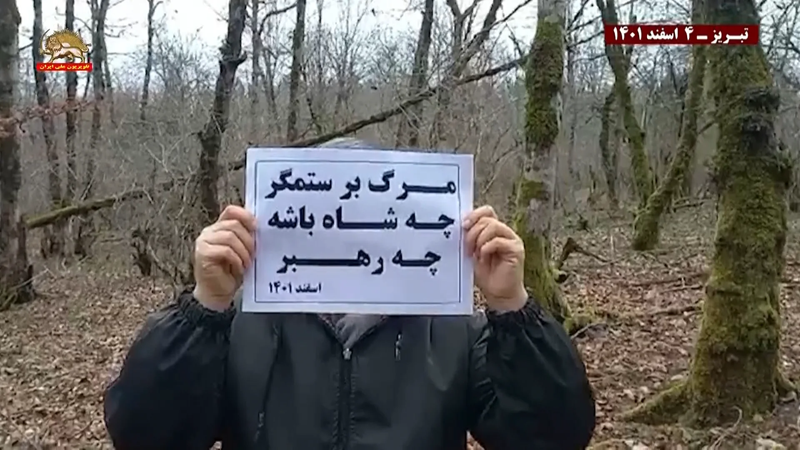
In recent months, segments of the Iranian public have been encouraged—implicitly and explicitly—to remain passive, to “wait” for external forces or dramatic geopolitical events to deliver liberation. At the same time, the lived reality of protest—people risking their lives in the streets—has often been reframed or appropriated to amplify figures positioned as ready-made leaders for a post-regime Iran. Through repetition across social media and satellite broadcasting, certain narratives have been amplified far beyond their organic base of support.
A recurring feature of this discourse has been the open or thinly veiled call for foreign military intervention, presented as the only viable path to change. Yet historical experience suggests that such interventions rarely align with the long-term interests of the societies they claim to assist. Instead, they tend to reflect the strategic priorities of external powers, often at the expense of domestic democratic development.
The recent wave of protests in Iran—like the 2026 uprising—should not be misunderstood as a spontaneous or purely emotional phenomenon. Like most complex social movements, it is rooted in long-term structural grievances and shaped by years of political experience. While external conflict may temporarily suppress its visibility, the underlying dynamics remain active. The Iranian political system itself appears acutely aware of this reality.
For decades, the ruling establishment has relied on two core strategies: comprehensive internal repression and the externalization of crises beyond its borders. These dual mechanisms have allowed it to maintain control despite recurring waves of dissent. However, recent developments suggest that both pillars are under increasing pressure.
At the same time, the emergence of externally endorsed or “manufactured” alternatives has complicated the political landscape. These figures—whether promoted domestically or abroad—often lack a credible connection to the internal dynamics of Iranian society. Their visibility does not necessarily translate into legitimacy.
Historical precedents reinforce this concern. In 1953, the overthrow of Prime Minister Mohammad Mossadegh through the 1953 Iranian coup d’état disrupted a nationally grounded political trajectory and reinstated monarchical rule under Mohammad Reza Shah. Decades later, during the 1979 revolution, the political process was again redirected—this time toward a theocratic system under Ruhollah Khomeini. In both cases, the outcome fell short of the democratic aspirations held by broad segments of Iranian society.
These historical patterns are not incidental. They reflect a recurring dynamic in which organic movements for change are overtaken or redirected by forces that ultimately constrain, rather than expand, political freedoms.
The argument advanced here is that meaningful transformation in Iran requires more than the collapse of the current system or the elevation of a new figurehead. It requires a structured, organized, and internally rooted movement capable of articulating and implementing democratic principles. Revolution, in this sense, is not an accident—it is the result of sustained political organization, strategic clarity, and social commitment.
Within this framework, leadership cannot be manufactured through media exposure or external endorsement. Nor can it be derived from historical legacy alone. It must emerge from—and remain accountable to—the social forces driving change on the ground.
The broader lesson is straightforward but often overlooked: durable political transformation is inseparable from its social base. Movements that align with the deeper trajectory of societal demands tend to persist, even under severe repression. Those that rely on nostalgia, opportunism, or external sponsorship tend to fade when confronted with the complexities of real political change.
Iran’s modern history has been shaped, in part, by the tension between these two paths—one rooted in internal agency and democratic aspiration, the other in imposed or constructed alternatives. The outcome of this tension remains uncertain, but the direction of travel is increasingly clear.
If there is a decisive factor in Iran’s future, it will not be the volume of messaging on social media or the prominence of exiled figures. It will be the capacity of organized, internally grounded forces to translate widespread dissatisfaction into a coherent and sustainable political transformation.