


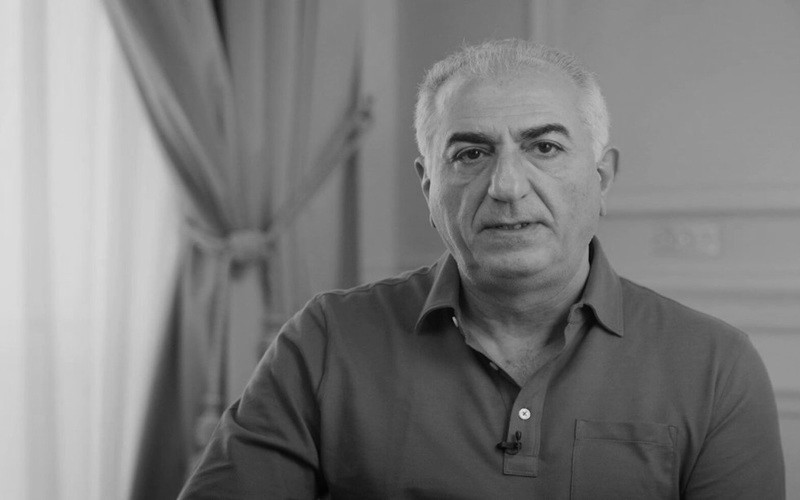

A controversial appearance reignites debate over the legacy of monarchy, repression, and accountability in Iran’s political future
Reza Pahlavi’s recent trip to Sweden—promoted by his supporters as an “official parliamentary visit”—has once again brought into sharp focus the enduring controversy surrounding the Pahlavi dynasty and its political ambitions. Far from signaling broad international legitimacy, reports indicate that his appearance was limited in scope, taking place in a small, side-room gathering attended by a narrow audience that included a handful of representatives from a right-wing political faction. This stark contrast between the promotional narrative and the actual setting raises fundamental questions about both intent and credibility.
More importantly, the visit has reignited a deeper and more consequential debate: can a political project rooted in a legacy widely associated with authoritarianism credibly position itself as a vehicle for democratic change in Iran?
Swedish daily Dagens Nyheter captured this tension succinctly, noting that “while the resistance movement in Iran is inherently anti-authoritarian, inviting Reza Pahlavi grants legitimacy to a figure whose political project is grounded in an authoritarian legacy.” The paper further drew a parallel to post-invasion Iraq, where figures such as Ahmed Chalabi emerged in political vacuums, presenting themselves as viable alternatives despite tenuous domestic legitimacy—often with destabilizing consequences.
At the center of the controversy lies not merely the question of political positioning, but one of historical accountability. During a press conference, when asked whether his father, Mohammad Reza Shah, had ever taken actions he disagreed with, Reza Pahlavi declined to offer any critical reflection. Instead, he stated that he is “proud” of his name, origin, and the legacy he represents.
This assertion is not a neutral expression of personal identity; it is a politically loaded statement. For many Iranians—particularly former political prisoners, victims of torture, and families of those persecuted under the monarchy—such remarks are perceived as a dismissal of documented historical grievances. The Pahlavi era, especially following the 1953 Iranian coup d’état against Prime Minister Mohammad Mossadegh, is widely associated with intensified repression, foreign dependency, and systemic corruption.
The role of the intelligence apparatus SAVAK remains central to this historical memory. Numerous reports, including those by Amnesty International, documented patterns of systematic torture, arbitrary detention, and extrajudicial killings. Techniques attributed to the agency—ranging from electric shocks to psychological torture devices—have left a lasting imprint on Iran’s collective consciousness.
Facilities such as Evin Prison, originally established during the monarchy and later expanded under the Islamic Republic, symbolize a continuity of repression that transcends political systems but remains rooted in institutional precedents set during the Shah’s rule. The prison’s reputation as a site of severe human rights abuses underscores the enduring weight of that legacy.
Against this backdrop, expressions of pride in such a lineage are not easily separated from their historical implications. They inevitably raise concerns about whether a future political order led or influenced by such figures would meaningfully diverge from past authoritarian practices—or merely reproduce them under a different guise.
None of this occurs in a vacuum. Iran today faces profound political, economic, and social crises, compounded by external tensions and internal dissent. In such conditions, political alternatives inevitably attract attention. However, history suggests that not all alternatives are equal in their capacity to deliver democratic transformation. The risk, as some analysts warn, lies in mistaking familiarity or visibility for legitimacy.
Ultimately, the Iranian people’s political trajectory will be determined not by exiled figures or international platform appearances, but by internal dynamics and the collective demand for accountability, representation, and justice. Any credible vision for Iran’s future must grapple honestly with the past—not obscure it, reinterpret it selectively, or invoke it with unqualified pride.