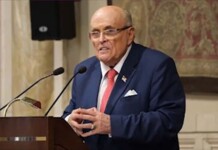
The Free Iran 2024 World Summit, a three-day event organized by the National Council of Resistance of Iran (NCRI), commenced on June 29, 2024, at their headquarters in Auvers-sur-Oise, north of Paris.
This annual gathering, which has become a focal point for supporters of democracy in Iran, brought together a diverse array of international political figures, human rights advocates, and Iranian expatriates.
The summit’s opening day set a powerful tone, emphasizing the urgent need for democratic change in Iran and outlining strategies to achieve this goal.
As the event began, thousands of Iranians also gathered in Berlin, creating a parallel demonstration of solidarity with their compatriots’ struggle for freedom.
This dual-location approach underscored the global nature of the movement and the widespread support for democratic change in Iran.
The summit’s first day was marked by passionate speeches from prominent figures, each bringing their unique perspective to the pressing issues facing Iran.
Former Canadian Prime Minister Stephen Harper delivered a compelling address, highlighting the Iranian people’s overwhelming rejection of the regime’s legitimacy. Harper pointed to the massive boycott of recent elections as clear evidence of this sentiment.
He emphasized that the international community must recognize and support the Iranian resistance, particularly the NCRI, as a credible alternative to the current oppressive regime.Mike Pompeo, former U.S. Secretary of State, built upon this theme, discussing the regime’s vulnerability in the wake of Ebrahim Raisi’s death.
Pompeo stressed that genuine change in Iran must originate from within, championed by the Iranian people themselves. He praised the NCRI’s vision for a free and democratic Iran, urging increased support for the organized resistance movement.
A pivotal moment of the day came with the address by Maryam Rajavi, President-elect of the NCRI. Rajavi presented her comprehensive Ten-Point Plan for Iran’s future, a roadmap that has gained significant traction among supporters of Iranian democracy.
This plan outlines a vision for Iran that includes political and social equality for women, a free market economy, freedom of expression and assembly, and the crucial separation of religion and state.
The plan’s presentation was met with enthusiastic approval from attendees and was subsequently endorsed by several speakers, including former German Minister Peter Altmaier, who praised it as a viable blueprint for Iran’s democratic future.
The summit’s first day also tackled the contentious issue of Iran’s nuclear program. Speakers unanimously called for a firm international stance against the regime’s pursuit of nuclear weapons.
They emphasized the critical need for coordinated global efforts to prevent Iran from obtaining such capabilities, viewing this as essential not only for regional stability but for global security.
Former U.S. Vice President Mike Pence provided another highlight of the day’s proceedings. Pence drew attention to the historically low turnout in Iran’s recent election, interpreting this as a clear sign of the regime’s waning power and legitimacy.
He commended the NCRI as a tested and proven resistance movement, expressing confidence in its ability to bring about lasting democratic change in Iran.
A recurring theme throughout the day was the extraordinary courage displayed by Iranian protesters and resistance units.
Despite facing brutal repression, these groups continue to fight tirelessly for freedom and democracy.
Speakers repeatedly called on Western governments to recognize and actively support this struggle, emphasizing that the Iranian people’s fight for democracy deserves robust international backing.
The human rights situation in Iran was another focal point of the day’s discussions. Speakers condemned the regime’s ongoing violations, including the execution of political dissidents and the systemic oppression of women.
They urged the international community to hold the Iranian regime accountable for these abuses, calling for concrete actions such as targeted sanctions and diplomatic pressure.
Throughout the summit’s opening day, participants stressed the importance of presenting a united front against the Iranian regime.
They advocated for increased economic sanctions, the formal recognition of the Islamic Revolutionary Guard Corps (IRGC) as a terrorist organization, and an end to attempts to revive the nuclear deal with Iran under its current terms.
The Free Iran 2024 World Summit’s first day served as a powerful platform to amplify the voice of the Iranian resistance and to galvanize international support for the cause of democracy in Iran.
It highlighted the growing momentum of the pro-democracy movement within Iran and underscored the crucial role of the NCRI in providing a viable alternative to the current regime. As the day concluded, there was a palpable sense of optimism among participants.
Speakers and attendees alike expressed hope for Iran’s future, envisioning a day when the country would rejoin the international community as a free, democratic, and peaceful nation.
They pledged their continued support for the Iranian people’s struggle and called on the global community to stand firmly on the side of freedom and democracy in Iran.
The summit’s opening day set a high bar for the following two days of discussions and presentations.
With a clear focus on practical strategies for achieving democratic change in Iran, the event promised to continue fostering important dialogues and forging crucial alliances in the ongoing struggle for a free Iran.
As attendees prepared for the second day of the summit, there was a shared sense of purpose and determination to build upon the momentum generated by this powerful opening session.