


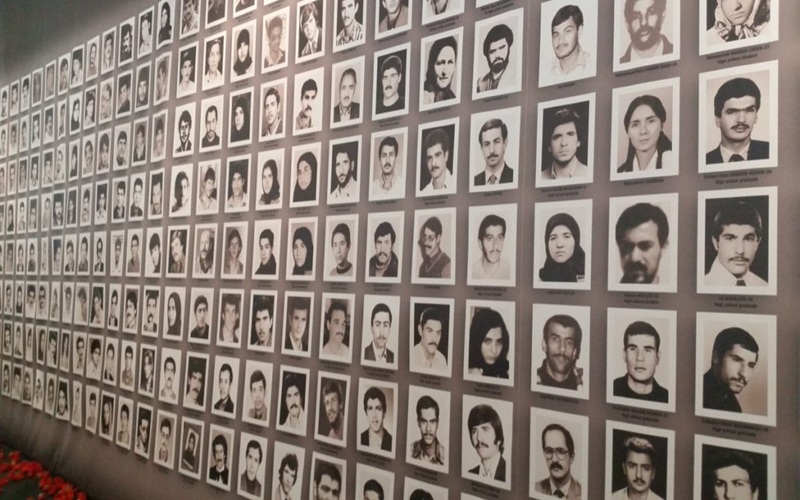

The campaign for justice over the 1988 massacre of Iran’s political prisoners did not begin decades later. It started while the executions were still underway, evolving into one of the world’s longest-running human rights accountability movements against state-sponsored crimes.
History often remembers atrocities only after the killing has ended. The victims are counted, the archives are opened, and years later the world begins asking what happened.
The 1988 massacre of political prisoners in Iran followed a different path.
Even as thousands of prisoners were being led before the regime’s infamous “Death Commissions” and executed within minutes, a campaign to expose the crime had already begun. Before the mass graves were hidden, before families even knew the fate of their loved ones, appeals were reaching the United Nations, international organizations, parliaments, and governments.
That campaign—the Justice Movement—has continued uninterrupted for nearly four decades.
Its history demonstrates that accountability for crimes against humanity is rarely achieved through a single investigation or court ruling. It is built through persistent documentation, testimony, international advocacy, and the refusal of survivors and victims’ families to allow history to be erased.
The First Alarm While the Executions Were Still Underway
The Justice Movement did not begin after the massacre became public knowledge. It began during the killings themselves.
In September 1988, while executions were continuing inside prisons across Iran, Massoud Rajavi, leader of the Iranian Resistance, sent an urgent telegram to then-UN Secretary-General Javier Pérez de Cuéllar, warning that the regime’s founder Ruhollah Khomeini had personally ordered the systematic execution of political prisoners.
The message described mass arrests, summary executions without trial, the disappearance of prisoners whose sentences had already expired, and reports that hundreds of bodies had been transferred from Evin Prison to Tehran’s Behesht Zahra cemetery within only a few days.
The appeal urged the United Nations to immediately dispatch an international delegation to inspect Iranian prisons before thousands more prisoners disappeared.
It was one of the earliest documented international warnings that a crime against humanity was unfolding in real time.
The Regime’s Strategy: Silence the Witnesses
The timing of the massacre was not accidental.
Only weeks after accepting the ceasefire ending the Iran-Iraq War, Khomeini’s regime faced growing internal instability and viewed imprisoned supporters of the People’s Mojahedin Organization of Iran (PMOI/MEK) as a political threat.
The regime established Death Commissions that interrogated prisoners with only a handful of questions. Those who remained loyal to their political beliefs were sent directly to the gallows.
Thousands who had already been tried and were serving prison terms—or had even completed their sentences—were executed without new judicial proceedings.
The regime also attempted to erase all evidence by cutting family visits, refusing to return bodies, and burying victims in secret mass graves.
The Justice Movement emerged precisely because survivors recognized that the regime intended not only to eliminate political opponents but also to eliminate the historical record.
International Advocacy Before the Internet Age
The campaign that followed was remarkable for its speed and scope.
During the final months of 1988, the Iranian Resistance organized international hunger strikes across numerous countries, demonstrations, parliamentary lobbying efforts, public meetings, and symbolic people’s tribunals to expose the executions.
Thousands of political leaders, parliamentarians, academics, lawyers, and human rights advocates appealed to the United Nations to intervene.
Lists containing the names of executed prisoners were compiled and delivered to international organizations despite the enormous risks involved. Eventually, more than 1,100 documented victims were submitted to the UN together with detailed evidence that the true number of executions reached many thousands.
This was long before digital communications or social media made rapid global campaigns possible.
Evidence That Could Not Be Buried
One reason the Justice Movement has endured is the extraordinary effort devoted to preserving evidence.
Over the years, survivors documented execution orders, identified members of the Death Commissions, mapped mass grave sites, collected testimonies from former prisoners, and recorded the names of victims from prisons throughout Iran.
In the years that followed, public conferences in Paris and Washington presented extensive documentation naming senior regime officials alleged to have participated in the massacre and identifying dozens of suspected mass burial sites.
Later, “People’s Tribunals” were established in cities including The Hague, Paris, Stockholm, London, Washington, Los Angeles, Nuremberg, and Toronto, where former prisoners and victims’ relatives testified under procedures intended to preserve evidence for future international prosecutions.
These proceedings served another purpose beyond documentation: they preserved the voices of witnesses before time could silence them.
Survivors Refused to Let the World Forget
The Justice Movement was never solely an institutional effort.
It has been carried by mothers searching for unmarked graves, former prisoners recounting torture decades later, families preserving photographs of disappeared relatives, and witnesses who chose to testify despite years of trauma.
Many described not only executions but systematic torture, public hangings, violence against women prisoners, and the killing of prisoners whose only “crime” was refusing to renounce their political beliefs.
Their testimony transformed individual grief into collective historical evidence.
Accountability Delayed Is Not Accountability Denied
For many years, governments treated the 1988 massacre as a historical event rather than an ongoing issue of international justice.
Yet developments in recent years—including growing recognition by UN experts, human rights organizations, and legal scholars—have increasingly characterized the massacre as a potential crime against humanity and have renewed calls for independent international investigations.
The central demand of the Justice Movement has remained remarkably consistent since 1988: those who ordered, organized, and carried out the executions should face independent judicial accountability rather than political protection.
That principle appeared in the earliest appeals sent to the United Nations and continues to define the movement today.
Why the Justice Movement Still Matters
The significance of the Justice Movement extends far beyond the victims of 1988.
The same structures of impunity that protected those responsible for the massacre have enabled decades of subsequent repression, including the violent suppression of protests, widespread torture, enforced disappearances, and the continuing use of executions as an instrument of political control.
Without accountability for past crimes, new abuses become easier to commit.
The Justice Movement therefore seeks not only recognition of a historical atrocity but also the dismantling of the culture of impunity that has shaped Iran’s modern history.
Nearly four decades after the executions began, the movement’s central message remains unchanged: justice delayed cannot become justice denied. As long as the victims remain without accountability, the demand for truth, remembrance, and international justice will continue to resonate far beyond the prison walls where the massacre began.