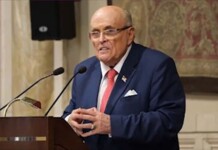
The second day of the Free Iran 2024 World Summit, held on June 30, 2024, built upon the momentum of the opening session, focusing on the Iranian Resistance’s roadmap to establishing a democratic republic.
This pivotal event, organized by the National Council of Resistance of Iran (NCRI), continued to draw world leaders, lawmakers, and human rights activists from across four continents, all united in their support for a free and democratic Iran.
The day’s proceedings were set against the backdrop of the recent sham elections in Iran, which saw an unprecedented boycott by the Iranian people.
This act of defiance resonated strongly with the summit’s participants, who interpreted it as a clear rejection of the current regime and a call for fundamental change.
German MEP Niels Geuking opened the day’s speeches by emphasizing the Iranian people’s desire for a free society and equality. He highlighted the significance of the election boycott, stating, “By boycotting the sham election, the people cast a solid ‘no’ to the regime”.
Geuking called for stronger EU policies against the regime and recognition of the NCRI as the legitimate opposition, praising Maryam Rajavi’s Ten-Point Plan as a foundation for a democratic Iran.
Lord Dholakia, Co-Deputy Leader of the Liberal Democrats in the House of Lords, addressed the meaninglessness of elections under the current Iranian system, describing them as “deceptions to legitimize an unpopular, faltering dictatorship”. His words underscored the international community’s growing recognition of the regime’s lack of legitimacy.
A highlight of the day was the address by Mrs. Maryam Rajavi, President-Elect of the NCRI. She celebrated the significant triumph marked by the nationwide boycott of the sham elections, with 88 percent of eligible voters abstaining.
Rajavi interpreted this as a clear indication of the Iranian people’s determination to overthrow the clerical regime. She also pointed out the regime’s internal divisions and vulnerabilities exposed by the election process.
Rajavi’s speech touched on the regime’s dual strategy of repression and seeking international appeasement. She drew parallels between the current appeasement of Iran and Europe’s historical appeasement of Nazi Germany, warning of the dangers of such a policy.” It paves the way for the dark forces of history, representing a dagger to the heart of freedom, peace, justice, resistance, and human rights,” she stated.
Mitchell Reiss, former US Special Envoy for Northern Ireland, provided an insightful analysis of the MEK and NCRI’s efforts against the Tehran regime across three domains: inside Iran, outside Iran, and in the battle of ideas. He highlighted the growing strength of the democratic resistance movement within Iran and the need to counter misinformation about the MEK and NCRI internationally.
The summit also heard from PMOI supporters like Nasser Sharif and Firouz Daneshgari, who emphasized the PMOI’s role as the only viable democratic alternative to the current regime. They highlighted the expansion of Resistance Units within Iran and rejected any policy of appeasement towards the regime.
International support for the Iranian resistance was evident in speeches from various global leaders. Ryszard Kalisz, former Minister of Interior and Administration of Poland, called for increased sanctions on Iran and an end to any economic or legal relations with the regime.
Marius Matijošaitis, a Member of Parliament from Lithuania, drew parallels between Iran’s struggle and Lithuania’s own history of oppression, expressing solidarity with the Iranian people’s quest for freedom.
The summit also addressed legal aspects of the struggle, with Izabela Konopacka, President of Fédération des Barreaux d’Europe, praising Maryam Rajavi’s leadership and the Ten-Point Plan for a democratic Iran.
Emanuelle Pozzolo, Member of the Chamber of Deputies of Italy, highlighted the regime’s use of terror and international terrorism to maintain power, calling for international recognition of the NCRI as a legitimate alternative.
Throughout the day, speakers consistently emphasized the need for a united front against the Iranian regime, calling for stronger international action, including the designation of the IRGC as a terrorist organization and support for the Iranian people’s right to resist dictatorship.
As the second day of the summit concluded, there was a palpable sense of determination and hope among participants.
The event had not only shed light on the current situation in Iran, but also presented a clear vision for the country’s democratic future.
With one day remaining, the Free Iran 2024 World Summit continued to serve as a crucial platform for advancing the cause of freedom and democracy in Iran, uniting voices from around the world in support of the Iranian people’s struggle for a free and just society.