The recent announcement by Iranian regime officials regarding the increase in freight and passenger transportation fares has sparked considerable concern, especially among low-income groups, despite being seen as positive for drivers.
Increase in Freight Fares
The head of the Road and Transport Organization has informed provincial authorities of a 30% increase in freight fares. According to the new directive, the transportation index rate will rise from 5,500 Rials per ton-kilometer to 7,150 Rials. This change will be implemented uniformly across the country starting June 2, 2024.
This increase comes amidst demands from the country’s truckers’ union for a 60-70% hike in transportation fares. The vice president of the truckers’ trade unions highlighted that last year, a 63% increase was proposed by the road organization but was eventually reduced to 30% after opposition from truckers.
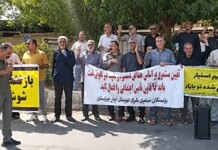
Previously, truck drivers had protested against the government’s delay in increasing freight rates, viewing the stagnation as a disregard for the rights of drivers and truck owners. Fakhreddin Shariati, a transport sector activist, emphasized that despite decades of inflation, the ton-kilometer index and freight rates have not seen proportional increases. He stressed that while fare increases are justified, they should not be exploited by profiteers.
Passenger Fare Increases
Shadi Maliki, head of the Tehran Taxi Organization, announced that electric taxi drivers could increase fares by up to 80%, though for public welfare, a 50% cap compared to the normal fare has been set. Concurrently, the sale of passenger train tickets for July 2024 began on July 14, with a 30% price increase.
The market regulation headquarters has authorized this increase, with Deputy Minister Kamal Hadianfar justifying it by claiming public perception of train tickets being too cheap. He mentioned plans to raise prices for plane, bus, and train tickets further.
Economic Impact on Society
The increase in transportation fares directly affects living expenses. Given that Iranian salaries and incomes lag behind the inflation rate, fare increases of 30%, 50%, and 30% for freight, electric taxis, and trains, respectively, exacerbate economic pressures on society.
One immediate effect is the rise in the prices of basic goods, as transportation costs significantly influence final prices. Low-income and vulnerable groups, who already spend a large portion of their income on essentials like food, housing, and transportation, are disproportionately affected. These fare increases reduce their purchasing power, making it harder to meet basic needs.
For low-income families, who were previously struggling to make ends meet, the rising costs can severely impact their standard of living. Additionally, continuous expense increases without corresponding income growth can lead to widespread dissatisfaction, reduced worker productivity, and potential social unrest.
Government Response and Possible Solutions
The Iranian regime has faced multiple protests due to inadequate attention to drivers’ conditions and insufficient fare increases. The disparity between inflation rates and salary increments has created significant societal challenges.
While drivers need fare increases to cope with high living costs and inflation, these increases should not excessively burden the public. A potential solution could be providing direct subsidies to drivers to enhance their income without raising fares. However, the regime has been reluctant to implement this measure.
Tax reforms and reduced taxes for drivers could also help lower their costs. Balanced decisions are essential to protect drivers’ rights while avoiding additional economic strain on the public. Failure to address these issues could lead to widespread dissatisfaction and significant economic and social consequences.