

On Sunday, July 28, Iran faced an unprecedented nationwide shutdown due to extreme heat. The government had already taken drastic measures, announcing reduced working hours for banks and government offices until 10 am starting from Saturday, July 27, in an effort to conserve electricity. The crisis has reached such proportions that factories are now denied power two days a week.
The environmental toll is equally alarming. Land subsidence is occurring in cities and plains, six million palm trees have withered, wetlands have dried up, and gas consumption has surpassed production levels. The situation is so dire that in winter, factories face temporary gas cutoffs. For several months, production facilities have been unable to register new orders.
In a desperate attempt to address water shortages, authorities are desalinating Persian Gulf water and transporting it over distances of a thousand kilometers to cities in Khorasan, Kerman, and Yazd provinces. The energy sector is equally strained, with daily gasoline consumption reaching 120 million liters. To meet domestic demand, Iran imports two to five billion dollars worth of gasoline annually. Additionally, approximately 20 billion dollars are spent on importing basic goods. Meanwhile, oil – the country’s primary export – is sold at minimum prices, and the efficiency of oil wells has plummeted.
These issues represent only a fraction of the disorder plaguing Iran, a situation that shows no signs of abating. The country’s descent into this state is neither surprising nor a one-time occurrence. Rather, it is the culmination of four decades of destructive governance by the current regime.
The healthcare system is also in crisis. In a country rich in natural resources, it’s unfathomable that pharmacies lack essential medicines. This dire situation has led to widespread despair, evident in the 90% of the population who abstained from voting in the recent presidential election.
Economists use the misery index to quantify people’s desperation. This index, calculated by adding the annual inflation rate to the unemployment rate, provides a measure of economic well-being. A higher misery index indicates unfavorable economic conditions, as unemployment cuts off people’s income while inflation increases the cost of goods and services.
Research shows that as the misery index rises, so do negative societal consequences such as increased crime rates, social unrest, lack of trust in economic conditions, and a pervasive sense of hopelessness, particularly among the youth.
Recent statistics reveal that Iran’s misery index ranges from 40% to 57.2%. The Iran Statistics Center reported in March 2022 that the country’s misery index had increased by 155% over five years, rising from 19.3% to 49.4% in 2021. These figures were derived from an examination of eight areas: economic, social, cultural, educational, health, infrastructure, gender, and intergenerational factors.
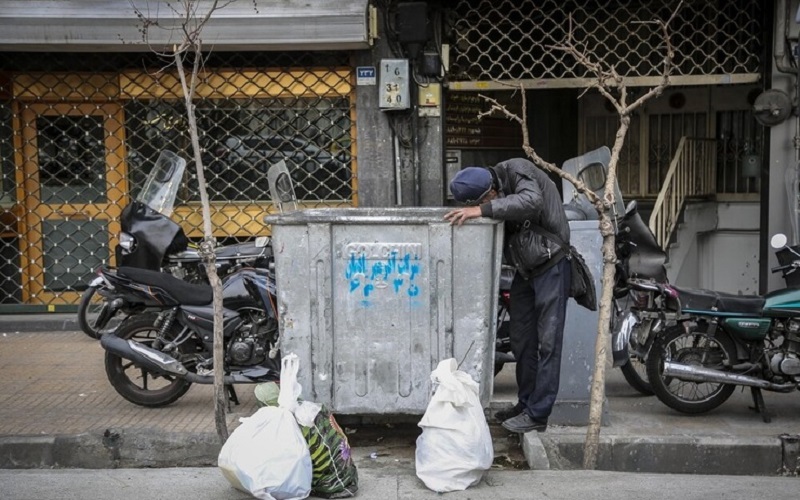
The human toll of this economic crisis is staggering. Out of Iran’s population of 80 million, more than 30 million people live below the absolute poverty line. Approximately 38% of Iran’s population lives in absolute poverty and requires livelihood assistance. Even more alarmingly, non-governmental sources at the beginning of this summer indicated that over 42 million people – about 50% of Iran’s population – now live below the absolute poverty line.
Both official and unofficial statistics consistently show that poverty is not only persisting but worsening. The government’s economic policies and continuously rising expenses are pushing more Iranians into poverty each month, with no end in sight to this troubling trend.