
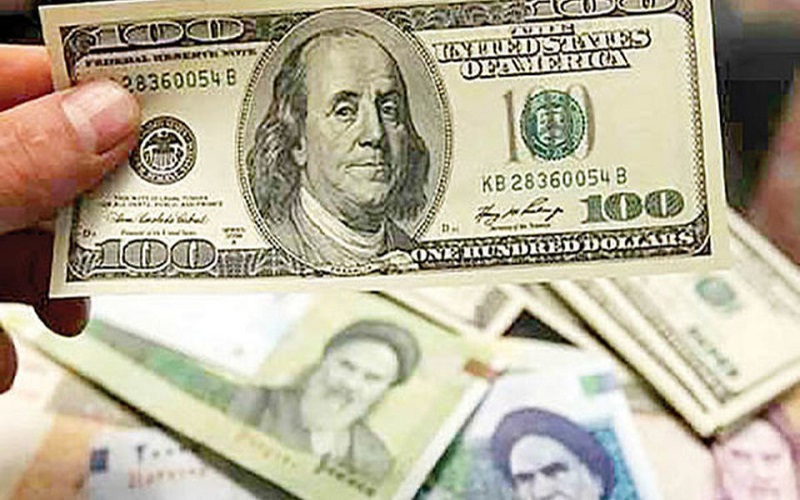

The Minister of Economic Affairs and Finance of the Iranian regime, Ehsan Khandozi, has recently made a bold claim regarding the country’s economic performance. On Saturday, August 10, Khandozi announced that Iran had achieved its highest level of ‘credible foreign investment’ in 16 years during 2023. He further asserted that “Iran was able to attract the trust of different countries despite the pressure of the sanctions,” citing a figure of $5.5 billion in foreign capital attraction over the past year.
However, these claims require careful scrutiny. It’s crucial to understand that Iranian officials often present statistics of ‘foreign investment approved by the government’ as ‘attracted foreign capital.’ In reality, the $5.5 billion figure cited by Khandozi represents permits issued by the government for potential foreign capital attraction, not actual investments realized.
Contradicting Official Claims
In stark contrast to the government’s optimistic narrative, data from the UN Conference on Trade and Development (UNCTAD) presents a different picture. According to UNCTAD, Iran attracted only $1.422 billion in foreign direct investment last year, marking the lowest figure in three years. This places Iran significantly behind its regional competitors: Turkey attracted seven times more foreign direct investment, Saudi Arabia nearly nine times more, and the United Arab Emirates an impressive 22 times more than Iran.
Global Context and Capital Flight
In the global context, Iran’s share of foreign direct investment is minimal. While countries worldwide attracted approximately $1.332 trillion in direct foreign investment last year, Iran’s portion amounted to merely one-thousandth of this figure.
The discrepancy between government claims and international data is further highlighted by reports from Iran’s Central Bank. In the first nine months of the previous year alone, over $20 billion in foreign capital reportedly left the country, dwarfing the claimed inflows.
Historical Comparisons and Memorandums of Understanding
The regime’s assertions of ‘record-breaking’ foreign capital attraction are further undermined by UNCTAD statistics. Over the past three years, Iran attracted a total of $4.347 billion in foreign direct investment, which is $876 million less than of what the previous administration claimed.
Much of what the regime presents as ‘attracted foreign capital’ appears to be investment memorandums signed with Russian and Chinese companies, many of which have not progressed beyond the initial agreement stage. According to the American Enterprise Institute, the last significant Chinese investment in Iran was in 2016, a $600 million deal between CNPC China and the National Iranian Oil Company for the Yadavaran oil field development, which was left unfinished after the U.S. withdrawal from the JCPOA.
Budget Discrepancies and Economic Realities
The lack of substantial foreign investment is reflected in Iran’s budget issues. Gholamreza Tajgardoon, a member of the regime’s parliament and Chairman of the Program, Budget and Calculations Commission, cited a review by the parliament’s research center revealing significant discrepancies in the 2023 budget. The report indicated a severe deficit and high disparity between budget items and their performance.
Tajgardoon elaborated that in 2023, the government’s main foreign exchange expenditure exceeded $18 billion, of which $12 billion was financed through the government budget, while nearly $6 billion of deficit was covered by foreign exchange resources from the Central Bank and the National Development Fund.
Economic Claims vs. Reality
The economic team of the previous government has made various claims of economic improvement, including reduced unemployment rate, decreased liquidity and inflation rate, increased oil sales, overall economic growth, and improved economic conditions for the people.
However, critics argue that the reported decreases in inflation and unemployment are due to changes in statistical methodologies rather than genuine economic progress. The decrease in inflation is attributed to changes in the statistical base year, while the reduction in unemployment is linked to the departure of the active workforce and jobseekers from the labor market.
The increase in oil sales, while noted, is believed to have occurred with U.S. acquiescence but remains hampered by sanctions. This has led to significant discounts of up to 30% on oil sales and difficulties in money transfers, with up to 20% lost in the process of moving funds.
Public Skepticism and Criticism
The government’s portrayal of the country’s economic conditions has even drawn criticism from within its own ranks. A member of the Mashhad Chamber of Commerce has gone so far as to demand a complaint be filed against the 13th government, declaring that the reports presented to the people are “pure lies” and accusing the government of having “killed economic activists” in its three years of operation.
In July, an Iranian newspaper published a report criticizing the ‘statistics’ provided by government institutions. Citing an economic researcher, the report called the claimed 24% decrease in inflation compared to the beginning of 2023 “a joke.”
In conclusion, while the Iranian government continues to tout record foreign investment and economic gains, a closer examination of international data, domestic economic indicators, and critical voices within Iran suggest a more challenging and complex reality for Iran’s economy.