


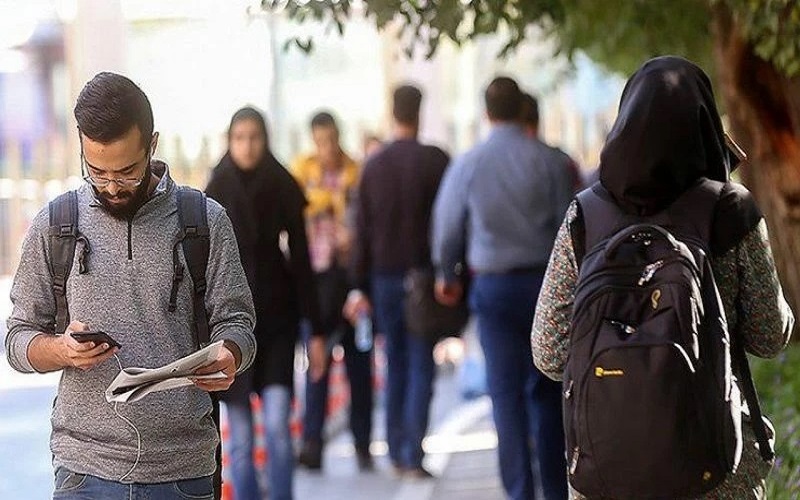

Recent investigations reveal that Iran’s NEET (Not in Education, Employment, or Training) population ratio significantly exceeds both global and regional averages. NEET individuals are those without a job who are not classified as ‘unemployed’ because they are not actively seeking employment. If the NEET population in Iran were to enter the job market and fail to find work, the country’s youth unemployment rate could increase more than sixfold.
The NEET Population in Numbers
According to 2020 statistics, out of Iran’s 16.7 million young people, more than 6.3 million (38%) are classified as NEET, meaning they do not participate in the national production process. This figure starkly contrasts with global and regional averages: 22.1% worldwide, 24.4% in Turkey, 31% in Pakistan, and 34.4% in Arab countries.
Economic Implications
The high proportion of NEETs in Iran is a severe warning for the economy. Contributing factors include economic stagnation, low growth, instability, foreign sanctions, inadequate education and skill training platforms, and cultural issues. Surveys indicate that Iran holds the world record for the NEET population. Young people in countries with insufficient employment growth and high unemployment rates are more likely to abandon the labor market, facing economic uncertainty and an uncertain future.
Understanding the NEET Demographic
The NEET demographic includes all individuals aged 15 and over who are neither employed nor enrolled in education or training programs. In Iran, out of the 16.7 million working-age youth, over 6.3 million are unemployed and unproductive, representing 38% of this population, compared to 22% globally.
The NEET rate in low-income countries is nearly double that of high-income countries, but Iran’s rate is even higher than many low-income nations and neighboring countries like Pakistan. Macroeconomic instability, economic recession, sanctions, and the lack of strategic planning have exacerbated this demographic challenge, turning a potential economic opportunity into a demographic burden.
Factors Contributing to the NEET Population
Several factors contribute to the NEET population in Iran:
- Discouraged Workers: Young people who have lost hope of finding a job and no longer seek employment.
- Family Caregivers: Individuals who leave the workforce to care for family members.
- Health Issues: Youth who are sick or disabled.
- Alternative Pursuits: Young people engaged in travel or artistic activities.
Demographic Shifts and Economic Impact
Over recent decades, Iran’s age pyramid has shifted towards an aging population, driven by declining fertility rates. This shift means the young population, which could have driven economic growth, now poses significant economic challenges. The participation of society, especially youth, in economic activities and the labor market is crucial for economic growth.
From 2011 to 2020, the active young population in Iran decreased from 8 million to 5.6 million. This decline indicates that Iran has failed to capitalize on its demographic window, hindering economic participation.
Unemployment and Economic Well-being
The unemployment rate among 15-29-year-olds, the primary job-seeking demographic, is currently more than twice that of the entire population aged 10 years and older. In 2020, the out-of-market youth population was 11 million. The inability to create sufficient jobs and inadequate youth skills have led to a large accumulation of unemployed young people, threatening economic well-being and posing a significant problem for Iran.
Policy Challenges and Gender Disparities
As of 2019, there were over 16.6 million young working-age individuals in Iran, with policy efforts addressing only 1.2 million unemployed youth. This narrow focus on unemployed youth overlooks broader economic and social damages affecting all youth demographics.
Interestingly, over 73% of Iran’s NEET population are women, likely due to unintentional and involuntary factors such as housework and caregiving responsibilities. This gender disparity highlights significant social and economic challenges.
Regional Disparities and Rural Challenges
Labor force surveys from 2019 and 2020 show that the NEET rate among 15-29-year-olds is 37% in urban areas and over 41% in rural areas. Rural youth are more likely to join the NEET population due to lower education levels, an inadequate education system, and unattractive rural job opportunities.
Provincial NEET Rates
In 2020, the highest NEET rates were in West Azerbaijan (47.6%), Sistan and Baluchistan (47.5%), and Ilam (47.4%). The lowest rates were in Yazd (27.2%), South Khorasan (29%), and Semnan (29.8%). Provinces with NEET rates exceeding 40% include West Azerbaijan, Sistan and Baluchistan, Ilam, Kermanshah, Kurdistan, Khuzestan, Golestan, Lorestan, Kohgiluyeh and Boyer Ahmad, North Khorasan, and Hamedan.
The Urgent Need for Policy Intervention
The increasing NEET population is an economic and social warning. Ignoring this demographic wastes valuable human capital and demographic opportunities, leading to social damage. Economic, social, and cultural policies in Iran rarely address youth as a target demographic.
A large portion of the NEET population is engaged in informal, unauthorized, and unfulfilling employment. Approximately 70% of Iran’s workforce operates under informal contracts, and the prevalence of temporary contracts creates a hostile environment for workers. Low wages in informal sectors diminish young people’s desire to work, and the commercialization of education restricts access to the upper classes.
Educational Inequities
Recent statistics show that 80% of Sharif University’s capacity is filled by students from the top two income deciles. Similar trends are observed at Tehran University (60% from the top three deciles) and Allameh University (65% from the top four deciles). This alarming trend highlights the neglect of education, limiting opportunities for social mobility and class equity.
Conclusion
Iran’s high NEET rate and existing inequalities are rooted in destructive and irrelevant policies. Addressing these challenges requires comprehensive policy interventions focusing on education, skill training, and economic stability to harness the potential of Iran’s young population for economic growth.