


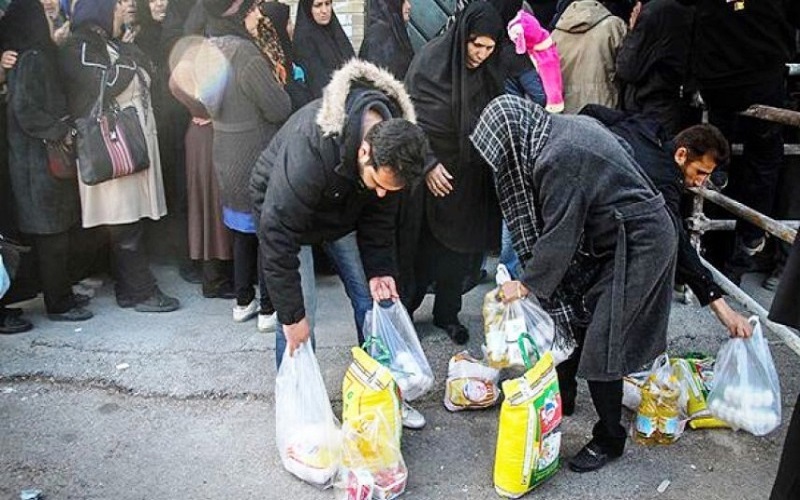

A recent report by the Food and Agriculture Organization (FAO) of the United Nations has revealed a troubling statistic: more than six percent of Iran’s population is grappling with malnutrition. The report, titled The State of Food Security and Nutrition in the World, ranks Iran 90th out of 167 countries in terms of food security. This position indicates that the situation in at least 89 countries is better than in Iran, while 77 countries face worse conditions.
Global Context: Iran’s Position in Food Security
The report also sheds light on the global food security landscape, identifying Madagascar as the country with the highest rate of malnutrition, where over 51% of the population suffers from food insecurity. In stark contrast, nations such as the United Arab Emirates, Austria, China, France, Germany, and the United States report malnutrition rates of less than 2.5%.
Malnutrition’s Impact on Children
Children are particularly vulnerable to malnutrition, more so than other age groups. The FAO report highlights that nearly 150 million children under the age of five worldwide suffer from food poverty, leading to disrupted growth and development.
In Iran, the absence of a precise and effective monitoring mechanism has resulted in a lack of accurate statistics on the number of people, including children, affected by food insecurity. However, government officials have acknowledged that eight provinces—Kerman, Kohgiluyeh and Boyer Ahmad, South Khorasan, Sistan and Baluchistan, Hormozgan, Khuzestan, Bushehr, and Ilam—are particularly at risk.
Government Response: A Support Program with Flaws
In response to the growing crisis, Iranian officials launched a support program in October 2023, aimed at distributing essential food items to children through a coupon system. This program provides monthly stipends of 1 million tomans for the lowest five income deciles and 600,000 tomans for the 6th and 7th deciles. Despite extensive government promotion, the program has two major shortcomings. Firstly, the food subsidy amount does not adequately cover children’s needs, given the high inflation rate. Secondly, the Ministry of Health has only identified 180,000 children as eligible for assistance, whereas the actual number of food-insecure children is likely much higher.
Health Implications of Malnutrition
Malnutrition has severe health consequences. In adults, it can lead to a range of diseases, while in children, it disrupts growth, resulting in stunted growth, obesity, or extreme thinness. According to data from the Ministry of Health, more than 9% of Iranian children are overweight—a problem that also affects adults.
Contrary to common belief, malnutrition does not solely arise from insufficient food. Overconsumption or imbalanced intake of calories and nutrients can also lead to malnutrition. Many people, lacking access to nutritious foods, resort to cheaper, low-quality options, which often results in obesity and other health issues.
Economic Barriers to Proper Nutrition
The state-run Fararu website reports that many Iranian families are unable to afford essential nutrients such as fresh fruits, vegetables, legumes, meat, and milk. Instead, they turn to cheaper, calorie-dense foods high in fat, sugar, and salt, which contributes to the rising number of overweight and obese individuals.
A report by the state-run Donya-e Eghtesad newspaper highlights the economic strain on families. Currently, a family of three needs to spend between 1,200,000 and 2,800,000 tomans per month to purchase a basic fruit basket. For a worker earning less than 10 million tomans monthly, affording this amount is nearly impossible, forcing many to forego fruits and necessary vitamins in favor of low-cost, low-nutrient foods.
This economic pressure is not limited to fruits and vegetables. Trade union activists have repeatedly reported declining demand for red meat, chicken, eggs, rice, dairy products, and even beans, further indicating widespread food insecurity.
The “Minimum Basket” Program: A Flawed Solution
In an attempt to address these issues, the government introduced a “minimum basket” program designed to ensure a baseline of daily and monthly food intake for health. However, Iran’s labor community has criticized this basket, arguing that it fails to meet the minimum caloric needs of families. The Ministry of Health, under government orders, reduced the required calorie intake and the per capita allocation of high-inflation items like meat and rice in this basket.
Despite these concerns, the Supreme Labor Council used this inadequate “minimum basket” as the basis for determining workers’ wages in March 2024, resulting in only a 27% increase in salaries—about one-third of the current subsistence basket. This wage increase falls far short of matching the inflation rate, leaving minimum-wage earners struggling to cover even basic expenses, such as rent, let alone adequate nutrition.