


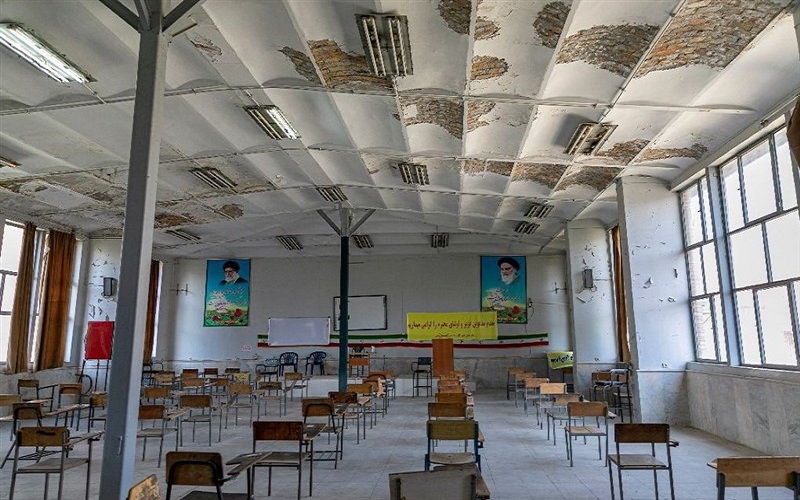

The deteriorating state of schools in Iran has become a critical issue, with years of neglect leaving students exposed to serious safety risks. Despite ongoing discussions about closing unsafe and overcrowded schools, little progress has been made.
Many schools have outlived their structural lifespan, and incidents such as fires and collapsing walls continue to endanger students. Even private schools operating in old residential buildings lack sufficient safety measures. While the authorities are aware of these problems, economic challenges and persistent neglect have prevented any meaningful action from being taken.
Years ago, the government promised to demolish worn-out schools, but these pledges have gone unfulfilled. Worse still, some schools are now facing issues of ground subsidence, further compromising their stability.
As time passes, even schools that were once considered safe are deteriorating and joining the growing list of dilapidated institutions. In addition to structural problems, many of these schools suffer from inadequate heating systems and a lack of safety features, increasing the likelihood of accidents.
Several tragic incidents in recent years highlight the dangers posed by unsafe schools. One of the most devastating examples is the 2012 Shinabad school fire, which killed two students and left 27 others with severe injuries.
The fire was caused by non-standard heaters and the absence of safe emergency exits. Other accidents, such as carbon monoxide poisoning in Kashan schools and the collapse of school walls in Chabahar, further underscore the perilous conditions faced by students.
This issue is not confined to public schools. Many private schools operate out of old houses, some of which are over 40 years old and structurally unfit for educational purposes. According to statistics, a significant number of students attend these schools, putting them at considerable risk.
Despite being fully aware of the dire state of school safety, authorities have delayed addressing the issue due to economic constraints and a lack of funding. The only viable solution to prevent further accidents is to revive and enforce a comprehensive safety plan for schools and other public buildings such as hospitals and service centers.
However, any further delay in implementing such measures could lead to more catastrophic events. Experts warn that without urgent action, over 100 schools could collapse within the next year.
According to the latest data from regulatory agencies, one-third of the country’s schools are unsafe. This alarming statistic means that approximately 30% of Iranian schools do not meet basic safety standards for students.
Yet, education officials often downplay or deny these reports, offering little comfort to concerned parents and the public. The central question remains: who is responsible for ensuring the safety of school buildings, and why are schools being reopened without thorough inspections?
In the absence of a robust response, the lives of countless students remain at risk, and without immediate intervention, the potential for future disasters looms large.