


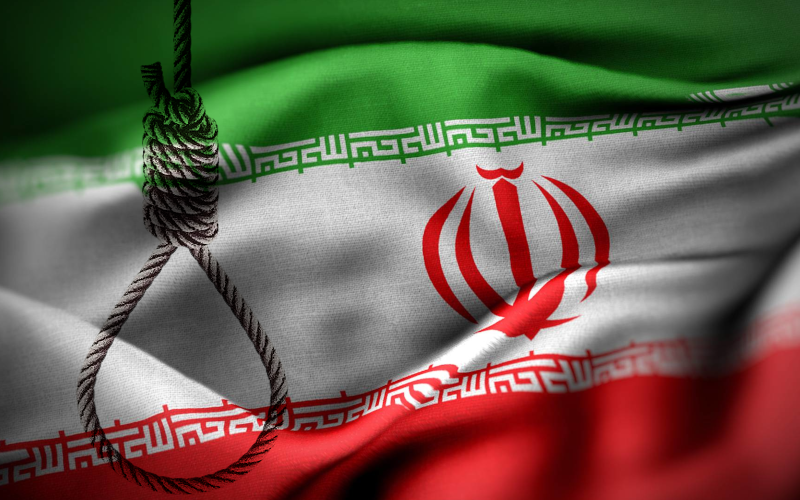

The alarming increase in political and social executions in Iran following the rise of the new president reflects a deliberate intensification of state repression aimed at quelling internal dissent. The Iranian regime’s notorious machinery of executions and systematic oppression has once again been activated, with chilling regularity. On October 16 and 17, the regime carried out the execution of 15 prisoners. This horrifying statistic underscores the severity of the crackdown and reveals the leadership’s profound fear of potential uprisings.
Of those executed since Masoud Pezeshkian took office, 12 were women—highlighting the regime’s use of execution as a tool not just of punishment, but of political intimidation and control under the leadership of Pezeshkian. This surge in executions is not only a legal punishment, but a deeply entrenched strategy to stifle social unrest.
Recent Executions: A Grim Catalogue
On Thursday, October 17, six prisoners were executed, including Abbas Karimi (36) and Mohammad Ali Najafi (35) in Isfahan, alongside two others in Qazvin and two more in Qom. A day earlier, on October 16, nine additional prisoners faced the same fate. Among them were Rasul Fili and a female prisoner in Hamadan, as well as Abdul Bari Tajik, Pasha Pashto, Javid Ahmad Khani, and Rahman in Qezel Hesar Prison. Other victims included Mohsen Mokhtari in Shiraz and a prisoner in Mashhad.
This wave of state-sanctioned killing, occurring within a two-day span, is part of a broader increase in executions since the new government took power in August 2024. Official statistics suggest that at least 316 people, including 12 women, have been executed in just a few short months—a horrifying indicator of the regime’s attempt to instill fear and preempt any form of public protest.
Executions as a Tool of Political Control
These executions are not solely responses to criminal acts, but rather represent a tool of political and social control. The Iranian government, with a long history of human rights abuses, routinely employs torture and executions to silence dissent and maintain its grip on power. The current wave of killings is part of a systematic policy designed to prevent and suppress any emerging protest movement.
For over four decades, the regime has violated human rights with impunity. Torture, forced confessions, and executions have become regular instruments of its governance. In this context, the recent executions form a terrifying strategy meant to contain the growing unrest seen across the country.
A Call for International Action
The international community cannot afford to remain silent in the face of such widespread violations of human rights. Diplomatic and economic relations with Iran, a regime now notorious for leading the world in state executions, must be conditioned on the cessation of these brutal practices. Engaging with a government that continues to commit systematic crimes without taking serious steps to stop these anti-human actions is tantamount to condoning them.
Human rights principles should be at the forefront of any interaction with the Iranian regime. The international community must demand the immediate cessation of these crimes and hold the Iranian leadership accountable for their long-standing record of human rights violations. International courts should pursue the prosecution of those responsible for the decades of repression and, if necessary, bring charges for crimes against humanity and genocide.
Conclusion: The Dire Human Rights Situation in Iran
The situation in Iran is undeniably dire. The recent wave of executions is only one aspect of the regime’s broader campaign to silence dissent and maintain its grip on power. International pressure, through targeted sanctions and the suspension of diplomatic ties, is crucial to forcing the regime to halt its barbaric policies and face justice for its extensive history of human rights abuses.