


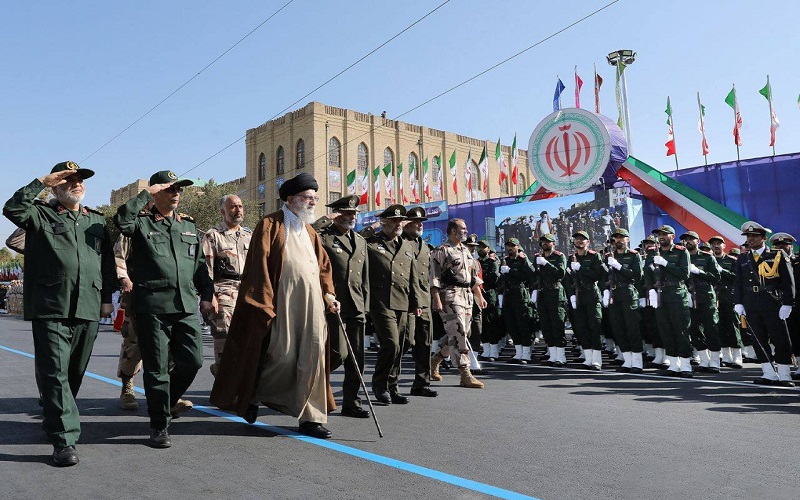

In the first budget bill under President Masoud Pezeshkian, Iran’s new administration has proposed a substantial increase in military spending, requesting a 200% rise in the defense budget for 2025. Fatemeh Mohajerani, the government spokesperson, described the proposed budget hike as essential for strengthening the nation’s defense infrastructure but did not disclose the total amount allocated.
Breakdown of Iran’s Military Budget
Officially, the proposed military budget is divided among the Iranian Army, the Islamic Revolutionary Guard Corps (IRGC), the Basij, and related institutions. Although the exact figures remain undisclosed, analysts believe the IRGC and its branches, including the elite Quds Force, are expected to receive the bulk of this increase. In addition to the standard military budget, substantial funds are likely reserved in undisclosed accounts for Iran’s support of proxy forces across the Middle East, as has been common practice in recent years.
In 2024, Iran’s official military budget stood at 470 trillion tomans, roughly one-sixth of the total national budget. However, the actual military expenditures rose when parliament approved an additional 132 trillion tomans in crude oil revenue earmarked for the armed forces. Iran remains unique among nations in that its military directly participates in national resource sales, notably oil, effectively granting the armed forces direct access to a portion of the country’s economic lifeblood.
Doubling Defense Amid Regional Tensions
Pezeshkian’s intent to double Iran’s military budget emerges against a backdrop of escalating tensions with Israel, fueling regional instability and heightening the country’s defense posture. In recent statements, Iranian officials have claimed a high level of “readiness” for escalated countermeasures, hinting at a more aggressive stance for the coming year. Observers fear this shift signals a commitment to military expansion at the expense of the Iranian economy and the wellbeing of its citizens.
Military Spending Versus Economic Hardship
Iran’s 2025 budget proposal allocates 47% of oil export revenue to the armed forces, while the government’s share from these resources stands at 43%. According to the third note in the budget bill, of the estimated 1,196 trillion tomans in revenue from crude oil, gas, and condensate exports, 561 trillion tomans will be directed toward military expenditures. This amount is nearly quadruple the funds allocated for defense from oil revenues in the previous year. An additional 126 trillion tomans are earmarked for “special projects” related to security and defense, though these remain vague and undisclosed.
The reliance on oil resources to bolster defense spending remains controversial. Iran’s current budget directs 14.5% of oil revenues to cover oil company expenses, but, under this new bill, the armed forces are exempted from paying into this fund, with the government covering these costs directly. Critics argue this exemption places a significant burden on the national economy, particularly in light of Iran’s continued economic struggles, high inflation, and capital flight.
Persistent Economic Challenges and Financial Transparency Issues
Despite the ambitious revenue projections in Iran’s 2025 budget, concerns linger over the feasibility of these plans. A report from the Parliament Research Center indicated that in the first four months of the current fiscal year, Iran failed to meet 18% of its anticipated oil revenue targets, raising questions about the attainability of next year’s budget goals.
Iran’s lack of financial transparency has further complicated efforts to determine actual defense expenditures. International organizations like the Stockholm International Peace Research Institute (SIPRI) and the International Monetary Fund (IMF) have consistently found it challenging to provide accurate assessments of Iran’s military spending due to opaque budget structures and undisclosed spending on paramilitary activities and regional proxies.
Conclusion: Rising Defense Costs Amid Social and Economic Unrest
Iran’s prioritization of military spending under President Pezeshkian, especially given the regime’s substantial reliance on oil revenues, underscores a controversial shift at a time of severe economic difficulties for the Iranian public. As inflation continues to soar and the stock market weakens, Iran’s leaders are once again drawing on national resources and secret funds to finance defense and regional ambitions. The allocation of oil revenues and the National Development Fund to the armed forces appears to reflect an enduring strategy to fund regional interventions and domestic security operations, even as ordinary Iranians face worsening economic and social challenges.
In a nation where economic uncertainty and inflation continue to impact everyday lives, this substantial redirection of resources toward military objectives raises concerns about long-term economic sustainability and national stability. Observers warn that as military spending escalates, Iran’s economic stability and social cohesion may face further strain in the years ahead.