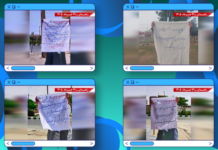
On Tuesday, November 19, the “No Execution Tuesdays” campaign released a statement marking the 43rd consecutive week of protests against Iran’s increasing use of the death penalty. The statement revealed that in the past week alone, the Iranian regime executed 28 people, including 18 on a single day, November 6.
Alarming Statistics on Executions
According to the campaign, since the start of Aban (October 23, 2024, in the Persian calendar), over 133 people have been executed, including three women and 13 Afghan citizens. The statement highlights a disturbing trend of intensified executions, particularly as the fifth anniversary of the November 2019 protests approaches. Many of those targeted are reportedly young individuals arrested during the widespread protests of 2022, raising fears of further escalations.
Unjust Trials and Sentencing
The campaign expressed deep concern over the fate of six defendants in the “Ektaban case,” who were recently sentenced to death after what it described as a trial riddled with contradictions and procedural unfairness. The individuals—Milad Armun, Alireza Kafaei, Alireza Barmerzpournak, Hossein Nemati, Navid Najaran, and Amir Mohammad Khosh Eqbal—face death sentences under circumstances widely condemned by human rights advocates.
Additionally, political prisoner Mohammad Mehdi, arrested during the 2022 nationwide protests, has been sentenced to death by the Khorasan Razavi Criminal Court.
Escalating Repression
The regime’s campaign of executions has extended to public hangings and alleged extrajudicial killings. Last week, a prisoner named Ahmad Alizadeh was executed twice in Ghezel Hesar Prison, and another unidentified prisoner was hanged publicly. In Malekan Detention Center, detainee Ghafar Akbari reportedly died under torture, while Seyyed Alireza Razavi was executed in Ghezel Hesar Prison without his family being informed.
Calls for Accountability
The “No Execution Tuesdays” campaign has called on Mai Sato, the UN Special Rapporteur on the situation of human rights in Iran, to take urgent action to save prisoners on death row and hold the perpetrators of these executions accountable. The campaign also urged the public to amplify the voices of death row inmates by uniting in solidarity.
Hunger Strikes and Resistance
Despite the regime’s intensified repression, prisoners in 25 facilities across the country have continued to resist. Members of the “No Execution Tuesdays” campaign have protested with hunger strikes every Tuesday for the past 43 weeks, demonstrating remarkable resolve against systemic injustice.
Protest Through Self-Immolation
The tragic self-immolation of political prisoner Saeed Gharibi at Adel Abad Prison in Shiraz was also reported separately by human rights sources. Gharibi, who suffered severe burns to his back and hands, reportedly acted in protest against dire prison conditions and unjust sentences. Despite his injuries, authorities denied him basic medical care. His lawyer, Astareh Ansari, confirmed that Gharibi, sentenced to 15 years in prison and exile for alleged opposition activities, resorted to this drastic measure to draw attention to his plight.
Self-immolation by political prisoners is not unprecedented in Iran. Reports of suicide attempts among inmates protesting harsh prison conditions and human rights abuses have surfaced repeatedly. In February 2024, over 800 prisoners at Urmia Central Prison signed an open letter warning of increasing suicides due to mistreatment and demanding the dismissal of the prison’s head.
Widespread Criticism
Activists and human rights organizations have consistently condemned the Iranian regime’s treatment of prisoners. The “No Execution Tuesdays” campaign’s latest statement underscores the urgent need for international action to address the regime’s systemic human rights violations and end its escalating use of executions as a tool of repression.
As Iran faces mounting pressure from within and beyond its borders, the resilience of prisoners and activists highlights the enduring fight for justice, dignity, and human rights in the face of relentless oppression.