



The rapid downfall of Syrian dictator Bashar al-Assad and the heavy losses sustained by Hezbollah have dealt a severe blow to Iran’s so-called “Axis of Resistance.” For decades, this coalition, which Tehran crafted to oppose Western and Israeli influence, was a cornerstone of Iranian foreign policy. Now, it appears to be unraveling under the weight of regional dynamics and strategic missteps.
Acknowledging Weakness
In a rare admission, Iranian Foreign Minister Abbas Araghchi publicly conceded on state television that the Axis of Resistance has significantly weakened. “The axis has endured a very difficult year,” he acknowledged, highlighting the profound challenges facing Tehran’s regional ambitions.
Iran’s Costly Gamble in Syria
Over the past 13 years, Iran invested vast human and financial resources to prop up the Assad regime, viewing it as a critical ally in the region. However, as Syrian cities fell in rapid succession, Tehran’s years of investment crumbled. Not only did Iran lose its partner in Damascus, but it also forfeited a key channel for projecting power across the region.
Hezbollah’s Humiliation in Lebanon
The situation worsened with Hezbollah’s recent defeat by Israel. Once considered a formidable force, Hezbollah’s losses have left many questioning its future role in Iran’s regional strategy. Experts warn that without Syria’s support, the entire Axis of Resistance risks collapse. As one analyst put it, “Without Syria, the axis loses its foundation.”
The October 2023 Turning Point
The October 7, 2023, Hamas attack on Israel marked a critical juncture. In retaliation, Tehran-backed forces across the region, from Gaza to Yemen, launched attacks on American and Israeli interests. Yet, Israel’s decisive military response, including targeted strikes on Hamas and Hezbollah leadership, dramatically weakened these groups. Iran’s own efforts to display deterrence—such as launching 200 ballistic missiles toward Israel in October 2024—failed to shift the balance. Instead, Israeli forces destroyed advanced Iranian military equipment, exposing Tehran’s vulnerabilities.
Strategic Failure and Regional Isolation
The fall of Assad underscores Tehran’s diminishing influence. Even as Iranian officials maintained silence over Assad’s downfall, issuing vague statements about “longstanding relations” with Syria, the loss marked a strategic failure. Abbas Araghchi admitted, “Even Assad himself was shocked by the Syrian army’s collapse.”
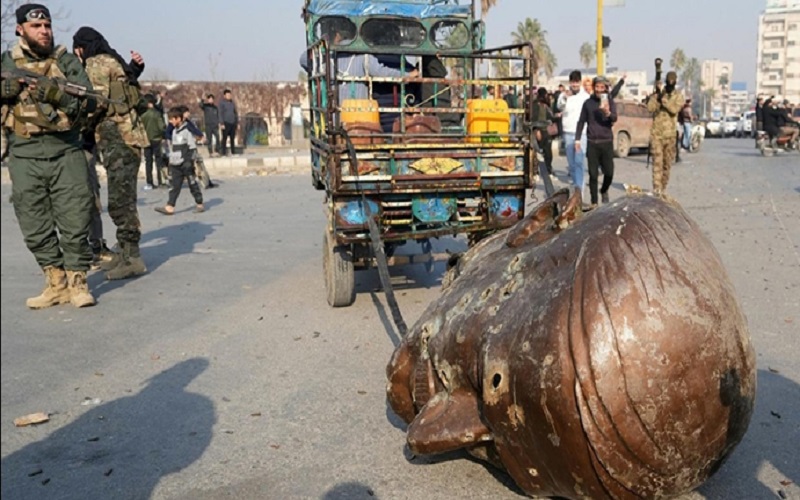
This unraveling has profound implications for Iran’s broader foreign policy. State-run daily Setareh-e Sobh lamented: “What Iran built in Syria over years has unraveled with the opposition’s victories. Assad’s opponents now dismantle symbols of his regime wherever they find them.”
The Ripple Effects
The defeat of the Axis of Resistance coincides with growing challenges to Iran’s other strategic pillars—its missile and nuclear programs. Years of economic strain from sanctions and the nuclear dispute have left Iran struggling to maintain support for its proxies. This has exacerbated domestic economic hardships and further eroded the regime’s legitimacy.
A Wake-Up Call for Tehran
Prominent Iranian figures have begun voicing concerns about the regime’s trajectory. Mohammad Taghi Naqd Ali, an Iranian MP, warned, “We should learn from what is happening in the region.” Mohammad-Ali Abtahi, a regime cleric, described Assad’s fall as a decisive moment: “The resistance axis communication ring is practically cut off.”
For Iran’s leaders, these developments signal the diminishing returns of a regional policy built on proxy forces and military interventions. For the Iranian people, they offer hope. The fall of Assad, coupled with the failures of Hezbollah and Hamas, is a powerful reminder that no oppressive regime can maintain its grip indefinitely. As Iran’s domestic challenges grow, the prospect of freedom, democracy, and a brighter future becomes ever more tangible.
The End of an Era?
The collapse of the Axis of Resistance may well mark the beginning of the end for Iran’s theocratic regime. As regional and international pressures mount, Tehran faces an increasingly uncertain future. The people of Iran, inspired by the resilience and victories of neighboring nations, may seize this moment to reclaim their freedom and reshape their destiny.