


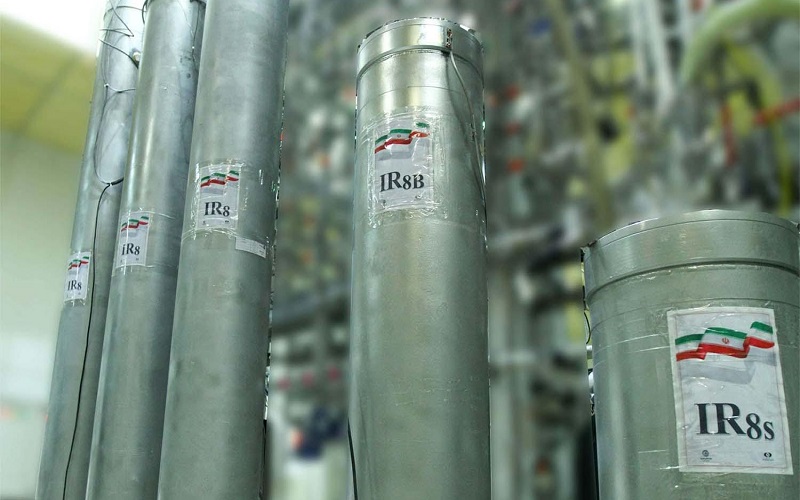

As Iran accelerates its uranium enrichment activities, the international community, particularly the United Kingdom, France, and Germany, is weighing the possibility of reinstating sanctions to prevent Tehran from acquiring nuclear weapons. Recent developments reported by the International Atomic Energy Agency (IAEA) have heightened these concerns. According to Reuters, citing an IAEA report, Iran has agreed to enhanced monitoring measures at its Fordow facility, a site buried deep within a mountain where uranium enrichment has intensified.
Accelerated Enrichment Activities at Fordow
The IAEA’s report highlights significant advancements in Iran’s nuclear program. Iran has been enriching uranium to 60% purity at Fordow, a level dangerously close to the 90% required for nuclear weapons. The agency estimates that Iran now has around 24 kilograms of 60% enriched uranium, which, with further processing, could suffice for one nuclear weapon. Moreover, the report indicates that Iran’s monthly production capacity of 60% enriched uranium has surged to 34 kilograms, six times higher than the 5–7 kilograms produced at both Fordow and Natanz combined in recent months.
For context, approximately 42 kilograms of uranium enriched to 60% is enough to produce a nuclear weapon if further enriched. Iran already possesses more than four times this amount, raising alarm among Western nations, who assert that there is no civilian justification for enrichment at such high levels.
Western Response and the Trigger Mechanism
In response to these developments, Britain, France, and Germany—the “Troika of Europe”—have reiterated their commitment to preventing Iran from obtaining nuclear weapons. They have raised the prospect of activating the “trigger mechanism” outlined in the Joint Comprehensive Plan of Action (JCPOA). This mechanism could lead to the re-imposition of U.N. sanctions on Iran if the country is found to be in breach of its commitments under the nuclear deal.
The Troika emphasized the importance of a diplomatic solution while cautioning against the expiration of certain provisions in Resolution 2231. This resolution, which underpins the JCPOA, is set to expire in 2025, paving the way for the automatic lifting of some sanctions. In their letter to the U.N. Security Council, the European powers warned of an impending “turning point” in October 2025, when the JCPOA’s “sunset clauses” are due to take effect.
Iran’s Stance and International Oversight
Iran has defended its actions as being within the framework of its agreements with the IAEA. Tehran claims that its enrichment activities are in response to resolutions passed by the IAEA’s Board of Governors. Nevertheless, under mounting international pressure, Iran has agreed to stricter oversight at Fordow, signaling a potential, albeit cautious, willingness to address global concerns.
Historical Context and the Role of the United States
The future of the JCPOA has been fraught with uncertainty since former U.S. President Donald Trump unilaterally withdrew from the agreement in 2018 and reimposed sanctions on Iran while the regime did not comply with the nuclear agreement and continued its nuclear ambitions secretly.
While Trump attempted to activate the trigger mechanism before leaving office, European opposition prevented its implementation. With the JCPOA provisions set to expire, the Western powers face mounting pressure to navigate this complex geopolitical challenge.
A Crossroads for Global Security
Iran’s nuclear ambitions and the international response reflect a high-stakes balancing act. On one hand, the world seeks to prevent nuclear proliferation; on the other, it must contend with the limitations of diplomatic agreements like the JCPOA. As key deadlines approach, the actions of both Iran and the international community will shape the course of nuclear non-proliferation efforts and the stability of the Middle East.