


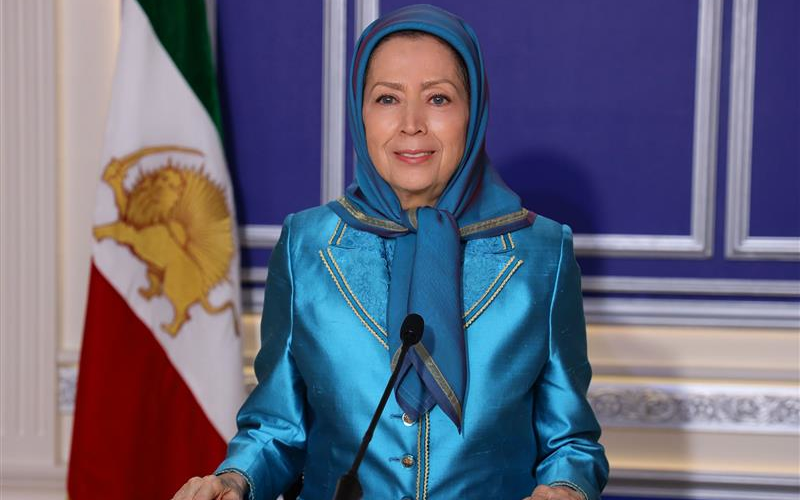

By Maryam Rajavi, published by Welt.de on December 20, 2024
The downfall of Bashar al-Assad, Tehran’s primary ally, marks a pivotal moment in the struggle against Iran’s ruling theocracy. Assad’s regime, which for 54 years committed egregious crimes against the Syrian people and the broader region, has long served as a cornerstone of Tehran’s regional influence. Now, his collapse presents a strategic opportunity for organizing resistance to Iran’s clerical regime and achieving long-sought freedom and democracy.
The Strategic Blow of Assad’s Downfall
The Assad regime’s collapse represents a devastating blow to Iran’s rulers. For decades, Tehran’s theocratic regime has been anchored by four pillars: domestic repression, the export of terrorism, regional meddling, and warfare. Syria—a crucial linchpin in this strategy—provided Iran’s Revolutionary Guards (IRGC) a direct land route to the Mediterranean, Lebanon, and its key proxy, Hezbollah.
Between 2012 and 2020, Tehran poured over $50 billion into propping up Assad’s government, sacrificing thousands of IRGC fighters, including dozens of senior commanders. Now, this strategy has failed, leaving the regime at its weakest point in decades.
Mounting Domestic Pressure
At the same time, Iran faces unprecedented unrest at home. In less than five months since President Pezeshkian’s inauguration, over 600 executions have been carried out in a desperate bid to suppress dissent. However, societal discontent continues to grow, fueled by economic collapse, soaring inflation, mass unemployment, and institutional corruption. The regime’s systematic suppression of women has further intensified this unrest.
The fall of Assad delivers a clear message to Iran’s youth and broader society: the regime is neither invincible nor stable. Assad’s heavily armed forces and IRGC-backed militias disintegrated in just 11 days, shattering the illusion of Tehran’s strength.
A Crossroads for the Regime
Iran’s rulers now face a stark choice: retreat from terrorism, warfare, and nuclear weapons development, or persist in confrontation with the international community. Either path leads to the regime’s inevitable collapse.
For decades, attempts to coerce Tehran into change through diplomacy or appeasement have failed, met instead with deception and blackmail. Following Assad’s downfall, Tehran is likely to intensify its nuclear weapons program in a bid to restore its diminished strategic position.
A Path Forward: Empowering the Resistance
While international sanctions and pressure are vital, the ultimate solution lies within Iran itself. The National Council of Resistance of Iran (NCRI), which I lead, offers a viable alternative for achieving freedom and democracy.
Several key components underpin this solution:
- An organized resistance movement with thousands of experienced members.
- Broad social and international support for the NCRI’s platform.
- A clear roadmap for transition to a democratic government.
- Active grassroots resistance cells, which form the foundation of a freedom army.
Iranian society is ready for change. Citizens are waiting for the spark that will ignite a nationwide uprising.
The Vision for a Free Iran
Under the NCRI’s plan, the regime’s collapse would be followed by the formation of a six-month transitional government tasked with organizing free and fair elections for a constituent assembly. This assembly would draft a new constitution for the Republic of Iran.
Key principles of this vision include:
- A democratic system rooted in free elections and the rule of law.
- Full gender equality and the empowerment of women.
- Autonomy for Iran’s ethnic minorities.
- Religious freedom and the separation of religion and state.
- A commitment to regional peace and a nuclear-weapon-free Iran.
This roadmap ensures stability and eliminates the risk of chaos. A free Iran will prioritize democracy, inclusion, and peace.
The Role of the European Union
The European Union must recognize the Iranian people’s right to overthrow their oppressive regime and hold Tehran accountable for its actions. This includes concrete measures against the regime’s domestic repression, terrorism, and nuclear ambitions.
Standing with the Iranian people is not only a moral imperative but also essential for the peace and stability of the region and the world.
Maryam Rajavi
President-elect, National Council of Resistance of Iran