


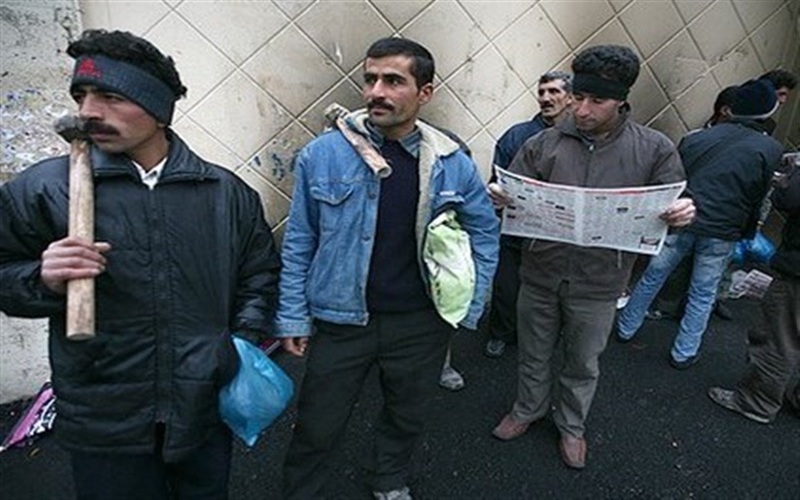

As Iran faces war, negotiations, and deepening economic turmoil, regime officials increasingly blame external pressures for crises rooted in years of corruption, mismanagement, and systematic plunder.
As Iran moves through a turbulent period of war, negotiations, and conflicting political messages, regime officials and affiliated commentators are engaged in an increasingly visible effort to shift responsibility for the country’s economic collapse. But mounting evidence and even admissions from regime-linked analysts indicate that inflation, soaring food prices, and widespread economic distress were already accelerating before the war began.
These days, Iran’s political landscape is dominated by a confusing mix of war rhetoric, negotiations, proposed agreements, and counter-agreements. Amid this turmoil, regime officials and insiders have increasingly turned the economic crisis into a political blame game.
The underlying issue, however, is difficult to conceal: years of mismanagement, corruption, rent-seeking, and organized economic plunder have left the Iranian economy deeply weakened. The war and sanctions are now being invoked as convenient explanations for problems that were already becoming acute.
This effort to control the public interpretation of the crisis recalls the political dynamics described by political theorist Franz Neumann, particularly the use of political power to influence and manage popular reactions. In Iran, the regime’s messaging appears increasingly focused not only on managing the economy, but also on managing how society understands its economic suffering.
Economic Crisis Before the War
Comments published by the Telegram channel Khaneh-ye Eqtesad on September 1, 2026, illustrate the growing criticism from economic and strategic analysts within the regime’s own orbit.
Strategic affairs analyst Hossein Ahmadi questioned why Iran had experienced such extraordinary price increases and what he described as widespread “mental turmoil” among the population during wartime.
He then pointed toward the domestic structures responsible for economic policymaking, arguing that powerful interests benefiting from concentrated wealth had gained influence over economic ministries, the Central Bank, and even the legislative process.
The more revealing admission came from economic researcher Mohammad-Taher Rahimi, who directly challenged attempts to attribute the deterioration of prices and inflation to the war.
According to Rahimi, food inflation had already reached 105 percent in Bahman, before the war began on March 9. He also pointed out that overall year-on-year inflation had risen from approximately 30 percent to around 70 percent during the same pre-war period.
His argument cuts directly against the regime’s effort to present the war as the primary cause of the country’s economic collapse. The figures indicate that the crisis was already accelerating when there was no war to blame.
War as a Political Shield
The use of the war as an explanation for every economic failure serves an important political function for the regime. It allows officials to redirect public anger away from decades of policies that have concentrated wealth, weakened productive capacity, and expanded opportunities for corruption and rent-seeking.
By portraying inflation and shortages as unavoidable consequences of external circumstances, the regime can attempt to present itself as a victim of events rather than an architect of the conditions that produced the crisis.
But this strategy faces a fundamental obstacle: the population has experienced the economic deterioration firsthand.
Rising food prices, declining purchasing power, unemployment, poverty, and the erosion of living standards cannot easily be explained away through official narratives when people have witnessed the deterioration over many years.
Public Anger Reaches Unprecedented Levels
The depth of public dissatisfaction was acknowledged by economist Hossein Raghfar in remarks published by Didar on August 29, 2026.
Raghfar stated that the level of dissatisfaction in Iranian society was, in his assessment, unprecedented in the past half-century.
That admission is significant. It suggests that the regime’s efforts to redirect responsibility toward war and external pressure have not eliminated the underlying social anger.
On the contrary, the combination of economic hardship and political repression appears to have produced a society increasingly resistant to official explanations.
A Society No Longer Easily Controlled
The regime’s economic messaging ultimately confronts a broader political problem. A population that has experienced decades of authoritarian rule, repression, corruption, and economic deprivation is increasingly capable of distinguishing between temporary external shocks and structural failures created by those in power.
The regime may attempt to use war as a political shield, but inflation and poverty have their own history. Much of the economic damage predates the current conflict, while the institutions responsible for economic policy remain firmly under the regime’s control.
The result is a widening gap between official narratives and public experience. The more officials insist that external circumstances are responsible for the country’s problems, the more they risk highlighting the question of what caused the crisis in the first place.
Iran’s growing economic hardship is therefore not merely an economic problem. It has become a political crisis of legitimacy, exposing the limits of a system that seeks to control both economic resources and the public interpretation of its failures.
The regime can attempt to control the narrative, but it cannot indefinitely control the lived reality of millions of Iranians. And as public dissatisfaction reaches levels that even regime-linked economists describe as unprecedented, the economic crisis is increasingly feeding a much broader challenge to the system itself.