
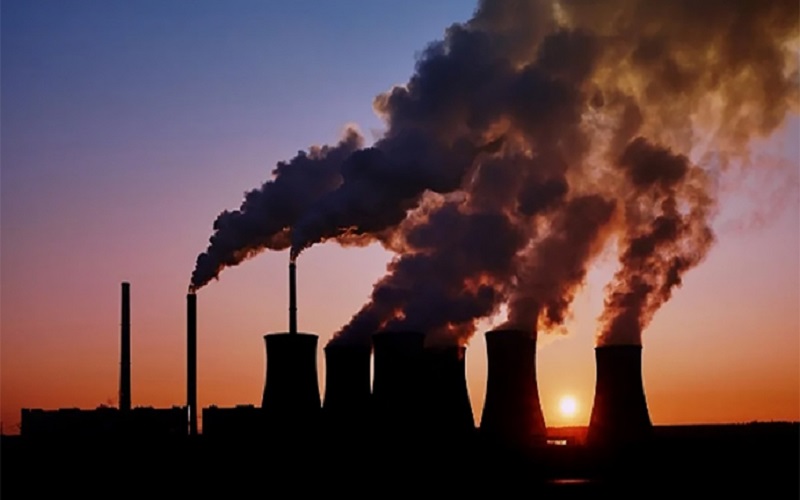

The Ministry of Science, Research, and Technology in Iran recently issued a directive announcing the closure of university classrooms and higher education institutions for the remainder of the fall semester. Citing air pollution and insufficient fuel to heat educational spaces, the ministry instructed institutions to switch to virtual learning until the exam period.
Despite a week of closures across schools, offices, universities, and industrial zones in most provinces, the crisis of fuel shortages continues to intensify. Electric power plants are struggling to supply urban and commercial electricity, highlighting the regime’s failure to meet basic needs. This stands in stark contrast to Supreme Leader Ali Khamenei’s claims of “approaching the peak of success.”
Toxic Air Pollution Threatens Public Health
Iran’s metropolises, including Tehran, are grappling with dangerously high levels of air pollution. The increased reliance on mazut—a low-grade, highly polluting fuel—in power plants has exacerbated the situation. According to the Tehran Air Quality Control Company, the city’s average air pollution index reached 166 on Thursday, December 19, categorizing it as “red and unhealthy.” This marked a significant deterioration from an index of 128 recorded just the day before. The closures intended to curb pollution have ironically worsened it, a reality acknowledged by Tehran’s governor.
In a public statement, the governor noted that the shutdowns merely “moved the crisis from one point to another” and increased fuel consumption. He further explained that closures led to more travel and traffic, thereby escalating gasoline usage and air pollution. Despite these measures, Golestan province’s electricity distribution company reported only a marginal 10% reduction in electricity consumption after four days of closures.
Infrastructure Failures and Lack of Planning
Iran’s long-standing issues with aging vehicles, low-quality car fuel, and polluting industries around Tehran have significantly contributed to the worsening air quality. Year after year, officials cite the same reasons for the crises but fail to implement tangible solutions. Decades of neglect have left the country without adequate investment in modern power plants or infrastructure to address growing energy demands. Similarly, gas production has steadily declined, leaving power plants without sufficient fuel.
Adding to the controversy, authorities claim that 20 million liters of fuel are “lost” daily. However, many believe this fuel is smuggled out of the country by the Islamic Revolutionary Guard Corps (IRGC). The Minister of Energy recently admitted that 13 power plants have been shut down due to fuel shortages—a staggering failure for a nation with the world’s second-largest natural gas reserves and fourth-largest proven oil reserves.
Public Outcry and Calls for Reform
The Iranian public has expressed growing frustration with the regime’s mismanagement. When Masoud Pezeshkian, the regime’s president, urged citizens to lower their home temperatures by two degrees to conserve energy, many took to social media to demand systemic changes instead. Critics called for cutting funding to foreign militia groups and the regime’s numerous military, ideological, and propaganda institutions. They argued that reallocating these resources could finance much-needed investments in power plants, refineries, and other critical infrastructure.
Conclusion
Iran’s dual crises of air pollution and fuel shortages reflect deeper systemic failures. Decades of mismanagement, corruption, and misplaced priorities have left the country ill-equipped to address its most pressing challenges. Without substantial reforms and investments in infrastructure, these crises are likely to persist, further eroding public trust and exacerbating the hardships faced by millions of Iranians.