


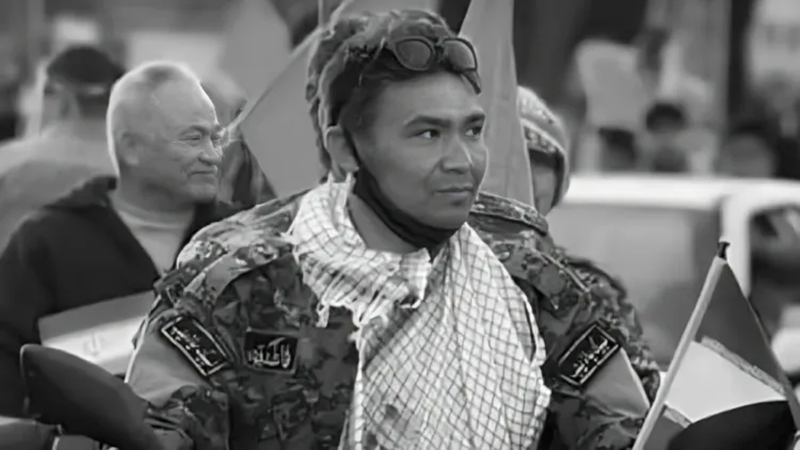

Visible deployment of foreign-backed militias amid economic collapse and social crisis deepens unrest and signals a shift in the regime’s strategy of control
Amid deepening economic and social crises, the Iranian regime has escalated its reliance on proxy forces—deploying them openly in urban centers across the country. Reports from multiple cities indicate that these proxy forces, once used more discreetly, are now visibly present in public spaces, contributing to rising public anger and a heightened sense of insecurity.
Expansion of Proxy Forces Across Major Cities
From Tehran to Mashhad, eyewitness accounts point to a significant increase in the presence of armed proxy elements. In Tehran’s Moniriyeh Square, witnesses report individuals carrying weapons and actively monitoring and controlling civilian movement. Similar scenes have been described along Vakilabad Boulevard in Mashhad, where these forces appear to operate with authority in public areas.
Residents increasingly describe these forces as socially and culturally alien. Their presence in everyday urban environments—particularly when issuing orders to civilians—has intensified feelings of resentment and unease. One Tehran resident noted that encountering armed individuals dictating behavior in the streets has “amplified both fear and anger” among ordinary people.
Beyond major metropolitan areas, proxy forces have also been observed in smaller cities and provinces. In Sistan and Baluchestan, reports indicate the presence of Pakistani fighters affiliated with the so-called Zeynabiyoun Brigade, further reinforcing perceptions that the regime is relying on foreign militias to maintain control.
Economic Collapse and Rising Discontent
The visible expansion of proxy forces comes at a time of severe economic deterioration. Business activity across Iran has sharply declined, with many reporting drastic income losses. Some estimates suggest that millions of Iranians have gone without any income for extended periods over the past two months.
Simultaneously, the country faces a worsening healthcare crisis. Shortages of essential medicines, coupled with soaring prices, have left patients—particularly those with chronic or critical conditions—struggling to access treatment. In this context, the regime’s decision to deploy proxy forces in urban areas has not alleviated tensions but rather compounded public anxiety.
Families now face a dual burden: economic hardship and growing security concerns. The combination has pushed public dissatisfaction to new levels.
A Strategic Shift in Repression
Historically, the regime’s use of proxy forces for domestic control dates back to the 2000s. However, the current phase represents a marked departure from previous practices. In earlier periods, efforts were made to obscure the presence of such forces. Today, their deployment is overt and widespread.
This shift suggests a deliberate strategy aimed at intimidation. The public display of armed proxy elements in crowded urban areas appears designed to send a clear message: dissent will be met with force. The timing is significant, as memories of recent violent crackdowns remain fresh in the public consciousness.
Psychological Impact on Society
Beyond the physical presence of these forces, their psychological impact is profound. Citizens increasingly report heightened anxiety, stress, and a pervasive sense of insecurity. Daily life has become more difficult, as economic instability, healthcare shortages, and visible militarization converge.
The expansion of proxy forces in Iran underscores a broader structural reality: a system increasingly dependent on coercion to maintain control. Rather than stabilizing the situation, this approach risks further alienating the population.
A Regime Under Pressure
The growing reliance on proxy forces reflects mounting pressure on the regime. As economic and social crises deepen, the regime appears to be closing off avenues for reform while doubling down on repression.
This trajectory is likely to intensify public opposition. The visible militarization of cities, combined with widespread hardship, is fueling a sense that fundamental change is not only necessary but inevitable.