
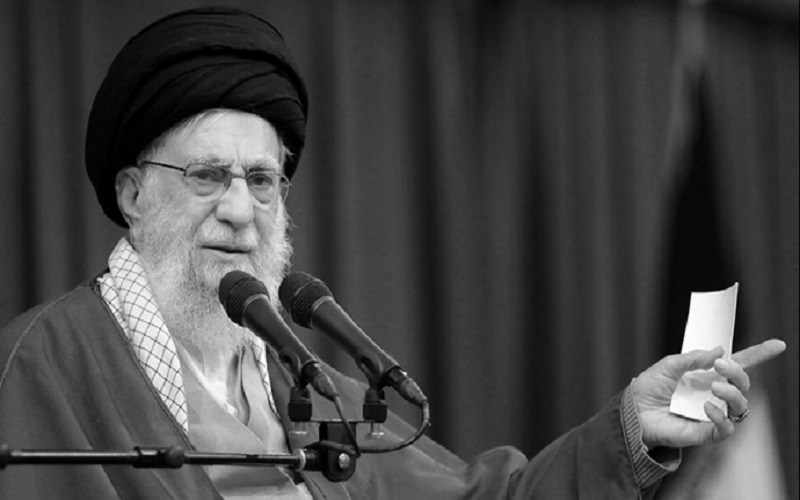

In less than a month, Ali Khamenei, the supreme leader of the Iranian regime, has launched his third verbal attack against Syria’s new government. Following the fall of Bashar al-Assad, Iran has emerged as the only country in the Middle East to react negatively to this significant political shift. While other nations in the region have welcomed Assad’s overthrow or expressed hope for Syria’s peaceful future, Tehran’s response has been starkly antagonistic.
Contrasting Regional Reactions
Most regional powers have swiftly engaged with Damascus, dispatching diplomatic delegations and fostering relations with Syria’s new leadership. In contrast, the Iranian regime has condemned Assad’s removal outright. Khamenei has gone so far as to publicly call for the new government’s downfall, a stance underscored by repeated speeches brimming with hostility. This unyielding position appears more focused on creating adversaries than fostering regional stability.
A Legacy of Interference and Resentment
Over the past decade, the Syrian people have endured immense suffering due to Iran’s intervention and its proxy groups such as Hezbollah, Fatemiyoun, and Harakat Hezbollah al-Nujaba. These groups’ involvement has left a legacy of war crimes, displacement, and destruction. Many Syrians view Iran not as a partner for peace but as a collaborator in Assad’s oppressive regime.
Rather than mending these deep wounds, Khamenei’s recent rhetoric exacerbates tensions. In his latest speech, he labeled Syria’s new reality as chaotic and unstable, ignoring the hope many Syrians feel about their future. This condescending narrative—dictating to Syrians that their optimism is misplaced—only alienates them further and undermines potential reconciliation.
Fear of Precedent
One of Khamenei’s primary concerns appears to be the implications of Assad’s downfall for Iran’s domestic situation. If Syria’s post-Assad transition proves successful, it could inspire Iranians to believe that their own dictatorship can also be toppled for the better. This fear drives Tehran’s efforts to obstruct the new Syrian government’s progress.
The regime’s destabilizing policies include support for armed factions within Syria, likely aimed at creating Hezbollah-like entities to perpetuate unrest. By fostering instability, Khamenei seeks to validate his claims that Assad’s removal would lead to chaos. However, such actions only deepen Iran’s isolation in the region.
Strategic Isolation and Domestic Challenges
As regional actors work towards peace and stability in Syria, Iran’s aggressive posture isolates it further. These hostile policies damage Iran’s national interests and tarnish its reputation, painting the country as a belligerent power resistant to progress. Khamenei’s insistence on confrontation reflects a broader unwillingness to adapt to changing regional dynamics.
2024 may well be remembered as the year Iran’s strategy of exporting revolution faltered. The regime now faces critical questions: how will it respond to this failure, and what does it mean for its future? Tehran’s influence in Lebanon and Syria has significantly waned, and the regime’s capacity to project power through its regional axis is collapsing.
A Shattered Dream of Regional Dominance
For decades, Iran sought to establish a strategic corridor stretching from Tehran to the Mediterranean. This axis, encompassing Iraq, Syria, and Lebanon, was pivotal for sustaining its regime and advancing its regional ambitions. However, the collapse of Assad’s regime has dealt a severe blow to this strategy. Hezbollah weakened in Lebanon, now faces logistical challenges as Iran’s ability to supply arms diminishes.
The grand vision of a Shiite axis uniting Tehran with the Mediterranean has disintegrated. Iran’s leadership, under Khamenei, must now grapple with the consequences of its overreach. As 2025 approaches, the question remains: can the regime adapt and survive, or will its intransigence accelerate its decline?
Conclusion
Khamenei’s relentless opposition to Syria’s new government not only harms Iran-Syria relations but also alienates the Iranian people and undermines regional stability. With its ambitions thwarted and resources drained, the regime faces mounting pressure at home and abroad. As the Iranian people increasingly recognize the futility of their government’s regional escapades, the regime’s grip on power grows ever more tenuous. Iran’s future now hinges on whether its leaders can confront reality and chart a new course or continue down a path of isolation and decline.