


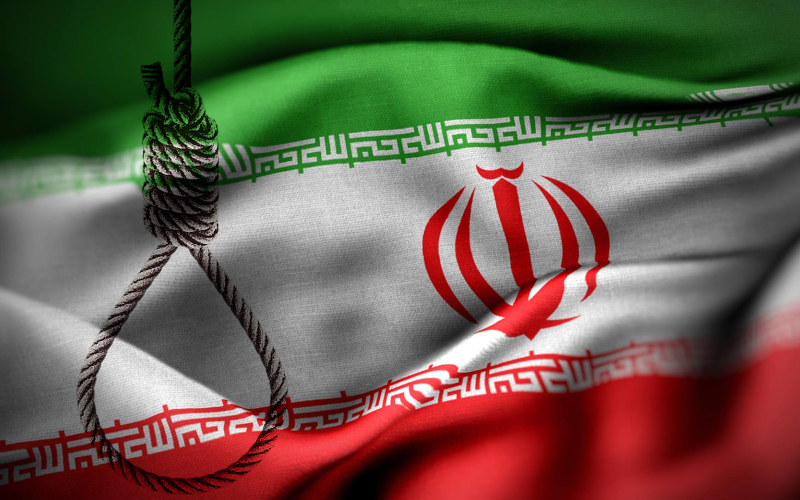

According to Amnesty International, the Iranian regime was responsible for 74% of all recorded executions worldwide in 2023, a figure that includes the execution of political opponents. One striking example is the case of Reza Rasaei, a protester arrested during the November 2022 uprising and later executed. These actions reflect the regime’s systemic use of capital punishment as a tool of repression.
The Independent International Fact-Finding Mission on the Islamic Republic of Iran emphasized in its March 2024 report that many executions followed hasty trials rife with human rights violations. Such actions, the Mission stated, constitute crimes against humanity, encompassing murder, torture, imprisonment, and sexual violence.
This article examines the record of human rights abuses by the Iranian regime, with a focus on its widespread use of executions and related atrocities.
Execution Statistics in 2024
General Overview
In 2024, at least 997 executions were recorded in Iran. However, the true number is likely higher due to the regime’s practice of secret executions. The highest monthly total occurred in October, with 170 executions, while February saw the fewest at eight. The breakdown of executions includes:
- 941 men in prison
- 4 men in public
- 34 women in prison
- 9 juvenile offenders in prison
- 9 political prisoners in prison
This marks a 16% increase from 2023’s recorded 864 executions. Notably, the 2024 figure represents the highest annual total in three decades.
Trends in Executions
The distribution of executions in 2024 correlates with political events and crises:
- 11% occurred in the first quarter.
- 17% in the second quarter, coinciding with parliamentary and presidential election preparations.
- 25% in the third quarter.
- 47% in the fourth quarter, during the regime’s regional defeats and escalating economic and social crises.
Notably, 695 executions (70% of the total) took place after July, under the presidency of Masoud Pezeshkian. Defending these actions, Pezeshkian declared on October 8: “Those who talk about human rights ask why we execute murderers.”
Geographical Distribution
Executions occurred in 86 prisons across all 31 provinces. Eight prisons accounted for half of all executions:
- 165 in Qezel Hesar Prison
- 97 in Shiraz
- 61 in Isfahan
- 59 in Tabriz
- 44 in Central Karaj
- 38 in Qazvin
- 33 in Mashhad
- 29 in Birjand
Remote prisons often lack transparency, making it difficult to document all executions. Among the identified victims, 119 were from Iran’s marginalized Baluch community—disproportionately represented relative to their population.
Demographics
- 34 women and 7 juveniles were executed.
- The average age of 491 verified victims was 36 years.
- 502 prisoners (over half) were executed on drug-related charges, despite allegations of regime involvement in major drug-trafficking networks.
- 4 executions were carried out in public.
Broader Human Rights Violations
Torture and Inhumane Punishments
The Iranian regime’s brutality extends beyond executions. In 2024:
- Physical torture: 28 cases reported.
- Whippings: 4 cases.
- Amputations: 3 cases.
For instance, in Urmia and Qom prisons, the fingers of several prisoners were amputated. Additionally, the judiciary sentenced a 2017 protester to blinding for allegedly throwing stones and injuring a police officer.
Arbitrary Arrests
At least 15,139 people were arrested in 2024, with the highest monthly total (4,658) in June. Arrests include:
- Political arrests: 3,314 people.
- Arbitrary arrests: 4,675 people.
- Religious minority arrests: 38 people.
- Social arrests: 7,112 people.
Extrajudicial Killings
Fuel porters in Sistan and Baluchistan and cross-border laborers (kolbars) in Kurdistan are frequent targets of extrajudicial killings. Victims also include civilians killed on the streets or under torture in detention centers. In 2024, these killings included:
- 39 kolbars
- 70 fuel porters
- 198 civilians
- 11 prisoners tortured to death
A Grim Conclusion
The Iranian regime’s record of executions and human rights violations underscores its use of state violence to suppress dissent and maintain control. The international community must continue to hold the regime accountable for its crimes against humanity and demand justice for its victims.