



Iran’s religious-dictatorial regime appears to be entering an irreversible stage of collapse, losing its grip not only domestically but also among its regional allies. Recent developments in the Middle East since July have dealt significant blows to the regime’s standing, marking a pivotal moment in the region’s geopolitical landscape.
The Shaking Axis of Resistance
The so-called “Axis of Resistance,” crafted by Iran to counterbalance Israel, has faced severe setbacks over the past six months. Hamas, a key player in this alliance, has suffered devastating losses in the Gaza Strip. Meanwhile, Hezbollah—once a dominant force in Lebanon—has been substantially weakened. Compounding these challenges, the fall of Bashar al-Assad’s regime in Syria has dismantled Tehran’s most critical regional partnership. Without allies on Israel’s borders, the Iranian regime faces an uphill battle to rebuild its faltering coalition.
The fall of the Syrian dictatorship, a cornerstone of Iran’s regional strategy, has fundamentally altered the power dynamics in neighboring Iraq. Ibrahim Al-Sumaidaie, an Iraqi political analyst and adviser to the Prime Minister, recently underscored this shift in a televised interview. According to him, Iraq can no longer serve as a linchpin of the Axis of Resistance following Assad’s potential fall and Hezbollah’s weakening. He called for the dissolution of Iran-backed armed groups and their integration into Iraq’s political framework.
The Waning Influence of Iranian Proxies in Iraq
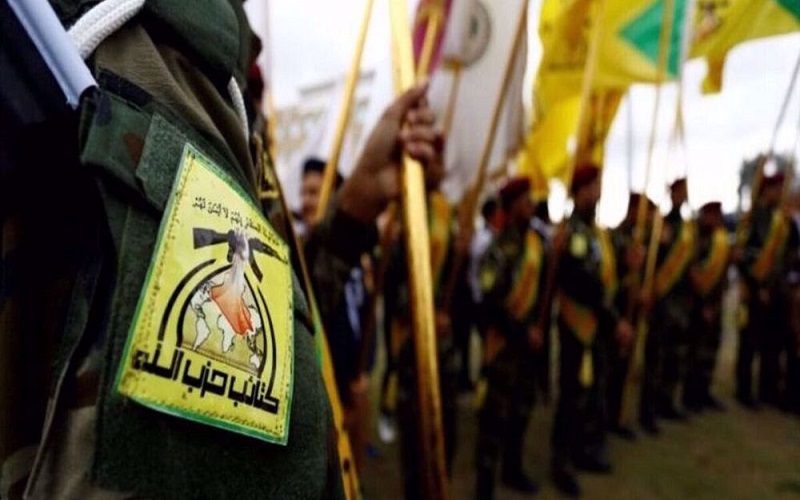
These statements highlight the diminishing influence of Iran-affiliated proxy groups in Iraq. Once buoyed by direct support from the Islamic Revolutionary Guard Corps (IRGC) Quds Force, these militias now face mounting internal and international pressure to disband. Some factions, such as Kata’ib Hezbollah, have already scaled back military operations against foreign targets and adopted a more subdued stance on Syrian developments.
In a revealing comment, a Kata’ib Hezbollah spokesperson remarked: “The conditions determine and shape the positions of the groups. This issue is no longer about bravery or recklessness.” Such admissions signal a profound decline in the operational and political clout of these militias.
Public Backlash and Calls for Dissolution
Iran-backed militias in Iraq are widely reviled for their roles in corruption, repression, and violence. The waning support from Tehran has left these groups vulnerable to public and political pressure. Even Iran’s Foreign Ministry spokesperson acknowledged the intensifying calls for the dissolution of Hashd al-Shaabi, a coalition of Iran-affiliated militias, emphasizing that the decision ultimately rests with the Iraqi government.
The loss of influence in Iraq carries profound implications for Tehran’s foreign policy. Supreme Leader Ali Khamenei has long championed the concept of “strategic depth,” viewing regional influence as vital to the regime’s survival. However, successive failures in Syria and Iraq have severely undermined this strategy.
A Turning Point for Iraq and the Region
The diminishing power of Iran’s regime presents a historic opportunity for Iraq to assert full control over its destiny. Freed from the shadow of foreign influence, Iraq can now strive for a brighter, independent future. This moment also serves as a wake-up call for the Iranian regime, which has long pursued expansionist and militaristic policies through its proxy networks.
The Beginning of the End?
The cascading failures in Syria, Iraq, and Lebanon suggest that the Iranian regime’s foundations are crumbling. The loss of its “strategic depth” has accelerated its decline, leaving the regime more isolated than ever. As the people of Iraq and the broader region chart a course towards self-determination, the era of Tehran’s hegemonic ambitions may finally be nearing its end.
Observers are increasingly confident that the collapse of Iran’s regime is imminent. The coming months may reveal the full extent of its unraveling, marking the dawn of a new era in the Middle East.