


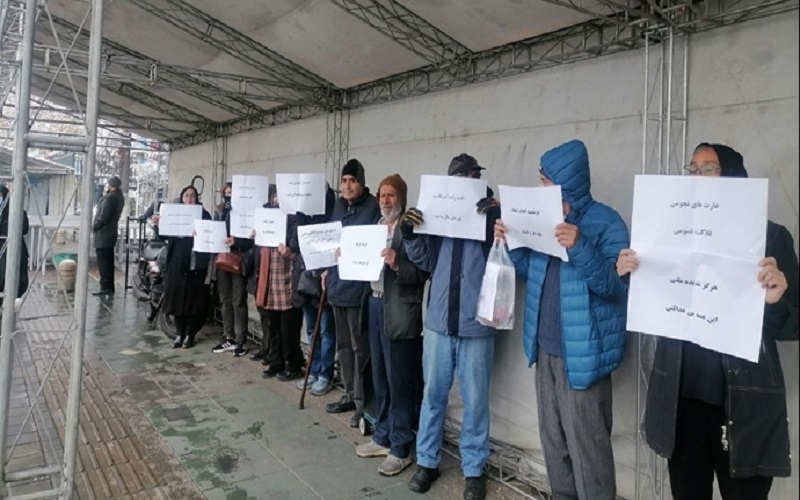

A recent report by the Statistical Center of Iran, published on January 7, 2025, reveals a stark reality: 27% of Iranian citizens survive on a daily income of just two dollars. This alarming statistic underscores the growing economic hardship faced by millions, as soaring inflation and currency depreciation continue to erode purchasing power.
Escalating Costs and the Decline in Purchasing Power
The depreciation of the Iranian rial has played a significant role in exacerbating poverty. The exchange rate, which stood at 79,500 tomans per U.S. dollar when the Statistical Center’s report was published, has since surged to 85,000 tomans. This rapid devaluation has further diminished the real income of the 27% living below the two-dollar threshold.
The impact of this economic downturn is reflected in the price of essential goods. According to official statistics, household food costs increased by 40% to 103% in January 2025 compared to the previous year. The steepest price hikes were recorded in grains and fruits, making basic nutrition increasingly unaffordable. For instance, while the government reported the price of one kilogram of potatoes at 32,000 tomans, market prices reached 36,000 tomans. The situation has forced many families to eliminate meat and eggs from their diets, contributing to rising malnutrition.
Malnutrition and the Global Hunger Index
The Global Hunger Index (GHI) for 2024 places Iran between Lebanon and Saudi Arabia in terms of food security. While Lebanon’s crisis stems from prolonged conflict, Iran faces a similar degree of food insecurity despite being at peace. The report highlights that 6.5% of the Iranian population suffers from malnutrition, and data from the Iranian newspaper Etemad suggests the true figure may be even higher. Their analysis reveals that:
- Moderate underweight affects 6% of the population.
- Mild underweight is observed in 25%.
- Severe stunting impacts 3%.
- Moderate stunting is found in 8%.
- Severe wasting affects 1%.
- Mild wasting is seen in 20% of Iranians.
Children have been particularly affected. The GHI report indicates that 5.3% of Iranian children suffer from stunted growth due to chronic malnutrition, an issue that has worsened alongside rising food prices and declining household incomes.
Meat and Protein Consumption: A Luxury for Many
The surge in food prices has turned meat into a luxury item that many Iranian families can no longer afford. In late January 2025, Ali Asghar Maleki, head of the Mutton Union, confirmed that as the dollar strengthened, meat prices soared, leading to a sharp decline in purchases. This decline is not limited to the 27% earning less than two dollars per day; middle-class families have also reduced their meat consumption, signaling a broader economic crisis.
A Declining Economy and Increasing Poverty
According to data from the Statistical Center of Iran, the country’s per capita national income in 2024 was 20% lower than in 2012, highlighting a long-term economic decline. The report suggests that Iran has become significantly poorer over the past decade, a trend that is clearly reflected in economic indicators and the deteriorating living standards of its citizens.
The state-run Eco Iran website reported on February 4, 2025, that since the implementation of the “economic surgery” policy in 2022, the number of people earning less than one dollar per day has increased, reaching 75,650 individuals. While government subsidies temporarily reduced extreme poverty, rampant inflation has eroded their effectiveness, leading to a renewed rise in poverty levels.
Government Policies and Their Impact
The World Bank defines the international absolute poverty line at $2.15 per day, the minimum income required to meet basic needs such as food, housing, and healthcare. Those earning less than one dollar per day fall into the category of extreme poverty, lacking access to even the most basic necessities.
Iran’s economic policies have played a crucial role in worsening these conditions. When Ebrahim Raisi assumed the presidency in 2021, the number of people living on less than a dollar a day stood at 75,650. One of his administration’s most controversial decisions was the elimination of the 4,200 toman exchange rate for essential goods in 2022. Originally intended to subsidize basic necessities, its removal led to severe price hikes, disproportionately affecting the most vulnerable segments of society.
Conclusion
Iran’s economic crisis has plunged millions into poverty, with inflation, currency devaluation, and policy decisions exacerbating the situation. The steady rise in food prices, declining purchasing power, and increasing malnutrition indicate a worsening humanitarian crisis. While government subsidies have provided temporary relief in the past, inflation has rendered them ineffective, leaving a growing number of citizens struggling to meet their most basic needs. As economic pressures mount, the need for effective and sustainable policies to address poverty and food insecurity becomes ever more urgent.