


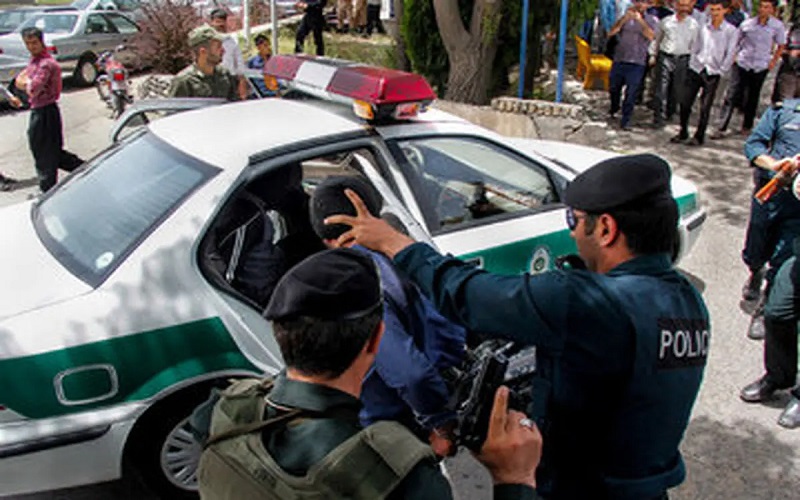

In the 2024 budget, the Iranian regime has allocated over 88 trillion tomans to the police force (Faraja), which translates to more than one million tomans per citizen annually. Despite this substantial funding, the police have prioritized establishing special mountain patrol units while failing to ensure the security of citizens in the heart of the capital.
The Murder of Amir Mohammad Khaleghi
On the evening of Wednesday, February 12, Amir Mohammad Khaleghi, a University of Tehran student, was murdered near his dormitory by assailants who stole his laptop. Student unions have since raised alarms about the persistent insecurity surrounding university dormitories, emphasizing that their repeated warnings have been ignored.
A Growing Police Budget with Questionable Priorities
The 2024 police budget has increased by over 21 trillion tomans (32%) compared to 2023. A significant portion of this budget—255 billion tomans—has been allocated to the Police Ideological-Political Organization, which is tasked with ensuring police personnel’s loyalty to the regime. Additionally, more than 23 trillion tomans have been designated for special projects, including the controversial morality police programs, often concealed under classified budget titles like the “Noor Project.”
Since 2012, an appendix in the annual budget has earmarked funds for the creation of special police units under the category of “miscellaneous appropriations.” This initiative, set to continue until 2025, has received an additional 21 billion tomans for infrastructure development in 2024.
Police Presence Where It’s Not Needed
The number of Faraja personnel in Greater Tehran remains undisclosed. However, based on statements by Ali Moayedi, head of the Faraja Preventive Police, an estimated 22,000 to 23,000 officers serve in the capital. Despite this force, Khaleghi’s murder took place in one of the busiest areas of Tehran—Amirabad, near Gisha Bridge—where no police officers were present.
Footage from the crime scene reveals a police officer admitting that a failure to apply pressure to Khaleghi’s wound led to his death. Meanwhile, Janat Alley, a known hotspot for violent incidents near the University of Tehran dormitories, had been repeatedly flagged by students as unsafe. It was only after Khaleghi’s murder that police finally installed a security kiosk in the area, highlighting their failure to act on prior warnings.
Policing the Mountains, Not the Streets
Since 2011, following media criticism of young men and women socializing in Tehran’s recreational areas, the police have stationed a mountain patrol unit in various locations, including Darabad, Jamshidieh, Darband, Tochal, and Saadatabad. Rather than addressing urban crime, these forces have largely focused on enforcing moral codes and harassing young people.
A Police Force More Concerned with Regime Security
Two days before Khaleghi’s murder, Tehran police were preoccupied with providing security for the anniversary celebrations of the 1979 revolution. Similarly, during the early presidential elections of 2024, 220,000 police officers were deployed to secure polling stations, assisted by 5,000 “Police Assistants” responsible for monitoring election compliance and enforcing hijab laws.
Meanwhile, Tehran police sent text messages to citizens advising them to prevent theft by avoiding public use of their phones, effectively shifting the responsibility for security onto the victims rather than addressing the underlying issues.
Rising Crime Amid Economic Decline
The rise in theft and robbery across Iran, particularly in Tehran, has been closely linked to the country’s economic crisis. Reports, including one from Donyā-ye Eqtesād, cite official data showing that except for 2015–2017—when Iran experienced relative economic stability—crime rates have steadily increased, reaching their highest levels in recent years.
Despite its vast budget, the Iranian police force appears more focused on ideological enforcement and regime protection than on safeguarding ordinary citizens. The tragic murder of Amir Mohammad Khaleghi underscores this misplaced prioritization, leaving Tehran’s residents vulnerable while funds are funneled into surveillance, ideological policing, and mountain patrols.