
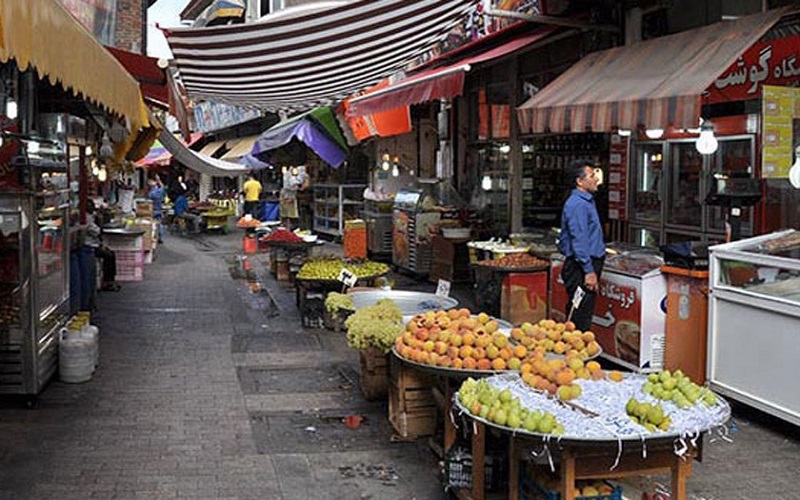

As Iran approaches Nowruz 1404, the traditional vibrancy of the holiday season has been eclipsed by an unprecedented economic recession. Skyrocketing prices, declining purchasing power, and a sharp drop in demand have stripped the markets of their festive atmosphere, leaving shopkeepers and consumers struggling alike.
A Deepening Market Recession
In recent days, social media has been flooded with videos capturing the grim reality of Iran’s markets, from food and clothing to household appliances. Business owners lament the slump in sales, while families report having to forgo essential and consumer goods due to soaring costs. Even a recent report from the Parliament Research Center acknowledges the growing phenomenon of “poor workers”—individuals who, despite being employed, remain trapped in poverty.
The economic downturn is visible across the country. Markets in Tehran, Mashhad, Tabriz, Isfahan, and other major cities, which were once bustling with shoppers before Nowruz, now stand largely empty. The once-thriving year-end sales have dwindled to historic lows, with merchants struggling to attract customers amid worsening financial conditions.
Nuts and Fruits: Luxury Items for Many
Nuts and dried fruits, a staple of Nowruz celebrations, have become unaffordable for many households. A kilogram of Akbari pistachios, for example, now costs around 1.3 million tomans, forcing many families to remove them from their Nowruz shopping lists. The impact is not limited to nuts—fruit and other essential food items, from meat and poultry to dairy products, have also seen a drastic drop in demand. Some reports indicate that shoppers are now purchasing fruit in single pieces due to exorbitant prices.
Clothing Sales Plummet
The clothing market, traditionally a major beneficiary of pre-Nowruz shopping, has also taken a significant hit. Rising costs and reduced purchasing power have led to a sharp decline in sales, with warehouses filling up with unsold inventory.
A clothing seller in Qazvin, quoted by Etelaat newspaper, described the stark contrast with previous years: “In the past, the market before Nowruz was exceptionally busy. People would start shopping months in advance, and we would have to work long hours, even on Fridays. Now, just two weeks before Nowruz, there are barely any customers.”
Household Appliances: Repairs Over Replacements
The home appliance market is in a similarly dire state. With prices soaring, many consumers are opting to repair their old appliances rather than purchase new ones. Even repairs, however, have become costly—fixing a quality piece of furniture now costs at least 40 million tomans, an amount unaffordable for many households.
The Growing Crisis of “Poor Workers”
The recession is not just a result of high prices but also of declining wages. Donya-e Eghtesad recently published a report titled “Production Line of Poor Workers” citing findings from the Parliament Research Center. According to the study, over the past two years, the minimum wage in Iran has fallen below the poverty line for a three-person household, giving rise to the phenomenon of “poor workers”—people who, despite having jobs, remain below the poverty threshold.
The report highlights a troubling trend: while employment used to provide a buffer against poverty, this is no longer the case. Since 2017, the role of employment in alleviating poverty has diminished, and by 2022–2023, the percentage of employed heads of households in poor and non-poor categories had nearly equalized. In 2024, the minimum wage covers only about 94% of the poverty threshold, meaning that even full-time workers cannot afford basic living expenses.
Moreover, the research indicates that in at least seven provinces—including Tehran, Alborz, Qom, Isfahan, Gilan, Qazvin, and Mazandaran—holding a job is no longer a safeguard against poverty. The minimum wage is insufficient to cover even the most basic necessities for a family of three.
A Chain of Crises
A combination of international sanctions, the regime’s antagonistic policies, rampant inflation, rent-seeking practices, government corruption, and inefficient resource management has created a cascading economic crisis that threatens the well-being of millions. Despite these undeniable hardships, Masoud Pezeshkian, the regime’s president, continues to insist that government policies are not leading to widespread starvation.
As Iran enters Nowruz 1404, the festive spirit has been replaced by economic anxiety. For many Iranians, the new year brings not a celebration, but an ongoing struggle for survival.