In the Persian calendar year 1403 (March 2024–March 2025), the PMOI (People’s Mojahedin Organization of Iran) Resistance Units played an extraordinary role in challenging the clerical regime ruling Iran. These units, deeply rooted in Iranian society and inspired by decades of resistance, not only endured severe repression but also demonstrated remarkable growth in both scale and effectiveness.
Expanding Operations: A Challenge to Dictatorship
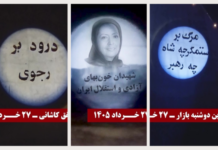
Over the past year, the Resistance Units significantly increased their activities, proving their ability to challenge the regime across Iran, from Zahedan to Tehran. The statistics speak volumes: over 39,000 anti-regime activities were carried out across 31 provinces and 135 cities. This represents a substantial rise in both the quantity and impact of their operations compared to previous years.

A Leap in Strategy: From Boldness to Impact
The qualitative evolution of the Resistance Units in 1403 was evident in their meticulous planning and deeper societal impact. Their operations disrupted the atmosphere of repression and censorship, instilling renewed hope and determination among the people.
A striking example of this progress is the ongoing protest campaigns in Zahedan. Since December 2022, these protests have persisted for over 120 weeks despite mass arrests and violent crackdowns. The Resistance Units have demonstrated adaptability and resilience, continuously expanding their networks despite the regime’s relentless pressure. Their ability to maneuver under such conditions presents an unpredictable force that the regime struggles to suppress.
Guiding the Uprisings: A Revolutionary Force
Resistance Units operate as small, organized groups of young activists committed to dismantling the religious dictatorship. By fostering a revolutionary atmosphere in cities, universities, and workplaces, they transform scattered social protests into a structured and effective movement. Their bold anti-regime activities drain the regime’s suppressive capacity, placing it on the defensive and exposing the frailty of its authoritarian rule.

Recruitment and Network Expansion
One of the most significant achievements of the Resistance Units in 1403 was their success in expanding recruitment efforts. Their continued defiance of repression has emboldened broader segments of society, encouraging new recruits eager to fight for freedom. This expansion is not just about numbers—it reflects a deeper societal integration, enabling the Resistance Units to establish a presence in 135 cities and reinforce their organizational structures against regime crackdowns.
The Physical Presence: A Defining Element
Unlike many opposition groups that operate from abroad, the Resistance Units stand out due to their direct engagement inside Iran. Their physical presence on the ground distinguishes them from theoretical or media-based opposition forces. Through real, high-risk operations, they have positioned themselves as a formidable force within Iran’s political landscape, embodying resistance, courage, and sacrifice in the pursuit of freedom.

Global Recognition and Influence
The impact of the Resistance Units in 1403 was not confined to Iran’s borders. Their activities garnered international recognition, with political and human rights figures highlighting their role in the struggle for change. At global gatherings, these units were acknowledged as a driving force behind Iran’s uprisings, reinforcing their credibility and strategic significance in the fight against the religious dictatorship.

A Turning Point in the Struggle for Freedom
The year 1403 marked a defining chapter for the Resistance Units. Through bold operations, widespread recruitment, and deep societal influence, they proved that resistance and progress are possible even in the face of severe repression. As the heartbeat of the uprising, they have instilled hope and demonstrated that with determination and sacrifice, dictatorship can be overthrown, paving the way for a democratic alternative.
Looking ahead, if this trajectory continues, 1403 may well be remembered as a pivotal moment in Iran’s struggle for freedom—a moment that heralded the beginning of a brighter future for the nation.