



Emergency Relocation of 133 Aircraft Reveals How Years of Isolation, Sanctions, and Neglect Left Iran’s Civil Aviation Industry Vulnerable to Collapse
The Iranian regime’s decision to relocate 133 aircraft to what officials described as “safe airports” during the recent conflict has provided an unprecedented glimpse into the vulnerability of the country’s civil aviation sector.
While Iranian authorities have portrayed the operation as a successful emergency response, aviation experts argue that it instead reveals the extent to which decades of mismanagement, international isolation, and chronic underinvestment have left one of the country’s most critical transportation industries exposed to crisis.
The latest admissions by senior aviation officials suggest that the recent war did not simply damage airports and aircraft—it exposed structural weaknesses that had been accumulating for years beneath the surface.
A Rare Admission from the Regime
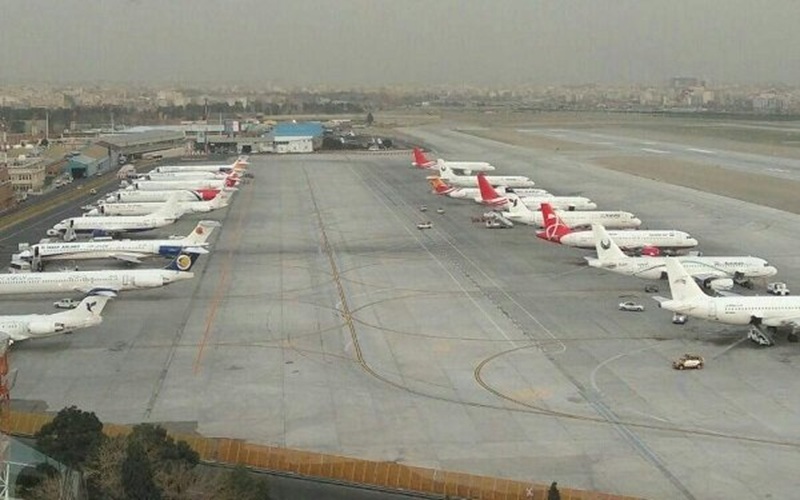
Abolfazl Shiroudi, head of Iran’s Civil Aviation Organization, announced that authorities carried out 133 aircraft relocations from Tehran’s Imam Khomeini and Mehrabad airports after the outbreak of hostilities.
He also confirmed that 36 permits were issued allowing aircraft to be transferred and stationed at foreign airports, with part of the evacuation plan successfully implemented.
The disclosure marks the first official acknowledgment that a significant portion of Iran’s passenger fleet was moved across the country and beyond its borders to avoid potential destruction.
Perhaps more importantly, Shiroudi confirmed that airports, control towers, radar facilities, and several aircraft sustained damage during the conflict.
Although the regime has not disclosed the full scale of losses, the statement itself underscores the extent to which key elements of Iran’s aviation infrastructure were exposed to attack.
A Fleet Already in Crisis Before the War
Long before the recent conflict, Iran’s aviation industry was struggling under the weight of decades of regime policies.
International sanctions linked to the regime’s nuclear and regional activities severely restricted access to new aircraft, spare parts, and maintenance services. As a result, airlines increasingly relied on aging fleets, complex procurement networks, and costly repairs to keep aircraft operational.
For years, industry observers warned that Iran’s civil aviation sector was operating with limited resilience.
Although airlines officially owned hundreds of aircraft, only a fraction were fully operational. Estimates prior to the war suggested that roughly 100 aircraft were actively serving commercial routes on a regular basis.
The conflict therefore struck an industry that was already weakened by years of economic isolation and regulatory constraints.
Airports Across Iran Sustain Damage
Reports published during and after the conflict indicated that several airports suffered varying degrees of damage.
Among the facilities reportedly affected were Mehrabad, Tabriz, Urmia, Khorramabad, Kashan, and Payam airports. Additional reports pointed to damage at airports in Ahvaz, Bandar Abbas, Bushehr, Kerman, and Kish.
Images circulating after the attacks showed damage to runways, aircraft hangars, support facilities, and airport infrastructure.
For an aviation system already struggling with aging equipment and limited investment, such losses present challenges extending far beyond immediate repairs.
The Hidden Meaning Behind the Relocation of 133 Aircraft
The relocation of 133 aircraft carries broader implications than officials may have intended.
The operation suggests that a substantial portion of Iran’s active fleet was concentrated in a limited number of airports. Had those facilities suffered more extensive damage, a significant share of the country’s commercial aviation capacity could have been eliminated in a matter of days.
This concentration exposed a vulnerability that experts have long associated with inadequate infrastructure planning and limited modernization.
In more resilient aviation systems, operational assets are often distributed across multiple hubs with redundant infrastructure. Iran’s ability to relocate aircraft at the last minute may have prevented even greater losses, but it also highlighted how exposed the system had become.
Economic Losses Mount
The financial consequences have been severe.
According to aviation industry representatives, losses suffered during the conflict reached approximately 30 trillion tomans. Airlines, travel agencies, airport service providers, and related businesses all experienced major disruptions as flights were suspended and airports shut down.
For an industry already facing financial pressures, the losses represent another setback that could take years to overcome.
The damage also extends beyond balance sheets. Reduced air connectivity affects tourism, trade, business travel, cargo operations, and broader economic activity.
Ultimately, ordinary Iranians bear the burden through higher travel costs, reduced service availability, and diminished transportation options.
Rebuilding Under Sanctions
Even if damaged airport facilities are repaired relatively quickly, replacing lost aircraft presents a far more difficult challenge.
Industry sources reported shortly after the conflict that around 20 passenger aircraft may have been completely destroyed, while dozens of others sustained serious damage. Although the regime has not officially confirmed these figures, recent statements acknowledging aircraft damage suggest that at least part of the fleet was directly affected.
Replacing aircraft under existing sanctions remains extraordinarily difficult.
Most Iranian airlines rely heavily on Boeing and Airbus aircraft, making access to original parts, technical support, and replacement airframes dependent on international restrictions that remain largely unresolved.
As a result, restoring lost capacity may require years rather than months.
The Price of Decades of Isolation
The aviation crisis illustrates a broader reality confronting Iran’s economy.
The recent conflict undoubtedly inflicted immediate damage, but the roots of the industry’s vulnerability lie in decades of policies that isolated the country from global markets and limited access to investment, technology, and modernization.
Civil aviation became another casualty of a system that prioritized ideological and geopolitical ambitions while neglecting long-term economic development.
Today, the consequences are visible across the sector: aging fleets, deteriorating infrastructure, rising operational costs, and increasing difficulty maintaining international standards.
A Warning for the Future
The relocation of 133 aircraft may ultimately be remembered not as a success story, but as a warning.
It exposed how vulnerable Iran’s aviation network had become and how little margin for error remained within a sector already strained by years of sanctions and underinvestment.
The war revealed what many aviation specialists had warned about for years: the greatest threat to Iran’s civil aviation industry is not a single military conflict, but the cumulative impact of decades of regime policies that left the sector fragile long before the first missiles were launched.
For ordinary Iranians who depend on safe, reliable, and affordable air travel, rebuilding that lost capacity will be one of the many long-term costs of the regime’s choices.