The Iranian regime is facing an unprecedented crisis in its 46-year history. The events of 2024, particularly the fall of Bashar al-Assad’s regime on December 8, have placed Iran’s leadership in a precarious and highly sensitive position. Even Supreme Leader Ali Khamenei cannot afford to underestimate the gravity of the situation. While the regime continues to issue statements boasting about its strength and longevity, these declarations ring hollow. The reality is stark, and no longer can rhetoric mask the dire circumstances Iran faces.
Economic Collapse and International Isolation
Iran’s economy, already crippled by escalating international sanctions, faces an increasingly bleak future. With no signs of sanctions being lifted—especially as the U.S. will double down on the “maximum pressure” policy—the regime is running out of options. Many economic experts warn that if this situation persists, Iran’s crisis-ridden economy will collapse. Furthermore, its international isolation continues to grow, leaving the regime with few alternatives for economic relief.
Rising Domestic Unrest and the Role of the Resistance
On the domestic front, two critical developments highlight the deepening crisis:
- Growing Public Anger and the Strengthening of the Resistance: Widespread resentment against the Iranian regime is manifesting in increasingly frequent protests and bold acts of defiance. The Resistance Units, associated with the People’s Mojahedin Organization of Iran (PMOI/MEK), have played a key role in organizing and executing these operations. Their influence, both inside Iran and on the international stage, is expanding rapidly.
- The Regime’s Regional Setbacks: The Iranian regime has suffered a series of significant defeats across the region, leading to an unprecedented weakening of its authority. Once a dominant force in Syria, Lebanon, and other areas within its sphere of influence, Iran now finds itself struggling to maintain control. This vulnerability resembles a wounded body with deep, festering wounds—wounds that are becoming harder to conceal or heal. The regime’s leadership is gripped by fear and uncertainty as its options narrow with each passing day.
The Boiling Point: A Nation on the Brink
The fall of Assad, Iran’s main regional ally, has intensified internal unrest within Iran. The regime had long considered Syria and Lebanon as key pillars of its influence, but recent developments have shattered this illusion. Iran now resembles a boiling volcano, poised for a massive eruption.
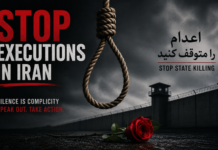
In response to mounting internal and external pressures, the regime has ramped up repression. The Revolutionary Guard Corps (IRGC), the Basij Force, and other repressive entities are working tirelessly to suppress dissent. However, despite these brutal crackdowns, the Resistance Units continue to break through the walls of oppression, executing daring operations that ignite hope for revolution.
A Defiant Resistance: Escalating Acts of Defiance
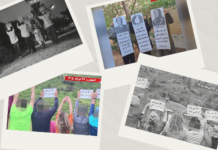
Marking the beginning of the 47th year since the 1979 revolution, the Resistance Units carried out 47 bold operations, shattering the regime’s illusion of control. On February 9, 2025, despite the regime’s heightened state of alert, these units launched coordinated actions under the slogans “Death to the dictator” and “Neither Shah nor the mullah.” Their objective is clear: to dismantle the foundations of religious tyranny and restore sovereignty to the Iranian people.
International Support for the Resistance
In January 2025, General James Jones acknowledged the growing strength of the Resistance Units, stating:
“Repression cannot extinguish the flames of resistance. In fact, it encourages all of us to be even more resolute in the downfall of the regime. Amid this brutal crackdown, MEK-affiliated Resistance Units have risen across Iran.
They have defied the regime’s pervasive surveillance, infiltrated its security layers, and boldly targeted regime symbols, IRGC bases, and paramilitary centers.
These brave men and women remind us of one undeniable truth: The spirit of resistance in Iran is alive. It cannot be crushed, and it cannot be silenced. Today, the Iranian regime is at its weakest point since 1979.
The death knells have begun to take a toll on this oppressive theocracy. But in every moment of crisis lies an opportunity for change, and that change comes in the form of a viable democratic alternative.
The National Council of Resistance of Iran (NCRI), led by Mrs. Maryam Rajavi, offers a clear vision for the future—a free, democratic, secular, and non-nuclear Iran. This vision has received global recognition, with 137 former world leaders, ambassadors, ministers, and senior officials voicing their enthusiastic support.”
The Path Forward
The Iranian regime’s future is more uncertain than ever. Economic decline, regional defeats, intensifying protests, and an emboldened resistance movement have created a perfect storm. While the regime clings to power through repression, history has shown that no dictatorship can survive indefinitely against the will of its people.
Iran stands at a crossroads. The spirit of resistance is alive, and the possibility of transformative change has never been more real. As the people of Iran continue their struggle, the world watches closely, waiting for the moment when the tides of history will turn once and for all.