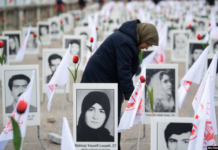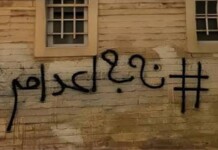
On Tuesday, April 8, 2025, political prisoners and inmates across 38 prisons in Iran marked the 63rd consecutive week of the “No to Execution Tuesdays” campaign by launching a coordinated hunger strike. This protest movement, led from within prison walls, continues to challenge the Iranian regime’s widespread use of the death penalty, which Amnesty International recently reported accounts for 64% of all recorded executions globally in 2024.
Surge in Executions After Nowruz
Following a brief lull in executions during the Nowruz holidays, Iran has witnessed a sharp resurgence in death sentences. Numerous prisoners have recently been moved to quarantine or “secure” wards—an ominous sign of impending executions. Just this past Monday, at least 10 inmates in Ghezel Hesar Prison were reportedly transferred in preparation for execution.
In this environment of heightened repression, prisoners are sounding the alarm—not only about their own lives but also about the broader trend of systemic violence sanctioned by the state.
International Condemnation Grows
The 63rd-week statement from the “No to Execution Tuesdays” campaign highlights new international actions against Iran’s escalating use of the death penalty:
-
United Nations Human Rights Council: In its 58th session in Geneva, the Council passed a resolution condemning Iran’s human rights abuses. It extended the mandates of both the Special Rapporteur on Iran and the Independent Fact-Finding Mission for another year. The scope of the mission has also been expanded to investigate a wider range of state crimes beyond the 2022 uprising.
-
European Parliament: In a concurrent resolution, the European Parliament denounced Iran’s ongoing execution spree and the upholding of death sentences for political prisoners Mehdi Hasani and Behrouz Ehsani. The resolution also called for the release of all political and ideological prisoners and urged the European Union to officially designate the Islamic Revolutionary Guard Corps (IRGC) as a terrorist organization.
Alarming Legal Developments
Despite global condemnation, Iranian authorities continue to issue and uphold death sentences. Two cases exemplify this disregard for international pressure:
-
Pakhshan Azizi, a Kurdish political prisoner, has had her appeal for retrial rejected for the second time by the Supreme Court, heightening the risk of her execution.
-
Karim Khojasteh, held in Lakan Prison in Rasht, has been formally charged with Baghi—armed rebellion against the state—a charge that frequently results in a death sentence.
A Call for Action
The prisoners behind “No to Execution Tuesdays” condemn both the political and non-political death sentences being carried out across the country. While expressing deep appreciation for international support, they are urging the global community to go further: make all political and economic relations with the Iranian regime conditional upon the abolition of the death penalty.
Participating Prisons
The hunger strike spans 38 prisons across Iran, including both male and female wards in major facilities such as:
-
Evin Prison (Women’s Ward, Wards 4 & 8)
-
Ghezel Hesar (Units 3 & 4)
-
Greater Tehran, Khorin Varamin, Choobindar Qazvin, Arak, Khorramabad, Isfahan (Asadabad & Dastgerd), Ahvaz (Sheiban & Sepidar)
-
Shiraz (Nezam & Adelabad), Borazjan, Ramhormoz, Bam, Kahnouj, Mashhad, Gonbad-e Kavus
-
Northwestern and Western prisons: Tabriz, Urmia, Salmas, Khoy, Naqadeh, Saqqez, Baneh, Marivan, Kamyaran
-
Northern and Caspian provinces: Qaemshahr, Lakan Rasht (Women & Men), Rudsar, Haviq Talesh
-
Kermanshah (Dizelabad), Ardabil, Miandoab, Tabas, Jowayin
The campaign has grown into one of the most persistent grassroots resistance efforts from within Iran’s prison system, giving a voice to the voiceless and relentlessly pressing for the end of capital punishment.
“No to Execution Tuesdays” Campaign
April 8, 2025