


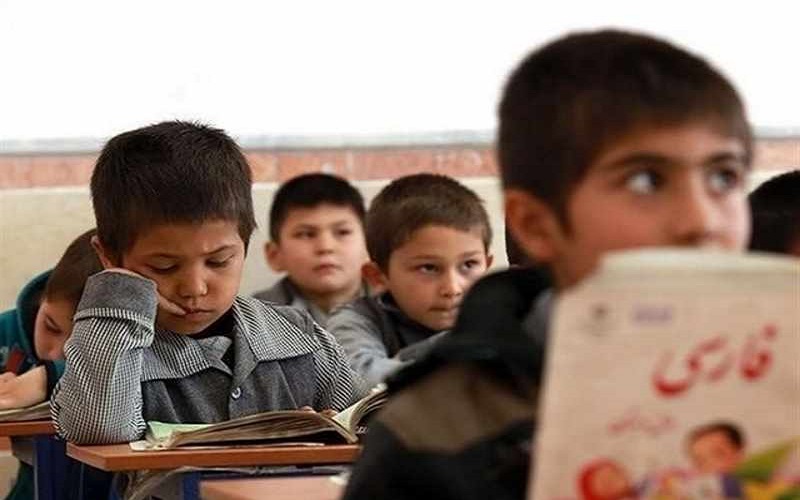

For years, the Iranian regime has sought to shape the minds of the younger generation in its own repressive and ideological image. Through widespread indoctrination, censorship, and the systematic distortion of history and culture, authorities have aimed to recruit youth into the state’s authoritarian and militarized framework. Yet today’s generation of Iranian students is defying that narrative—choosing resistance over compliance and rebellion over repression.
Despite decades of regime-led attempts to impose reactionary values and suppress independent thinking, Iran’s youth continue to embody the spirit of dissent and the pursuit of freedom. Their courage has now become a potent force against the very system that sought to silence them.
This simmering tension reached a boiling point on Monday, April 21, when the publication of a controversial memorandum of understanding between the Police Command of the Islamic Republic of Iran (Faraja) and the Ministry of Education was made public. The agreement has sparked widespread outrage and alarm across Iranian civil society, particularly among educators, child rights activists, and legal experts.
According to the terms of the memorandum, projects such as “police assistant teachers” and the stationing of law enforcement officers within a 500-meter radius of schools are to be implemented. Officially, the goal is to “prevent social harm,” “establish order and discipline,” and “teach law-abiding behavior” to students.
However, critics argue that the memorandum marks a dangerous encroachment of security forces into the educational sphere. Education professionals and human rights advocates warn that such actions contradict both international and domestic legal standards—especially those concerning the rights and psychological safety of children.
Experts have condemned the move as a blatant violation of the principle of separation between civil society institutions, asserting that education should be led by trained professionals, not by the security apparatus. They warn that the presence of police in schools transforms what should be nurturing environments into spaces of fear and intimidation, eroding students’ sense of safety and undermining their development.
Iran is a signatory to the UN Convention on the Rights of the Child, which stipulates that all policies concerning children must prioritize the “best interests of the child.” A secure, threat-free educational environment is a cornerstone of that principle. Deploying police in schools, critics argue, is fundamentally incompatible with this commitment.
Rather than resorting to security measures, observers urge that efforts to address social harms in schools should focus on constructive, educational solutions—such as increasing the presence of school counselors, educational psychologists, and expanding life skills programs. These approaches, they argue, are far more effective in empowering students and reducing vulnerability than a militarized school environment.
In a joint statement, Iranian child rights activists and educators highlighted the risks of psychological trauma, infringement on students’ human dignity, and the violation of both constitutional and international legal norms. They emphasized that the Minister of Education lacks the legal authority to authorize such a memorandum, which they describe as an “educational and legal catastrophe” aimed at ideologically controlling children and adolescents.
The reaction from the education community has been swift and unequivocal. The Coordination Council of Iranian Teachers’ Unions issued a strong statement, declaring:
“The Ministry of Education is not the minister’s personal property or a parade ground for military forces. The entry of law enforcement into the safe confines of schools is an illegal, oppressive act that violates the rights of teachers and students.”
The Fars Province Teachers’ Union called the agreement “ridiculous and shameful,” writing in an open letter:
“Mr. Soldier! If you are a soldier, leave education and return to your main post. Teachers are not anyone’s soldiers. They are educators. Their duty is to teach—not to obey orders.”
The controversy has not only sparked a new wave of civil and trade union resistance but has also reignited the broader debate around the independence of Iran’s educational institutions. At its core, the issue is about the soul of education in Iran: Should schools be spaces for growth, learning, and personal development—or tools of ideological control and repression?
As calls grow louder for the immediate repeal of the memorandum, one message from educators and activists rings clear: The sanctity of the school must be preserved. Education must return to its human, cultural, and intellectual mission—free from the shadow of security forces.