


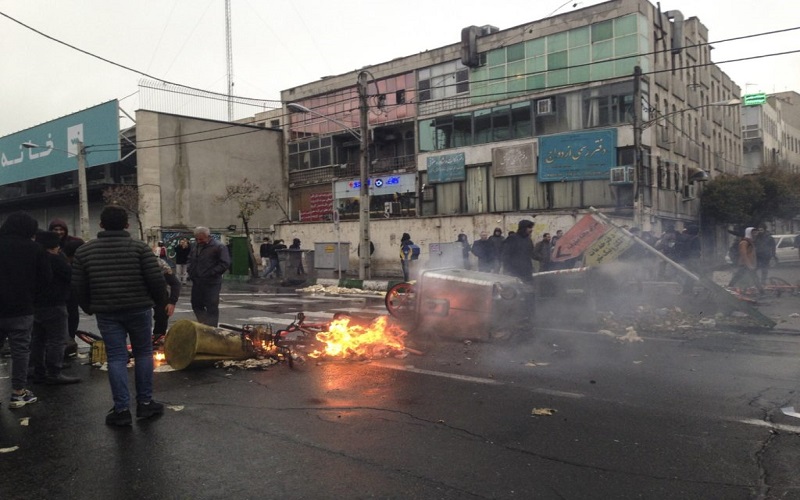

Javad Arianmanesh, a former member of Iran’s parliament, has described the country’s current economic and social conditions as “deplorable” in an interview with the Jamaran website. His remarks serve as a stark warning about the potential for widespread unrest, highlighting deep public distrust in the government and the regime’s growing instability. These comments come as Iran approaches the final year of its 20-year development plan known as Iran 1404—a plan that has fallen dramatically short of its goals.
A Vision Unfulfilled
The Iran 1404 plan aimed to position Iran as the leading economic and military power in the region. However, Arianmanesh labeled the present situation as “catastrophic.” He pointed to deep-rooted structural issues such as poverty, corruption, runaway inflation, currency devaluation, and widening social inequality—all of which have fueled growing public dissatisfaction.
Arianmanesh, who served in parliament from 2004 to 2012 and is affiliated with the so-called principalist faction, warned that the accumulation of unresolved crises could lead to “massive chaos.” His candid remarks reflect not only the dire state of the country but also an emerging consensus among insiders that the regime’s foundations are rapidly eroding.
Public Distrust and Political Disillusionment
Significantly, Arianmanesh acknowledged that public trust in the entire political system—including both the principalist and reformist factions—has been lost. “People are done,” he said, noting that even supporters of hardline figures such as Saeed Jalili are beginning to question their allegiances. He added that many of those who still back the regime do so out of self-interest rather than genuine belief in its ideology.
This level of disillusionment, he warned, is unprecedented and reflects a society that no longer sees reform as a viable path forward. The regime, he implied, is running out of options and out of time.
Warnings from Within: A Regime at Breaking Point
Arianmanesh is not the only former official sounding the alarm. Others, including former interior minister Abdolreza Rahmani Fazli, have described the current situation as “more concerning” than in November 2019, when nationwide protests erupted and were brutally suppressed. These warnings reflect a growing recognition among former insiders that the regime may not survive another wave of unrest.
With the hardliners and reformists alike losing relevance and legitimacy, the regime’s social base has effectively collapsed. As living conditions worsen and the people face deepening economic hardship, the groundwork is being laid for a large-scale uprising.
A Society Poised for Revolution
Observers note that the regime’s inability to reform, coupled with its repressive nature, has left many Iranians with no option but to seek radical change. Revolutionary forces, including organized Resistance Units inside the country, are increasingly active and coordinated. These groups have been targeting key institutions of repression, signaling a new phase in the struggle against Supreme Leader Ali Khamenei’s rule.
Arianmanesh’s statements are more than a critique—they are a warning that the regime’s stranglehold on power is unraveling. The combination of internal collapse, external pressure, and a growing revolutionary movement has created a volatile mix. According to many analysts, including those within the regime itself, the days of Khamenei’s authoritarian control may be numbered.
As the regime braces for impact, the people of Iran appear more determined than ever to break free from decades of repression—and to write a new chapter in their country’s history.