


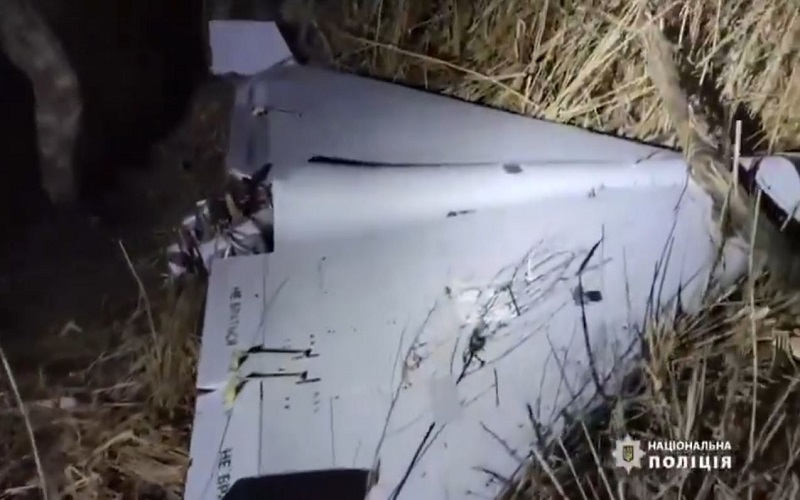

The Iranian regime’s growing military partnership with Russia has enabled Moscow to dramatically expand its drone capabilities, with profound implications for the war in Ukraine and the global sanctions regime. According to a new report by the Washington-based research group C4ADS, Iran’s provision of drone technology and know-how has allowed Russia to establish a major domestic UAV production line, using Iranian designs to launch relentless drone assaults on Ukrainian cities.
At the heart of this cooperation is a deal struck between Moscow and Tehran in 2022, which led to the construction of a drone-manufacturing facility in Russia’s Tatarstan region, within the Alabuga special economic zone. The facility now produces Iranian-designed Shahed-136 drones—renamed Geran-2 by Russia—and is reportedly aiming to build at least 6,000 units by summer 2025. These drones, which carry 118 pounds of explosives, are now a staple in Russia’s nightly attacks on Ukraine.
From Imports to Domestic Arsenal
The C4ADS report highlights how the Iranian regime helped Russia move from importing drones to full-scale domestic production. Beyond the Geran-2, Russian engineers have begun producing the Geran-3, a faster, jet-powered variant. This evolution not only underscores the technological depth of the collaboration but also shows the effectiveness of localized manufacturing in sustaining Russia’s war effort.
“We appear to be seeing a quite successful localization,” said Omar Al-Ghusbi, the report’s lead author. “There is growing variation in the models, suggesting Russia has moved beyond simple replication and is now developing derivative versions based on Iranian designs.”
Covert Networks and Sanctions Evasion
The partnership between the two sanctioned regimes has given rise to a sophisticated sanctions-evasion infrastructure. C4ADS reveals a covert payment network involving intermediary countries and non-traditional forms of payment—including gold transfers—to bypass Western financial restrictions.
A leaked contract shows that Russia paid Iran’s Sahara Thunder, a Tehran-based front company tied to the regime’s Defense Ministry, with approximately $104 million worth of gold bars. This strategy avoided U.S. dollar transactions and minimized the digital footprint of the deal.
By exploiting the financial flexibility of the UAE’s Free Zone Establishments—jurisdictions that allow for foreign ownership, tax exemptions, and discreet asset movement—Russia and the Iranian regime secured access to international banking and logistics infrastructure typically off-limits due to sanctions.
Sahara Thunder and Iran’s Proxy Industry
Documents leaked by the hacker group Prana Network in early 2024 included over 10 gigabytes of internal files from Sahara Thunder. These files confirmed the company’s role in supplying drone components and facilitating technology transfers to the Alabuga plant. The U.S. government sanctioned Sahara Thunder in April 2024, calling it a cover entity for Iran’s military establishment.
Interestingly, Iranian records indicate that shortly after these sanctions were imposed, Sahara Thunder began a formal liquidation process—suggesting the regime’s intent to simply reconstitute the entity under a new name and continue operations with minimal disruption.
A Challenge to Global Sanctions
The Iran-Russia drone pact has not only intensified the war in Ukraine but also exposed the limitations of international sanctions. Despite layers of export controls and financial restrictions, both regimes have proven adept at adapting, creating new channels of procurement and payment to sustain their military goals.
“The partnership exemplifies how sanctioned actors innovate to evade detection,” the C4ADS report notes. “Only by understanding and adapting to these tactics can global stakeholders effectively disrupt such networks.”
Conclusion
As the Iranian regime deepens its military-industrial ties with Russia, it is playing a pivotal role in prolonging the conflict in Ukraine—while simultaneously undermining the integrity of global sanctions. This partnership is not just a matter of bilateral cooperation; it is a test case for how authoritarian regimes can collaborate to blunt international pressure and export repression across borders.
Disrupting this alliance requires more than punitive measures—it demands a comprehensive understanding of how these regimes operate in the shadows and a coordinated global effort to close the loopholes they so effectively exploit.