



Conflicting statements among Iranian regime’s officials reveal deep confusion and vulnerability amid escalating foreign intelligence operations
As the Iranian regime grapples with mounting internal crises and growing external pressures, a series of contradictory statements from members of the Iranian parliament have revealed the regime’s escalating internal confusion and insecurity. The public discourse now reflects not only deep institutional disarray but also an intensifying struggle over how to respond to perceived infiltration by foreign intelligence services.
Contradictions in the Parliament: Denial vs. Deflection
In one striking statement, MP and IRGC member Ebrahim Abnoosh, who serves on the regime’s National Security Commission, called for a sweeping purge of “infiltrators and undesirable elements” within state institutions. His comments echo repeated warnings by Supreme Leader Ali Khamenei about the alleged presence of hostile elements within the Iranian regime—a theme long used to justify crackdowns on dissent and bureaucratic purges.
However, Abnoosh’s remarks were starkly contradicted by another lawmaker, Manan Raisi, who openly challenged one of the regime’s central narratives. Raisi admitted that based on “reliable intelligence,” there is not a single Afghan migrant among Israeli spy networks operating in Iran. This directly undermines the regime’s frequent claims that foreign-born individuals, particularly Afghan refugees, are being used as spies, a narrative often employed to incite xenophobic sentiments and deflect attention from domestic issues.
Raisi’s statement is not only a rare public admission but also a significant blow to the regime’s credibility, revealing the failure of its propaganda campaigns and attempts to scapegoat migrants for its own security lapses.
The Shadow of the June 12 Conflict and the NSC Attack
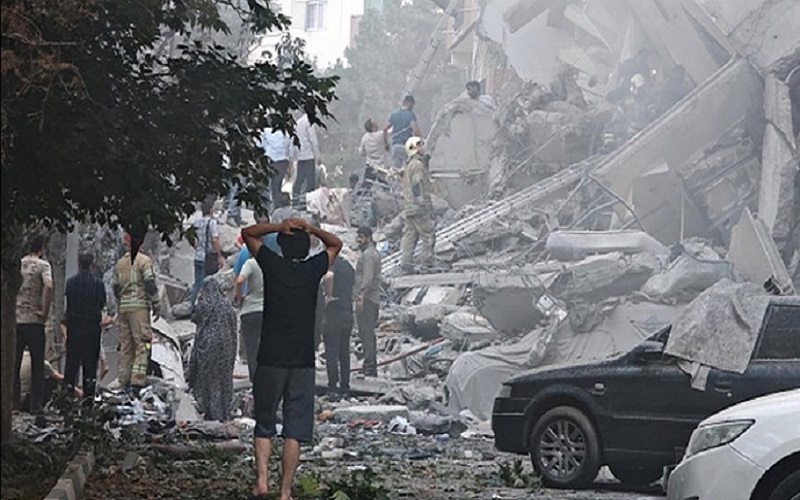
The deeper crisis, however, stems from a more alarming security breach: the suspected Israeli strike on a highly sensitive meeting of Iran’s Supreme National Security Council (SNSC), which reportedly took place on June 12. According to official and semi-official sources, this extraordinary session—attended by the heads of all three branches of government, military chiefs, and senior ministers—was targeted just minutes before an Israeli missile hit the Islamic Republic of Iran Broadcasting (IRIB) glass tower.
Questions are now swirling in Iranian media and among regime insiders: How did Israel obtain precise information about the date, time, and location of the closed-door session? How was it able to target six key locations, including potential evacuation routes? These concerns have been raised not just by dissidents or foreign analysts but in state-affiliated media such as the daily Ham-Mihan, which asked whether the attack signals a return to the high-stakes espionage and assassinations reminiscent of the early 1980s.
The newspaper also highlighted the growing disparity between public assessments by regime officials and the operational reality exposed by Israel’s intelligence capabilities, suggesting that Tehran may be unaware of the full extent of the breach—or unwilling to acknowledge it publicly.
High-Ranking Voices Raise Alarm
Former IRIB strategist Vahid Jalili was reportedly the first to suggest that the SNSC meeting was a target. Subsequent confirmations came from prominent officials such as former parliament speaker Ali Larijani and former IRGC commander Mohsen Rezaei. Iran regime’s president, Masoud Pezeshkian, also alluded to the attack during an interview with American journalist Tucker Carlson, framing it as an Israeli attempt to assassinate the regime’s top leadership.
It later became clear that the ultimate target was an emergency session of the Supreme National Security Council, comprising Iran’s most powerful figures: the heads of the executive, legislative, and judicial branches; top military and intelligence officials; and two representatives appointed directly by the Supreme Leader.
Had the strike succeeded, it could have decapitated Iran’s national command structure.
Strategic Implications
The aftermath of the incident has reignited debate over the regime’s security doctrine. Parliament speaker Mohammad-Bagher Ghalibaf stated that one of Israel’s top strategic goals was to “change the governing political system in Iran.” Given the timing and precision of the attack, this assessment seems credible.
Moreover, the fact that the Israeli operation unfolded just minutes before a coordinated aerial assault in western Tehran suggests a level of strategic and technical sophistication far beyond previous incidents. It also casts serious doubt on the effectiveness of Iran’s counterintelligence apparatus.
Conclusion: A Regime at a Crossroads
The inconsistencies in public messaging, coupled with the exposure of deep vulnerabilities at the heart of the regime’s security infrastructure, paint a picture of a government increasingly out of touch and overwhelmed. While some officials continue to blame vague infiltrators, others are now admitting hard truths about the failure of the regime’s narratives.
The recent developments—from the failure to control propaganda narratives about Afghan migrants to the near-miss at the heart of Iran’s national security leadership—suggest that the regime is entering a period of acute internal instability. As the regime scrambles to reassert control and salvage its credibility, the growing gap between rhetoric and reality is becoming impossible to ignore.