


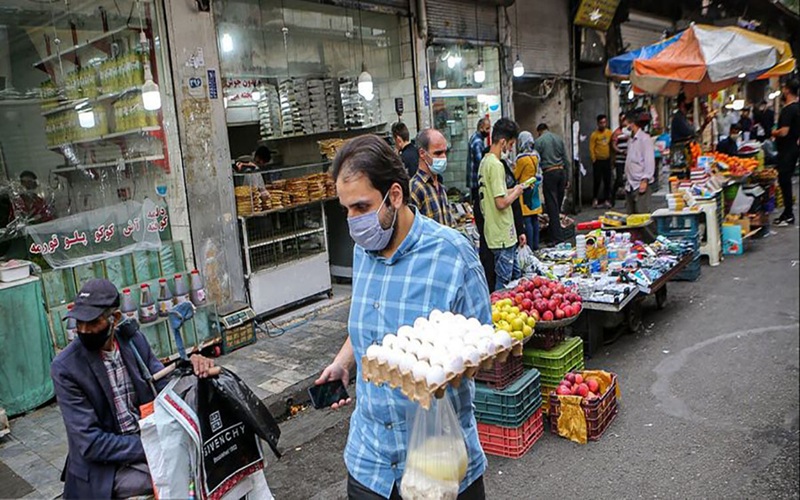

From runaway inflation to the collapse of food affordability, Iran’s ruling elite turns a blind eye as citizens struggle for survival
As inflation continues its relentless climb in Iran, the regime’s refusal to intervene in market regulation has intensified the economic burden on millions. From essential goods like bread and meat to fuel and medicine, prices are spiraling beyond reach, shrinking household incomes and expanding the circle of poverty across the country.
Despite its fundamental duty to secure citizens’ access to basic necessities, the Iranian government under President Masoud Pezeshkian has failed to act decisively. The rising cost of living is not a short-term crisis but a persistent wound that has been deepening for decades. The regime’s use of external conflict, including the recent 12-day war, as justification for internal economic failures has only worsened public resentment.
A Decade of Decline
Between 2011 (1390) and 2025 (1404), the price of one kilogram of lamb has surged from 10,000 tomans to 700,000—a seventyfold increase. Similarly, beef has climbed from 7,500 tomans to 550,000. While meat prices have risen dramatically, workers’ minimum wages have only grown 37 times over the same period. This discrepancy has slashed the purchasing power of Iranian families in half when it comes to red meat—an item that, for many households, has become a memory rather than a meal.
And this decline isn’t theoretical. In practical terms, meat has vanished from the tables of many Iranian families. The gap between income and survival is no longer just alarming—it’s catastrophic.
Even bread, a staple that historically anchors poor and middle-class diets, has undergone two rounds of price hikes under Pezeshkian’s administration. A third increase is looming, further endangering already-vulnerable families.
The State’s Abdication of Responsibility
The government has argued that market interference is counterproductive, citing fears of discouraging producers. But such claims are increasingly discredited. Around the world, many nations employ strict price controls to protect consumers, especially in times of crisis. Iran, in contrast, has allowed economic freefall to dominate, effectively abandoning its citizens to the mercy of market forces and mismanagement.
Rather than intervening to stabilize prices, Iranian officials have exacerbated the problem through manipulations of the exchange rate. The rial’s rapid devaluation—from 110,000 to 80,000 against the dollar—has had no effect on domestic prices, exposing the cynical motives behind these monetary maneuvers: covering budget deficits at the cost of public welfare.
The Collapse of Informal Employment
Compounding the crisis, disruptions in internet infrastructure following the war have rendered approximately 13 million informal workers—including five million motorcycle couriers and eight million app-based drivers—jobless. These individuals rely on daily earnings to survive. For them, a single day without work can mean a day without food.
This segment of the workforce, already precarious, is now teetering on the edge of destitution.
A Nation at the Brink
The regime’s long-standing narrative—that price control is impractical or counterproductive—has collapsed under the weight of reality. The vast majority of Iranians now experience economic insecurity firsthand, including the once-resilient middle class.
The regime’s ongoing policies—marked by indifference, inaction, and occasional sabotage—are actively eroding not only livelihoods but the very foundations of public trust.
If the current trajectory persists, the regime will no longer face questions from economic analysts—it will face a reckoning from a growing army of the hungry and dispossessed.