Decades of Poor Governance Leave Millions Struggling to Survive in Resource-Rich Iran
Poverty in Iran has become an urgent and multifaceted crisis, affecting broad segments of society and threatening the country’s social stability. While Iran is rich in natural resources like oil and gas, millions of its citizens are struggling to meet their most basic needs. The roots of this crisis lie not in the lack of national wealth, but in chronic economic mismanagement, structural corruption, and flawed policymaking.
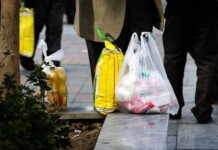
Recent economic challenges have severely worsened living conditions. The exchange rate has fluctuated between 80,000 and 100,000 tomans to the dollar, drastically increasing the cost of imported goods and pushing up prices across all consumer markets. Inflation is officially reported to be in the upper 40 percent range, drastically reducing the purchasing power of ordinary Iranians. As prices surge, families are forced to make hard choices between food, healthcare, and education.
The regime’s growing budget deficit has only deepened the crisis. To finance this shortfall, authorities are resorting to printing money or taking on more debt—actions that fuel even higher inflation and widen the poverty gap. Instead of stabilizing the economy, these policies have triggered a vicious cycle of rising prices, reduced investment, and increasing hardship.
In this environment, both financial and human capital are fleeing the country. Skilled workers and entrepreneurs are leaving in search of better opportunities abroad, while investment in new businesses and industries is drying up. This capital flight is further limiting job creation and accelerating unemployment, particularly among the youth.
Official statistics—which are widely viewed as underreported—indicate that more than 30 percent of the population lives below the absolute poverty line. In reality, the number is likely much higher. Behind these numbers are real people facing hunger, displacement, and a growing sense of hopelessness.
At its core, the poverty crisis in Iran is not just an economic issue. It is a direct result of political and administrative failures. Poor planning, instability in economic policy, lack of financial transparency, and widespread corruption have all contributed to a broken system. While Iran’s natural resources should be a driver of prosperity, they have instead become a source of inequality and resentment, as the benefits fail to reach the broader population.
Economic hardship is deeply intertwined with social inequality. Unequal access to quality education, healthcare, and employment opportunities ensures that poverty becomes a generational cycle. Children in deprived areas are especially vulnerable, with limited chances to escape the conditions they are born into.
The consequences of this poverty are far-reaching. Rising rates of crime, addiction, divorce, and emigration are all symptoms of deeper social despair. Poverty eats away at the fabric of society, weakening family bonds and undermining public trust. It breeds frustration and anger—emotions that, sooner or later, find expression in public outbursts and unrest.
Iran’s poverty crisis cannot be solved by short-term financial fixes or empty promises. It requires structural reform, transparent governance, and a long-term vision that puts people—not political survival—at the center of economic policy. Until those changes happen, poverty will remain a defining feature of life for millions of Iranians, and its consequences will continue to ripple across every aspect of the nation’s social and political landscape.