



State-controlled outlets rally behind Supreme Leader’s authority, warn of sanctions snapback, and attack dissenting voices within the regime.
A review of Iran’s state-run press this week reveals a coordinated campaign to frame the country’s foreign policy challenges as a matter of national survival, demanding total unity behind the Supreme Leader’s directives.
Several newspapers, including Ham Mihan, have sounded alarms over the potential activation of the UN’s “snapback” mechanism, warning that the return of international sanctions could have “serious consequences for the entire nation.” Drawing parallels to Mahmoud Ahmadinejad’s dismissive stance on sanctions as “worthless scraps of paper,” they insist that all political, diplomatic, economic, and military officials must work to prevent such a scenario.
The narrative extends beyond sanctions. Kayhan has gone so far as to allege foreign climate sabotage, claiming that weather systems once destined for Iran are now being diverted to Azerbaijan, supposedly as part of an Israeli-led project. At the same time, multiple outlets highlight the possibility of renewed conflict with Israel, suggesting both Tehran and Tel Aviv are preparing for another military confrontation following the recent “12-day war.”
In parallel, regime media are closing ranks to defend the official diplomatic line. Outlets like Javan and Khorasan have publicly rebuked senior figure Saeed Jalili for likening advocates of renewed negotiations to “calf-worshippers,” calling his remarks disrespectful to the Iranian people and a challenge to the Supreme Leader’s established policy. Tabnak has emphasized that any talks with the United States will proceed only when deemed in the “national interest” by the leadership, with messaging exchanges continuing despite the absence of a formal agreement.
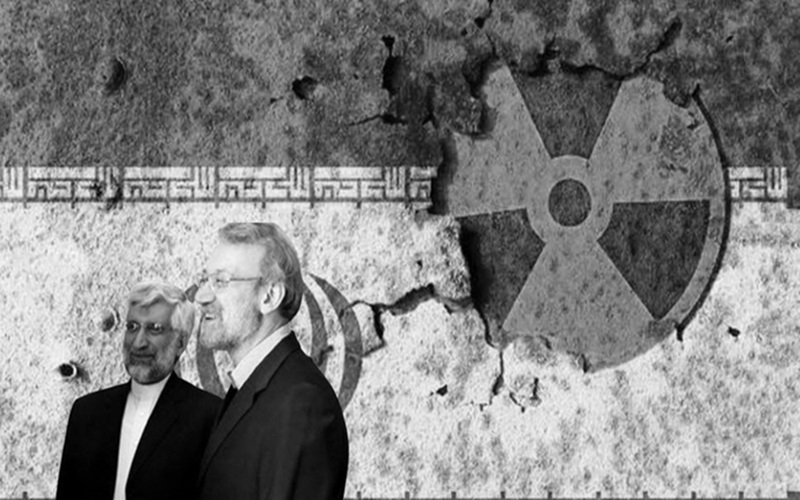
Internal political developments are also being tied to foreign policy strategy. Ham Mihan has portrayed the appointment of Ali Larijani as a potential catalyst for change—if it comes with a shift in both domestic and foreign policy approaches. Meanwhile, Shargh and Farhikhtegan warn against narratives that suggest divisions at the top, describing such claims as part of a “Zionist project” to create rifts between regime loyalists and the broader public.
Taken together, this week’s coverage underscores the regime’s core message: Iran faces external threats on multiple fronts—from sanctions and war to alleged environmental warfare—and the only acceptable response is absolute loyalty to the Supreme Leader’s strategic line. Dissent within the system is portrayed not as debate, but as a threat to the nation’s survival.