



Power outages, food spoilage and soaring poverty drive Iranians to the streets, documenting daily collapse of basic services.
The crisis of poverty, unemployment, and economic hardship in Iran has reached breaking point. From city centers to rural farmlands, citizens are speaking out — often in desperation — against conditions that have stripped them of stability, dignity, and hope.
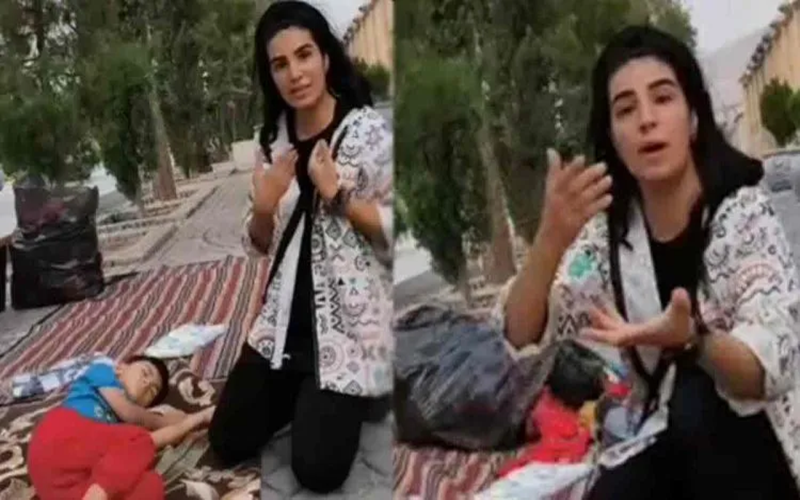
One such voice comes from a woman street vendor in Shiraz. In the sweltering heat of summer, she lays her child on the stone pavement near Hafezieh and speaks with raw frustration:
“It’s not fair that some live as billionaires, drowning in wealth and comfort, while others struggle to afford bread for the night.”
She continues, describing her years of unrelenting labor:
“I’ve shouted my pain many times, but no one hears me. Sometimes I wish the world didn’t exist — what’s in it for people like us? A handful of heartless officials sitting in parliament. We are 80 million Iranians; has no one heard my voice? I’ve worked for my honor and my child’s future through cold and heat, never selling my dignity. Yet my struggles go unseen. We are exhausted — we have nothing left to lose.”
Her words echo across Iran as daily life collapses under the weight of failing infrastructure, particularly power outages that cripple homes, shops, and farms.
In Langarud, a man describes the repeated blackouts:
“Today alone the electricity has gone several times — last night from 9 to 11, today at 9, 11, 5, and 7. My fruit stock is spoiling, I have rent and wages to pay. This isn’t once or twice — it’s constant, even in the middle of the night.”
A working woman returning home at night after a long day finds her freezer defrosted and food ruined:
“Look at this — everything has melted, all the meat and chicken gone to waste. We don’t need Israel to attack us — our own government is killing us. Who will compensate us?”
In Babolsar, a farmer whose crops depend on electric pumps is furious:
“I’ve been trying to irrigate my land for ten days. The power cuts make it impossible. This isn’t governance — resign if you can’t run the country.”
In Abbasabad, shopkeepers denounce the impact on commerce:
“You promised to make this country better. Is this your idea of normal life? If you can’t manage, step down.”
Others speak of staying in dark shops until midnight waiting for power to return, unable to secure their businesses:
“Do you know what it’s like to send a worker home without dinner because the lights are out? This isn’t life.”
These testimonies are from people in central urban areas — those the authorities often claim are “better off.” Yet the situation is far harsher in Iran’s neglected provinces. In places like Sistan-Baluchestan and Kurdistan, children endure temperatures above 50°C without electricity or water. From the parched lips of a child in Chabahar to the street vendor in Shiraz, the message is the same: the crisis has reached its peak, and the regime has neither the capacity nor the will to address it.
This is not merely a story of power outages and food spoilage — it is a story of a nation pushed to the edge, where survival has become the daily struggle. The voices from Iran’s streets are clear: their patience is gone, and their suffering is no longer silent.