


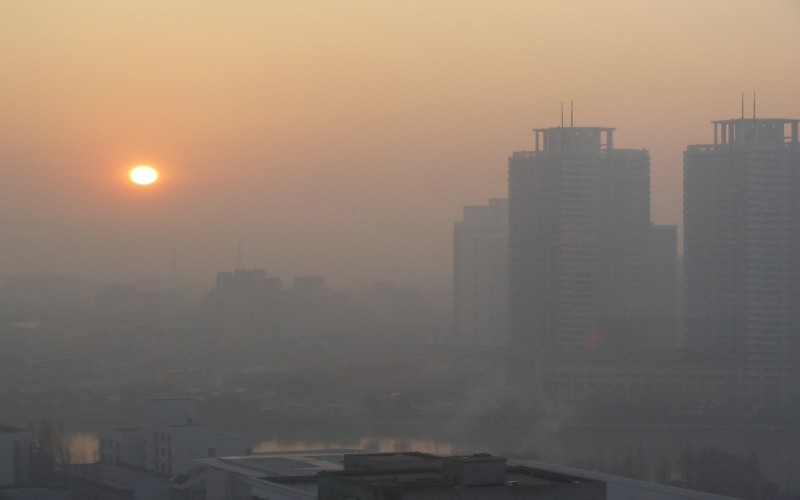

Despite repeated promises to end the use of mazut in power plants, the Iranian regime continues poisoning citizens with toxic emissions, deepening the country’s environmental and health crisis.
The Iranian regime’s top environmental official has openly admitted the government’s failure to implement the Clean Air Act, blaming political conditions, sanctions, and limitations. Shina Ansari, head of the Environment Organization, attempted to defend the government of Masoud Pezeshkian by claiming that last year “low-sulfur mazut” was burned at the Shazand power plant in Arak.
Ansari, speaking on Sunday, August 24, insisted that Pezeshkian’s government has “not hidden problems” and admitted that if mazut burning is ongoing, “we must say it directly.” This admission comes after repeated denials and false promises from regime officials.
In November 2024, government spokesperson Fatemeh Mohajerani even suggested that “organized blackouts” could temporarily replace the “production of poison” inflicted on the population. This statement came as citizens already faced summer power cuts and widespread gas shortages.
At the time, state media reported that Pezeshkian had ordered a halt to mazut burning in three major power plants in Arak, Karaj, and Isfahan. Yet, despite these declarations, the toxic practice continued. In some areas, pollution levels became so severe that residents staged street protests, particularly in Arak, where demonstrations continued into late 2024.
Three months later, in February 2025, Somayeh Rafiei, spokesperson for the regime’s parliamentary Agriculture Committee, revealed that all thermal power plants nationwide had resumed burning mazut.
Ansari attempted to downplay the disaster by stating that “low-sulfur mazut” was used in Shazand during parts of the winter, claiming it reduced sulfur dioxide emissions compared to the previous year. However, the reality contradicts this narrative. On August 9, the news outlet Tejarat News reported that, despite official promises, mazut burning had become a “formal and reliable option” for the regime in its failed attempt to manage the energy crisis.
The report highlighted the regime’s incapacity to resolve the energy problem, noting that citizens must endure toxic air pollution, power outages, and rising illnesses at the same time.
The consequences have been devastating. In 2024, most major cities across Iran suffered not only from power cuts and gas shortages but also from catastrophic air pollution. According to Tehran’s Air Quality Control Company, residents of the capital breathed clean air for only seven days during the entire year. Data further shows that in 2024, Tehran’s air was unsafe to breathe on 40 percent of the days.
This grim reality underscores how the Iranian regime, through corruption, mismanagement, and disregard for human life, has turned basic necessities like air, electricity, and energy into sources of suffering and disease for millions of Iranians.