


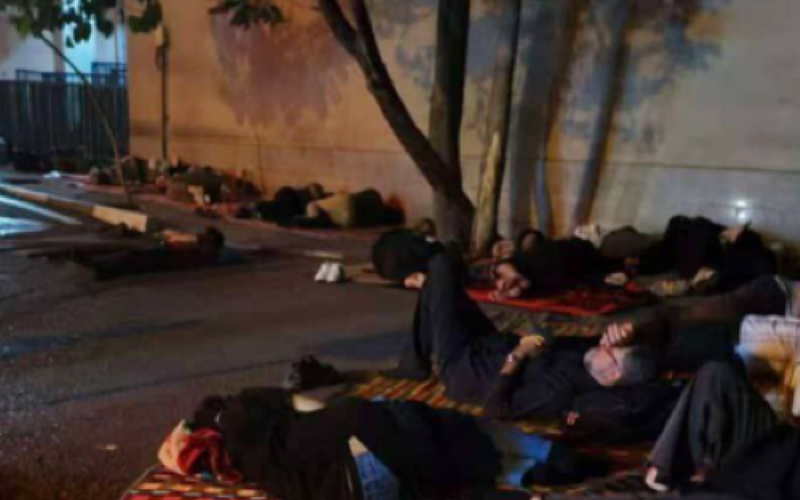

Long lines for Chinese visas in Tehran highlight the desperation of citizens seeking to escape economic collapse, corruption, and lack of opportunity under the regime.
Recently published images of overnight lines outside the Chinese Embassy in Tehran once again drew public attention to one of the most pressing realities of today’s Iran: the widespread desire to leave the country.
Hossein Selahvarzi, former head of Iran regime’s Chamber of Commerce, called the scenes “a source of shame,” criticizing the situation by stating: “A nation whose imports from China account for more than 70 percent should not have its citizens sleeping on the streets just to get permission to travel.” He urged regime president Masoud Pezeshkian to order the dispersal of these “humiliating queues” before his planned trip to Beijing.
These images have emerged even as the Iranian regime boasts in its propaganda about strengthening “strategic partnerships” with Eastern powers such as China. Yet, the sight of citizens camping outside foreign embassies reveals the deep disillusionment and rising migration trend—even toward countries like China.
Experts point to systemic corruption, skyrocketing inflation, political repression, and the absence of job and welfare prospects—especially for youth and the middle class—as key drivers behind this growing exodus. The surge in demand for student, work, and even tourist visas to Asian and European destinations reflects the desperation of Iranians to secure a future abroad.
Pezeshkian’s upcoming visit to China, announced by government spokesperson Fatemeh Mohajerani, is now overshadowed by mounting criticism. Many social media users argue the regime should focus on solving Iran’s economic and social crises instead of pursuing symbolic diplomacy, so citizens no longer have to spend nights on embassy sidewalks to escape the country.
On August 21, Rahim Zare, a member of the regime’s parliamentary Budget Committee, admitted that in the wake of the 12-day Iran-Israel war, many Iranians have put their homes up for sale in preparation for migration. He warned: “If we look at reality, many Iranians have listed their homes for sale due to current conditions. This is one of the factors driving up foreign exchange rates.” Zare further revealed that within just 48 hours, 240,000 residential units in Tehran were listed for sale, a shocking figure contributing to the rising dollar rate.
The exodus predates the war. Bahram Salavati, former head of Iran’s Migration Observatory, stated on July 28 that nearly four percent of Iran’s educated and student population has already emigrated. He previously reported that the number of Iranian students abroad had surpassed 100,000, with only one percent ever returning.
This growing wave includes academics, medical staff, university professors, and skilled professionals, sparking alarm among both experts and the public. A May report by Digiato revealed that Iran has effectively become an exporter of skilled programmers.
The surge in migration underscores the regime’s catastrophic mismanagement, which has transformed Iran from a country of opportunity into a land from which its brightest and most capable citizens are desperate to flee.